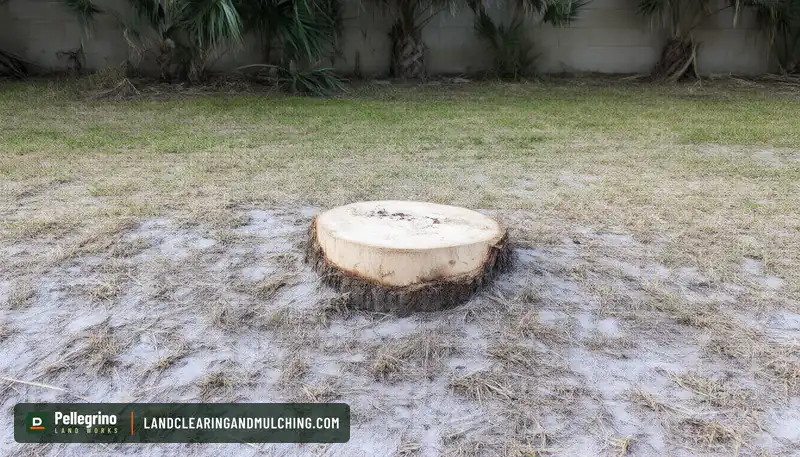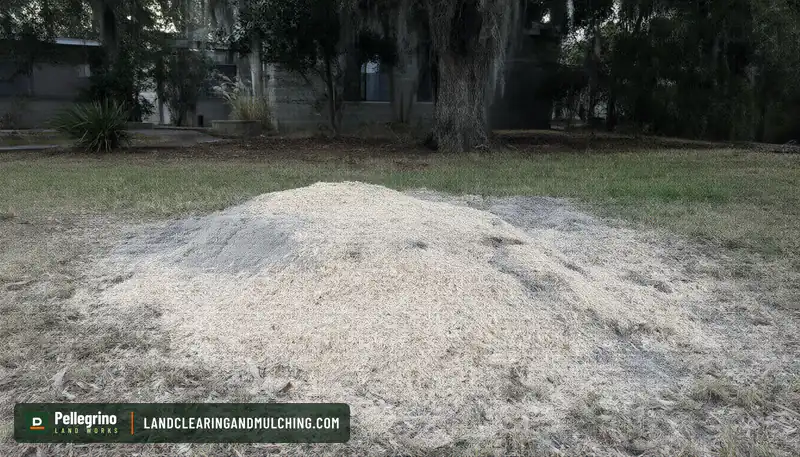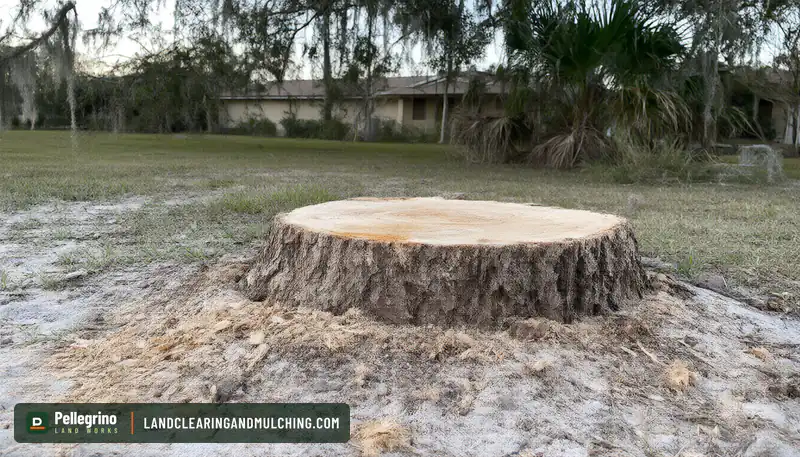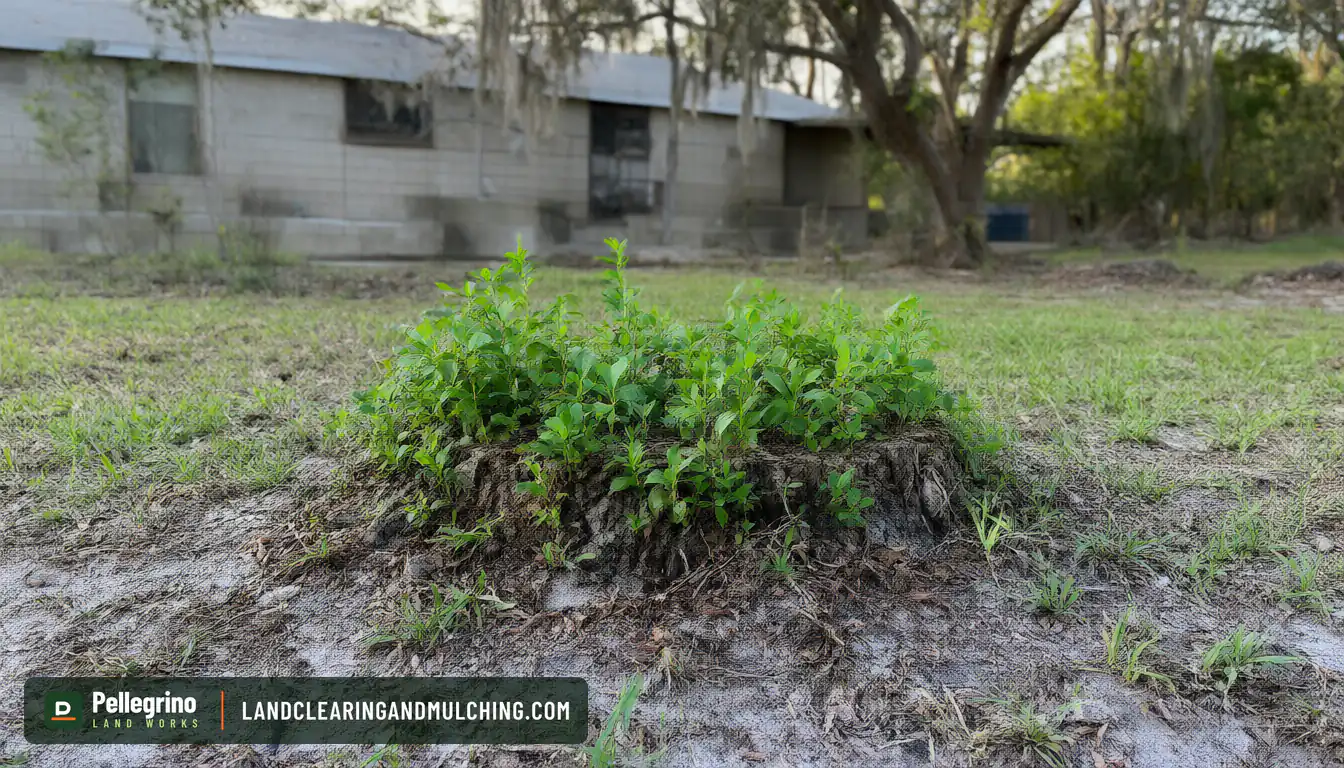
Do tree stumps grow back? Many do, but as a bush of sprouts, not as the old tree. Live oak, red maple and Brazilian pepper push up shoots from the stump and the roots, sometimes within weeks. A cabbage palm cannot come back, and a mature slash pine almost never does. The exception is a young pine cut high, which can sprout.
So the honest answer depends on what you cut. A pine stump in a Florida yard is a piece of wood waiting to rot. An oak stump is a root system with its head cut off, and it would like a new one. Our crews grind both kinds every week through our stump grinding service, and the species decides whether I tell you to watch the spot afterward.
Can a tree regrow from a stump?
A hardwood stump regrows shoots, not a trunk. What comes back is a cluster of stems from buds around the cut, fed by the roots.
Those buds sit in the bark for years, held back by the growing top. Take the top away and they wake up. The roots still hold the food the tree stored, and they spend it on new leaves.
It happens fast. The USDA Forest Service says red maple buds begin to extend 2 to 6 weeks after the stem is cut. That is quicker than most of us return a phone call. Red maple lined the cypress edges on the corridors I cleared, and the Forest Service says its stumps sprout vigorously.
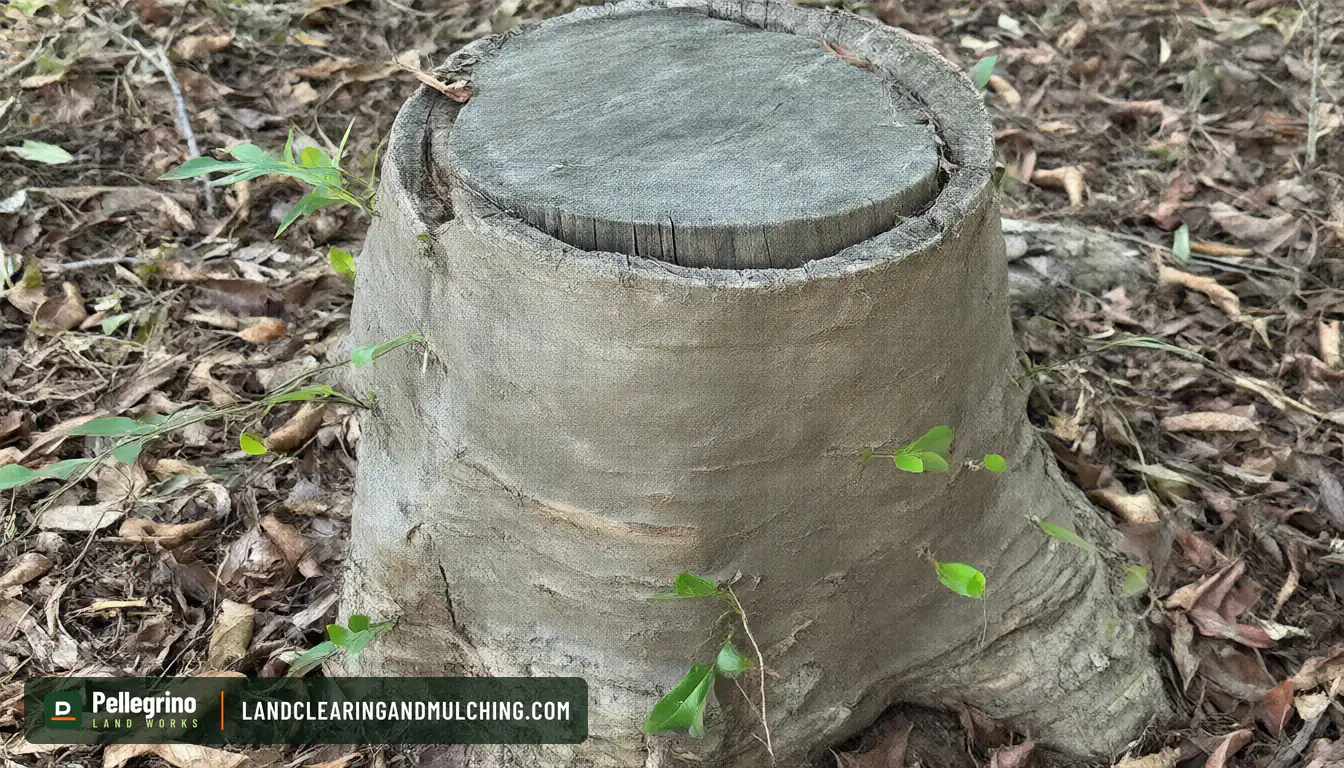
Size and age matter. The same Forest Service data shows red maple sprouts per stump climb with diameter up to 9 to 12 inches, then fall off on bigger trees. Stumps of younger trees also grow taller sprouts. A young stump is the dangerous one.
Which trees grow back from stumps in Florida
Broadleaf trees and invasive exotics come back. Pines and palms do not. Here is how the trees our crews cut most often behave, by species.
| Tree | Sprouts from the stump? | Sprouts from the roots? | After grinding | What I would do |
|---|---|---|---|---|
| Slash pine, mature | Rarely | Rarely | Nothing comes back | Grind it or let it rot |
| Slash pine, young sapling | Yes, if cut high | Not reported | Nothing comes back | Cut at 6 inches or lower |
| Live oak | Yes, from the root collar | Yes, from surface roots | Root sprouts possible | Grind, then watch the lawn a season |
| Red maple | Yes, within 2 to 6 weeks | Not reported | Rarely | Grind or treat the fresh cut |
| Brazilian pepper | Yes, many stems | Yes, from what is left | Often | Grind and treat the same hour |
| Cabbage palm | No | No | Nothing comes back | Grind the boot or leave it |
Two sources drive that table: the USDA Forest Service silvics manual for the native trees, and UF/IFAS for the exotics. “Not reported” means the silvics page does not discuss root sprouts for that tree. It does not mean never.
Do oak stumps grow back?
Yes. Oak stumps are the most stubborn native stumps in Florida, and live oak leads the pack.
The Forest Service silvics manual says live oak “sprouts abundantly from the root collar and roots.” When the top is killed, it adds, roots near the ground surface send up numerous sprouts. Then the line I quote to every customer with a big oak coming down: the capacity to sprout makes live oak difficult to kill by mechanical or chemical means.
That is the live oak in your front yard, the one with the Spanish moss. Cut it down and you have not ended the tree. You have changed its shape.
Palmetto and live oak share one belief: the top is optional.
Do pine tree stumps grow back?
No, a mature pine stump almost never grows back. The Forest Service says vegetative reproduction of slash pine rarely occurs naturally. A cut slash pine stays cut.
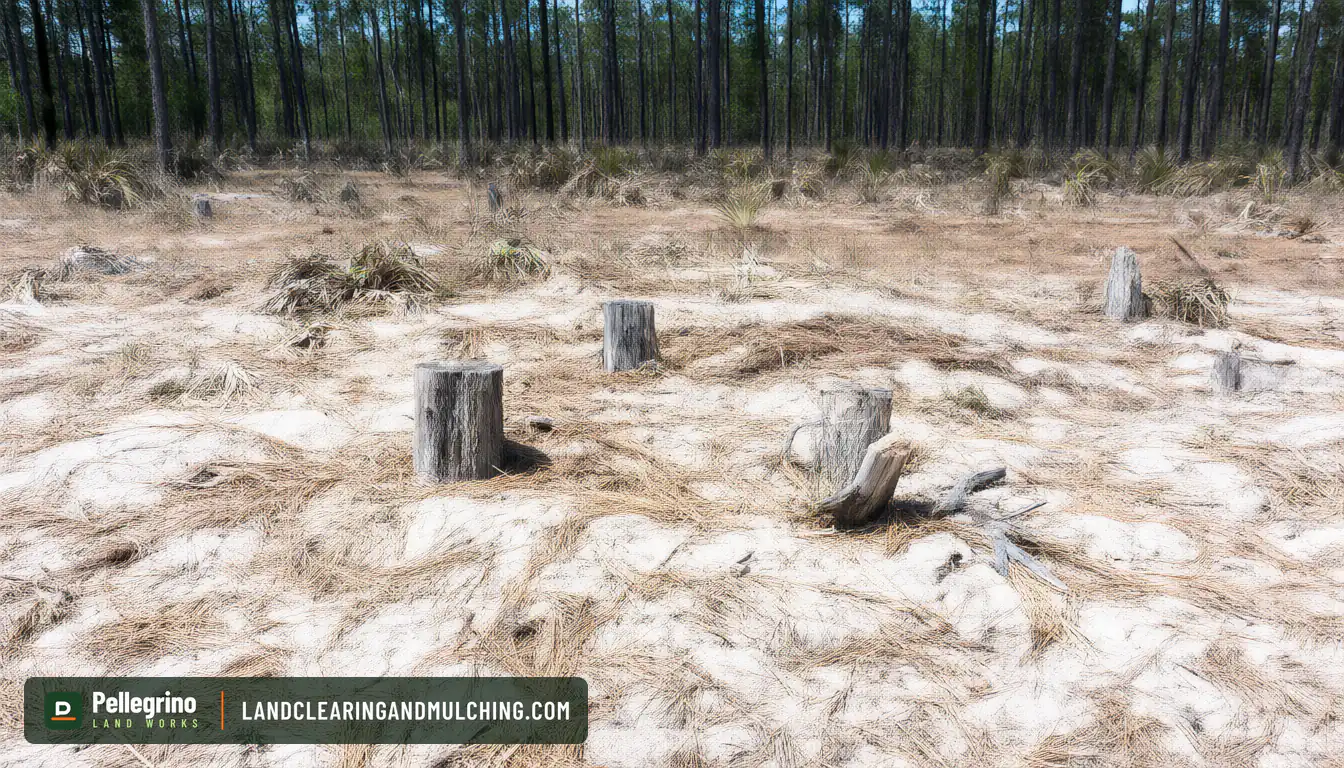
There is one footnote, and it matters if you are thinning a young stand. A Forest Service study cut 4 to 7-year-old slash and loblolly pines to test exactly this. To keep those young stumps from resprouting, it found, cut in late summer at 6 inches or less above the ground. Cut a sapling knee-high and it can push a new shoot.
On a flatwoods lot the stumps that come back are almost never the pines. They are the hardwoods and the pepper growing between them. Pine stumps in sugar sand mostly rot in a few years, and our tree clearing crews cut them low enough to mulch over or grind.
Will a palm tree stump grow back?
No. A cabbage palm grows from one bud at the top, and once that bud is gone, the palm is gone.
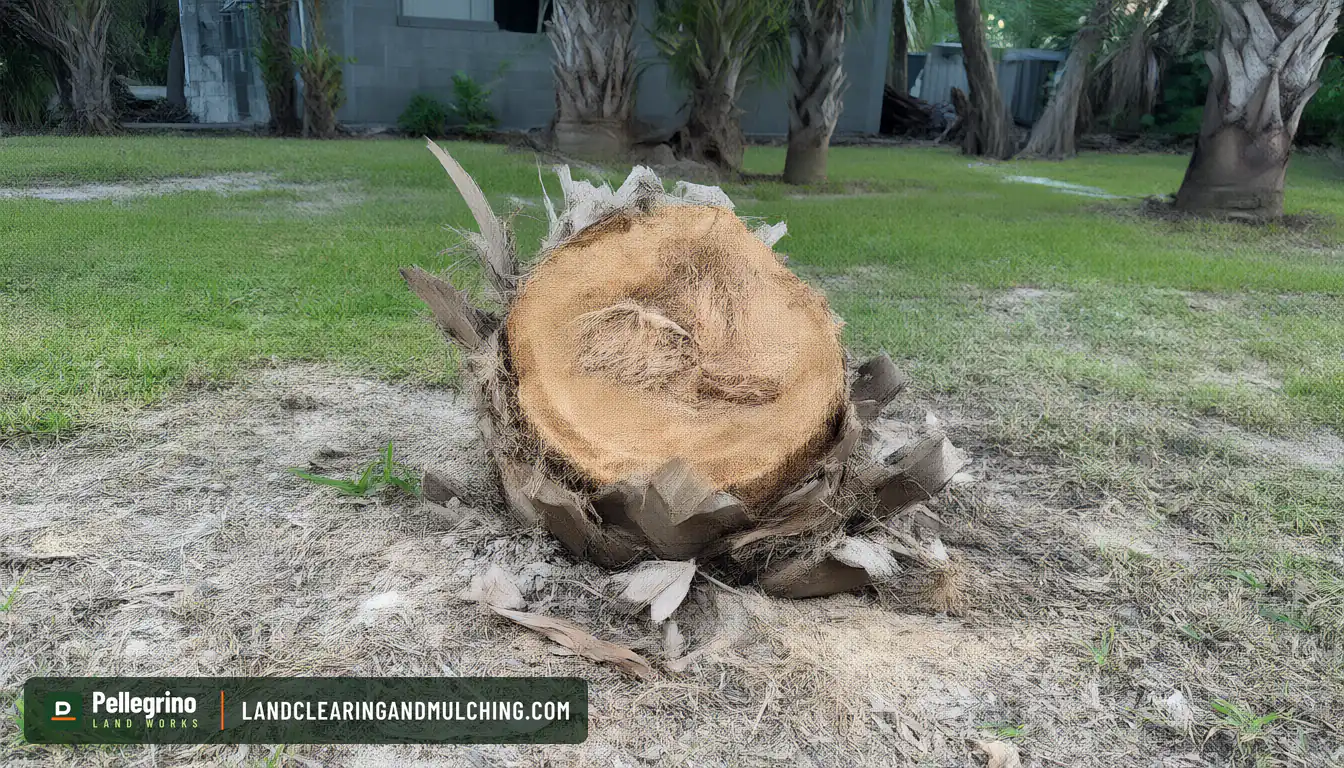
The Forest Service says the cabbage palmetto grows upward from a single terminal bud, and puts the rest plainly: “Removal of the bud kills the tree.” There are no spare buds in the trunk waiting for a chance. A palm cut at knee height is a fiber post. The fiber clogs a grinder wheel, which is why our crews cut palm boots low and grind them slow, but it will never leaf out.
Stump sprouts vs root suckers
Stump sprouts come out of the stump itself. Root suckers come up out of the lawn, along the old roots, sometimes yards from where the tree stood.
The difference tells you where the living tissue is. Sprouts around the bark ring mean the stump is alive. Shoots in a line across the grass mean a surface root is alive, even if the stump is ground or rotten. Live oak does both, which is what the Forest Service means by sprouting from the root collar and the roots.
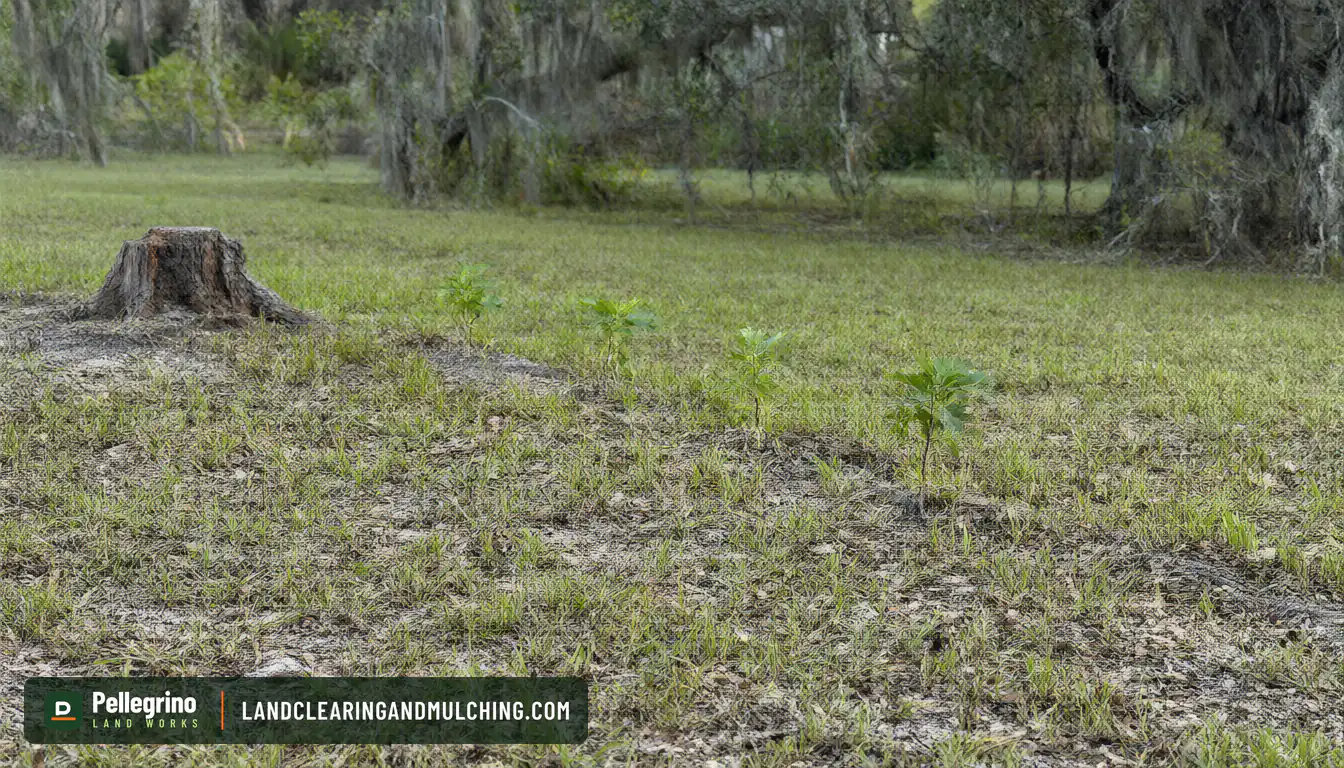
A word of caution on identification. A small oak in the lawn could also be an acorn that a squirrel planted. Pull one up. A sucker is tied to a thick root. A seedling has its own little root and comes out easy.
Will a tree stump regrow after grinding?
Most ground stumps stay dead, but not all of them. Grinding takes out the root collar, the main source of stump sprouts. It leaves the lateral roots in the ground.
UF/IFAS says invasive tree species vary in their ability to sprout after stump grinding, and some regrow from what is left of the stump or the lateral roots. Brazilian pepper is the one I worry about. Melaleuca and camphor too. On those, our crews grind and treat the roots in the same hour. Without that treatment, you get a hedge by fall.
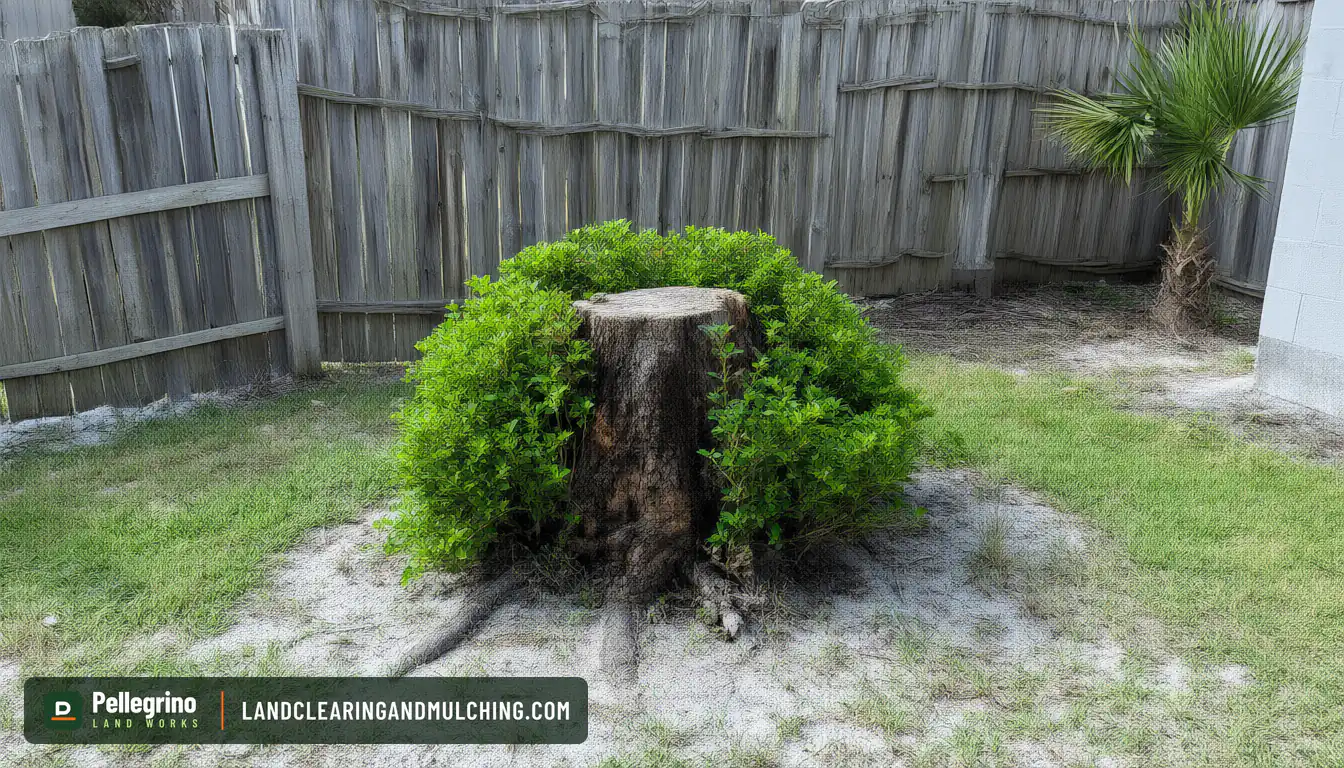
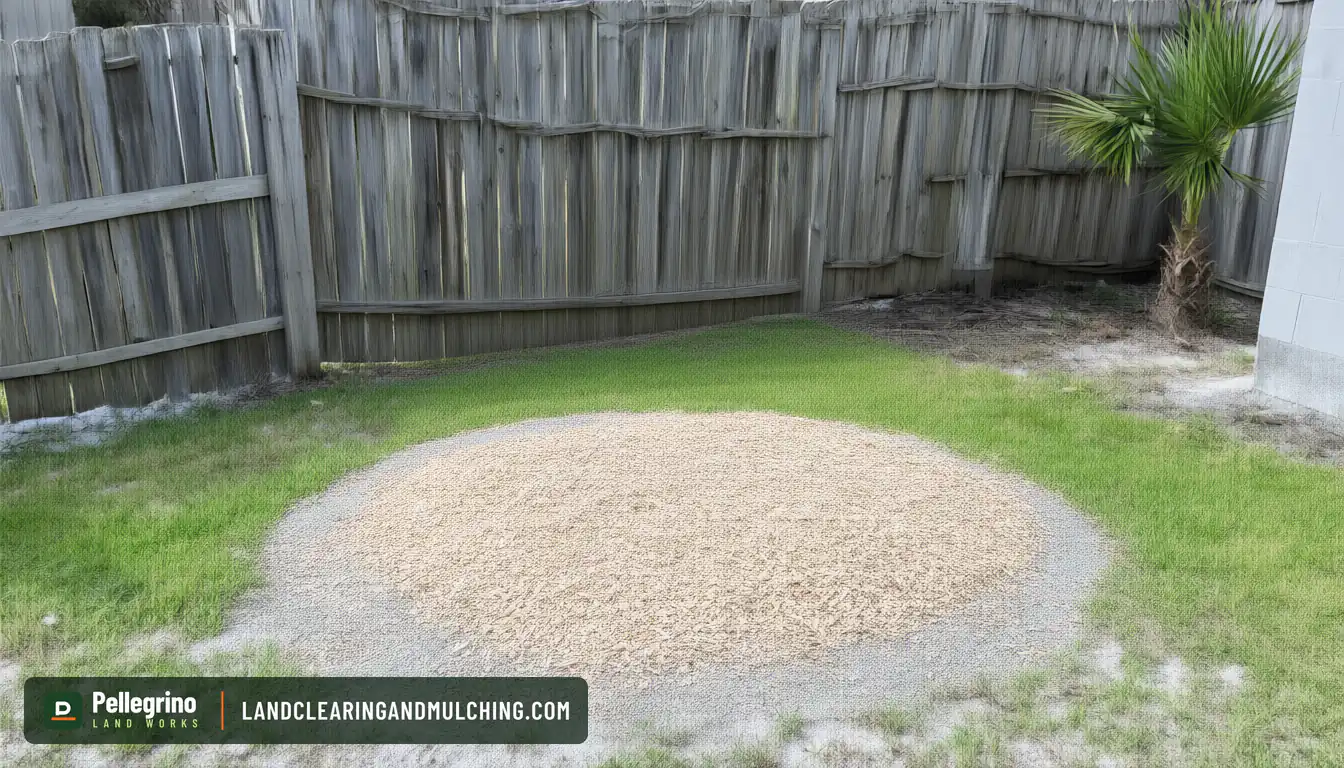
Pine leaves nothing to sprout. Oak is in the middle. Grinding removes the collar where most oak sprouts start, and in my experience a ground oak stump rarely comes back as a bush. A live oak’s surface roots can still send up shoots in the lawn, per the silvics manual, so watch the spot for one growing season and clip what shows. What happens to the chips, the hole and the rotting roots is its own story, told in what happens after stump grinding.
How to stop a stump from sprouting
Kill the roots or starve them. Grinding or a fresh-cut herbicide kills them fast. Repeated cutting starves them slowly.
- Name the tree. If it is a palm or a grown pine, stop here. It will not sprout.
- Cut the stump low and flat, so the herbicide pools and the grinder has less to chew.
- On oak, maple or pepper, treat the fresh cut with a labeled glyphosate or triclopyr product. Do it within minutes, because UF/IFAS warns a fresh stump seals itself very quickly. Read the label: the label is the law.
- Or grind the stump below grade, which removes the root collar.
- Check the stump and the lawn around it every few weeks from spring through fall.
- Clip each sprout flush with the bark or the root it came from. Do not leave stubs.
- On a stump you cut days ago, UF/IFAS says triclopyr ester on the bark, exposed roots and top gives more reliable control.
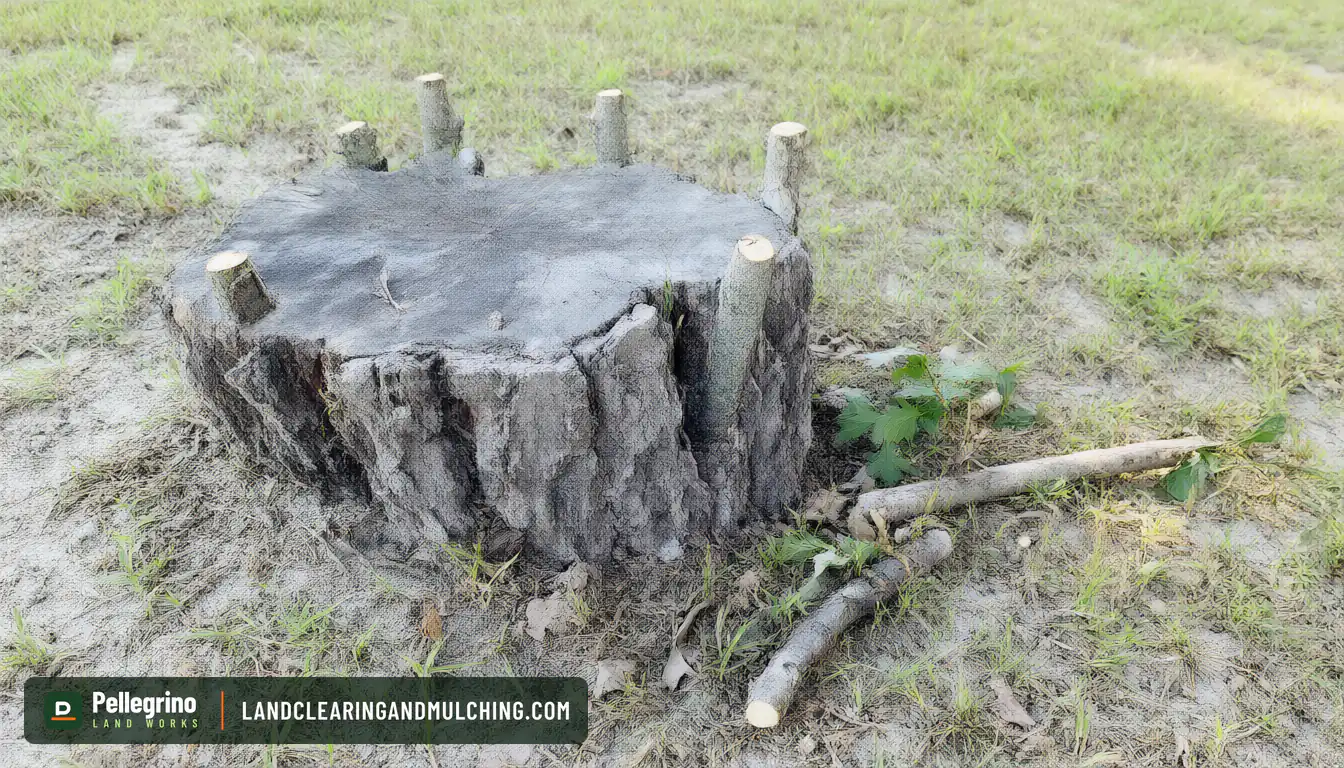
The herbicide step has more to it than fits here: strengths, timing, and what Epsom salt does not do. That is all in how to kill a tree stump. If you are still deciding between grinding, digging and chemicals, start with how to get rid of a tree stump.
Clipping alone can wear down a small maple, with patience. On live oak, the Forest Service warns, mechanical means alone have a hard time. I would not spend a summer clipping a live oak.
When to call a pro
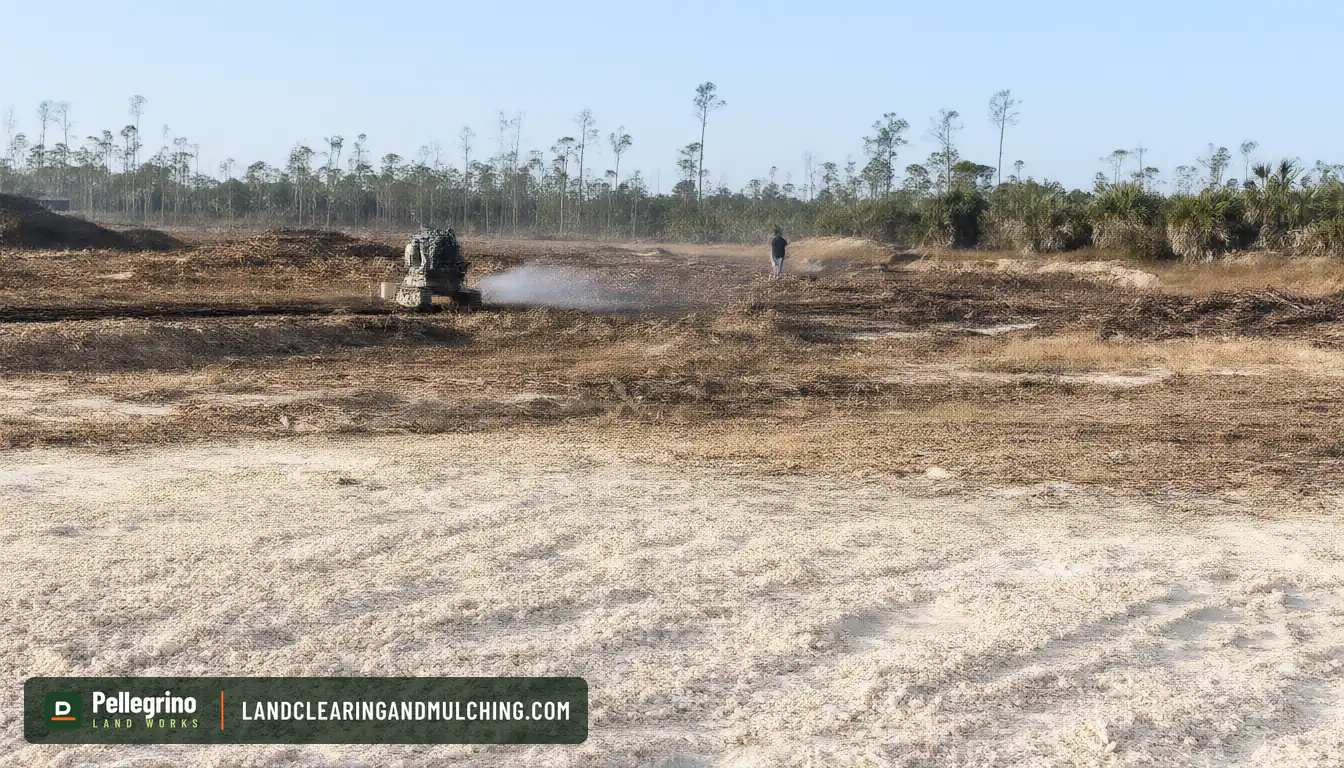
Call a crew when the stump is a sprouting hardwood you want gone for good, when there are more than a few, or when Brazilian pepper is in the mix. Pepper needs a grinder and herbicide in one visit, not a weekend and a pair of loppers.
Our stump grinding runs $4.50 per inch of diameter, $150 minimum per stump. Ten or more stumps on one lot go by the day. A pepper thicket is a clearing job with a surcharge: on 2.5 acres in Port Charlotte our crews spent 2 days, $6,700, including the cut-stump treatment. Pepper is why clearing in Southwest Florida costs more per acre than palmetto, and the full price list is on our land clearing cost page.
Tell us what the tree was, how wide the stump is at ground level, and whether it is already sprouting. Send the form or call (352) 619-3597. Brandi texts you a scheduling window within the hour.
Questions people ask
How long does it take for a stump to sprout?
A hardwood stump can sprout within weeks of the cut. The USDA Forest Service says red maple buds begin to extend 2 to 6 weeks after the stem is cut. In Florida's warm months, with rain most afternoons, expect green on an oak or maple stump before the first month is out.
Can a dead tree grow back from the stump?
A tree that died standing usually cannot, because its roots died with it. A tree whose top was killed is different. The USDA Forest Service notes that when a live oak is girdled or its top is killed, roots near the surface send up numerous sprouts. Green shoots mean the roots are still alive.
Can a tree grow back from roots alone?
Some can, and live oak is the Florida example. The USDA Forest Service says live oak sprouts from its roots as well as its root collar, and that roots near the surface send up numerous sprouts when the top is killed. Slash pine and cabbage palm cannot regrow from roots.
Will mowing kill stump sprouts?
Mowing keeps sprouts short, but it rarely kills the roots under them. The USDA Forest Service calls live oak difficult to kill by mechanical means, and a mower is a mechanical means. Grinding the stump, or a labeled herbicide on a fresh cut, ends it faster than a season of mowing.
Can you let a stump sprout grow into a new tree?
You can, but I would not count on it. A sprout grows from the edge of an old stump that is rotting under it, and big stumps sprout weakly. The Forest Service found red maple sprouting falls off on stumps past 9 to 12 inches. A nursery tree planted a few feet away is the surer start.
How we made this guide
Marc Pellegrino wrote this from 14+ years of clearing Florida lots and right-of-way corridors, and checked the facts against these sources:
- USDA Forest Service, Silvics of North America: Live Oak
- USDA Forest Service, Silvics of North America: Slash Pine
- USDA Forest Service, Silvics of North America: Red Maple
- USDA Forest Service, Silvics of North America: Cabbage Palmetto
- USDA Forest Service Research Note SO-320: Sprouting of Slash, Loblolly, and Shortleaf Pines Following a Simulated Precommercial Thinning (Campbell, 1985)
- UF/IFAS EDIS SS-AGR-127: Herbicides to Kill Invasive Trees in Home Landscapes and Surrounding Natural Areas