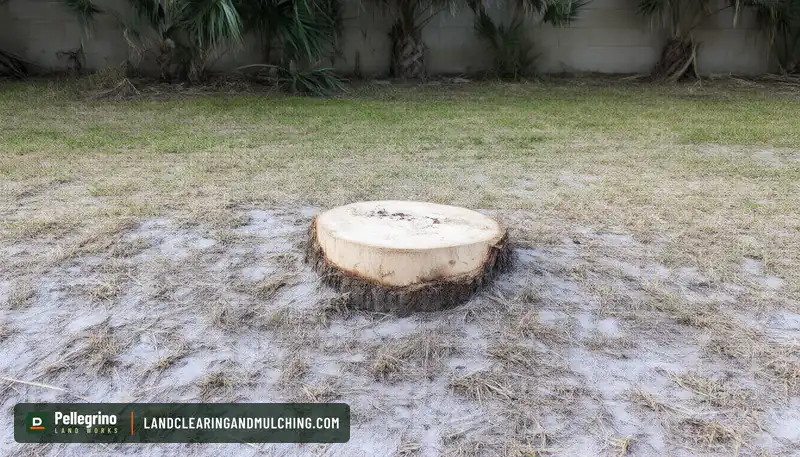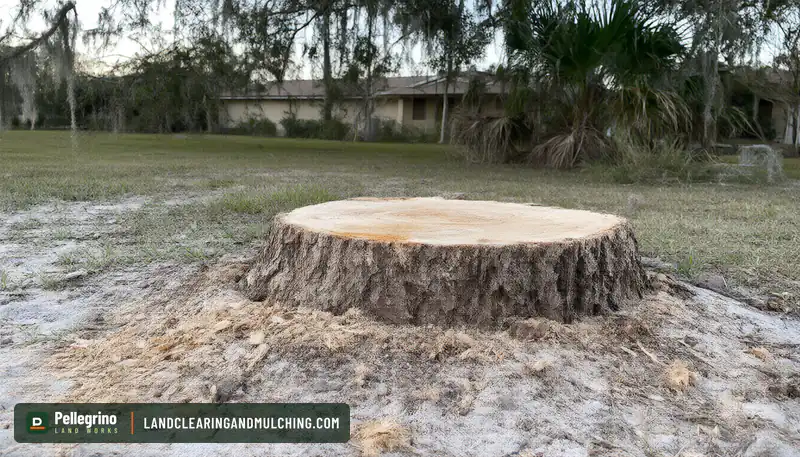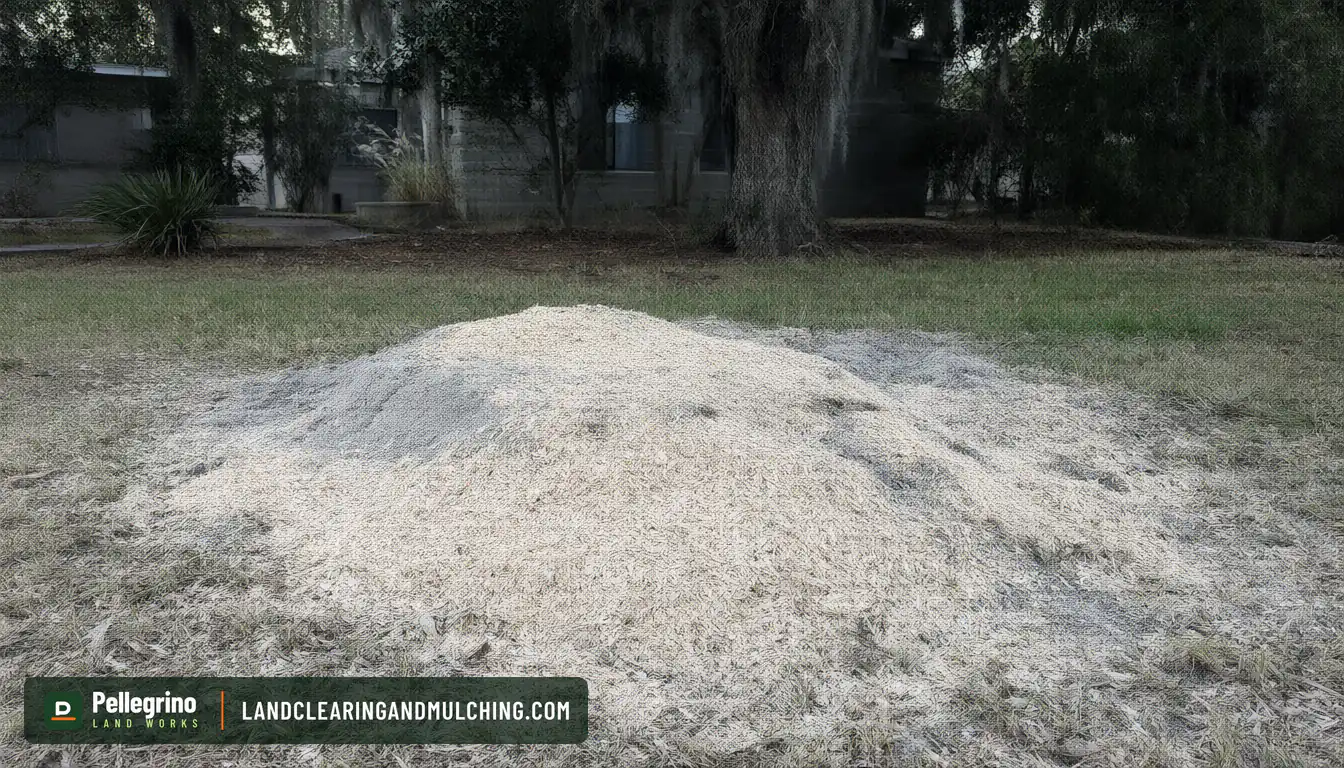
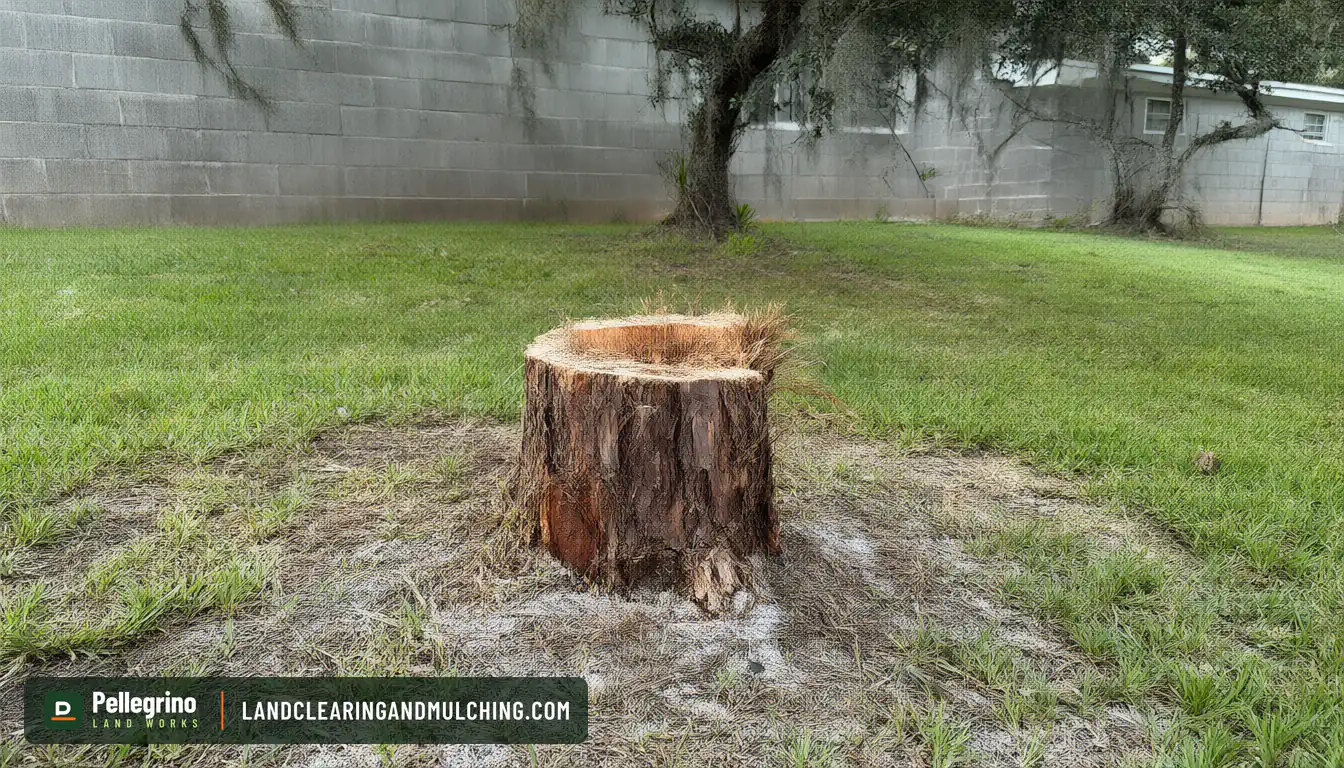
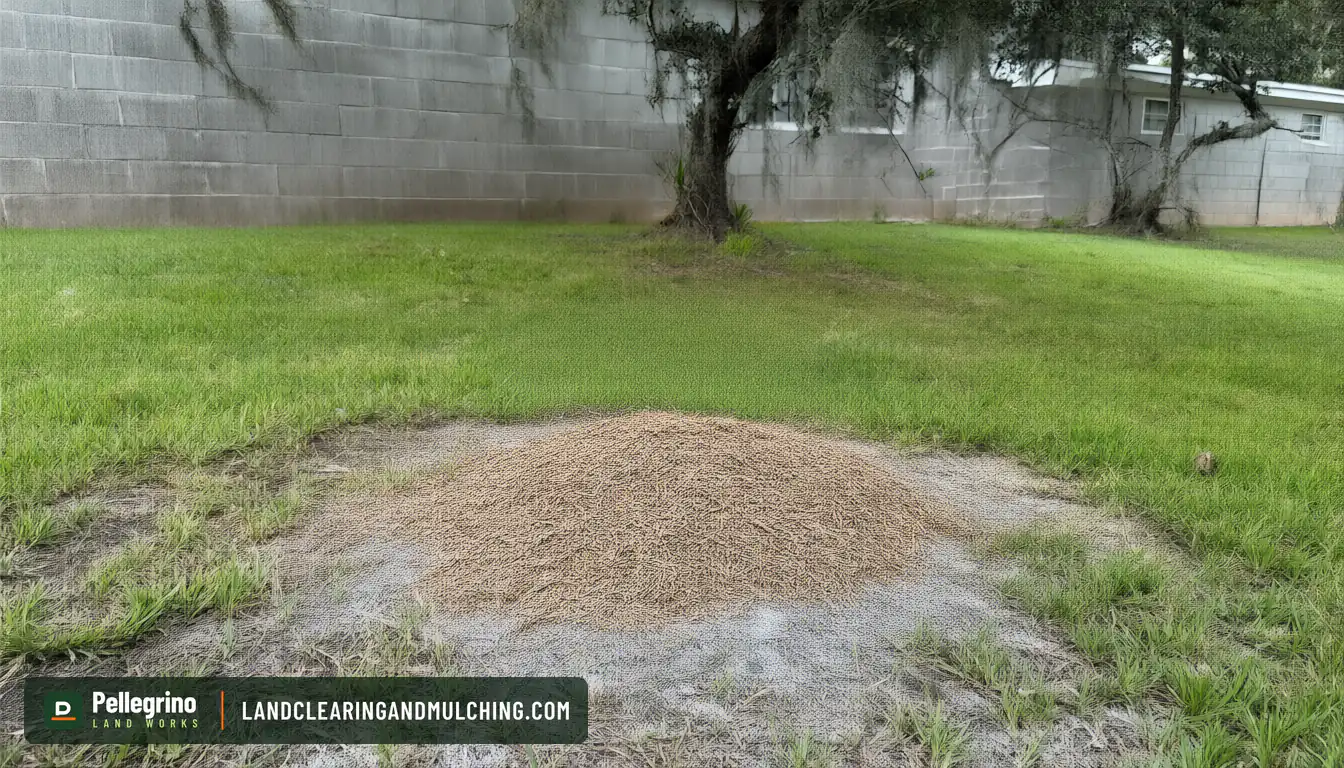
What is stump grinding? It is a carbide wheel chewing a tree stump into chips until the top sits 6 to 12 inches below ground. After it, three things are left: a pile of grindings, a shallow hole and roots that rot in place. The chips and the hole are yours to manage, unless a slab or septic field goes on top. Then the whole root ball comes out.
How deep does stump grinding go?
Most stump grinding goes 6 to 12 inches below grade, and the depth is set by what comes next. Six inches is enough for sod. Twelve suits a flower bed or a fence post. A footer or a slab needs the root ball out, and that is a different machine.
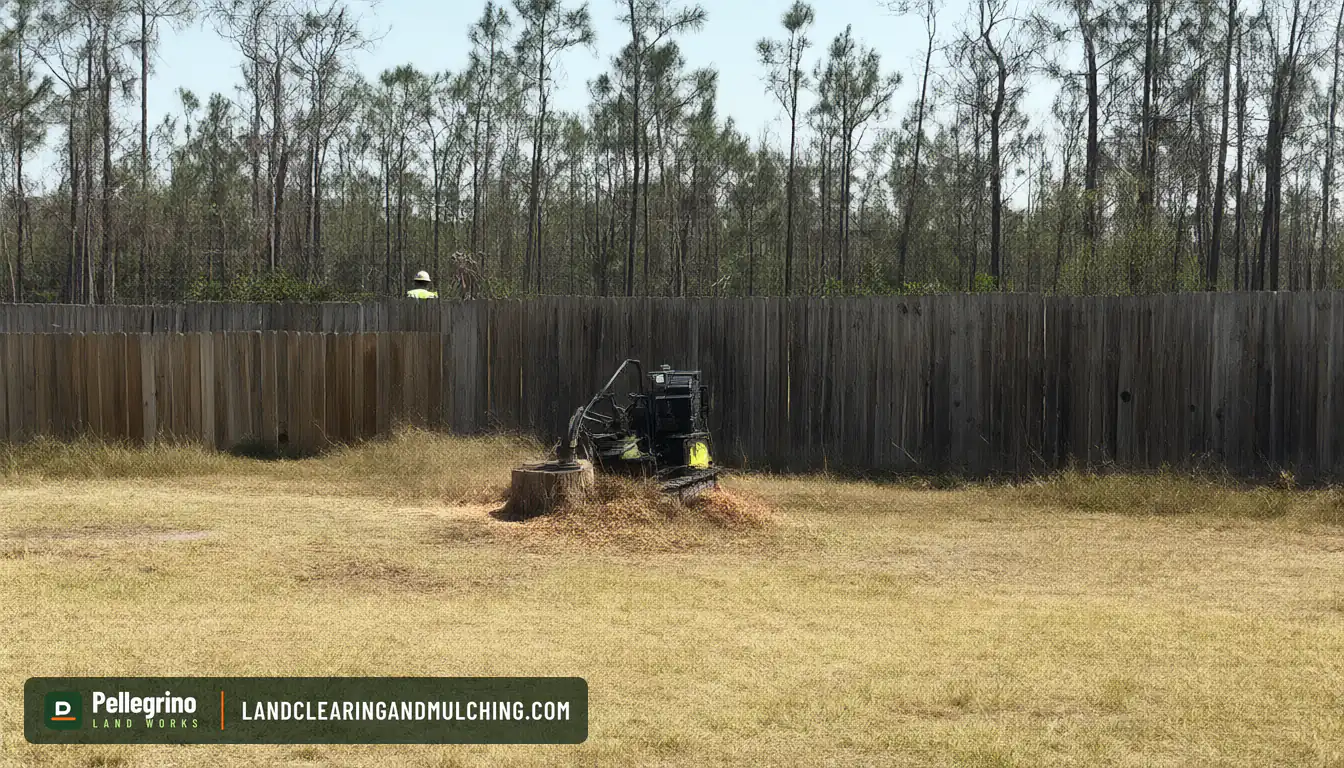
The grinder itself is simple. A heavy wheel set with carbide teeth spins on a hydraulic arm. The operator sweeps it side to side across the stump, a few inches at a time, and lowers it each pass. The wood leaves as chips. Nothing gets pulled out of the ground.
Our stump grinding service runs $4.50 per inch of diameter, measured at the widest point at ground level, with a $150 minimum per stump. Ten or more stumps on one lot go by the day.
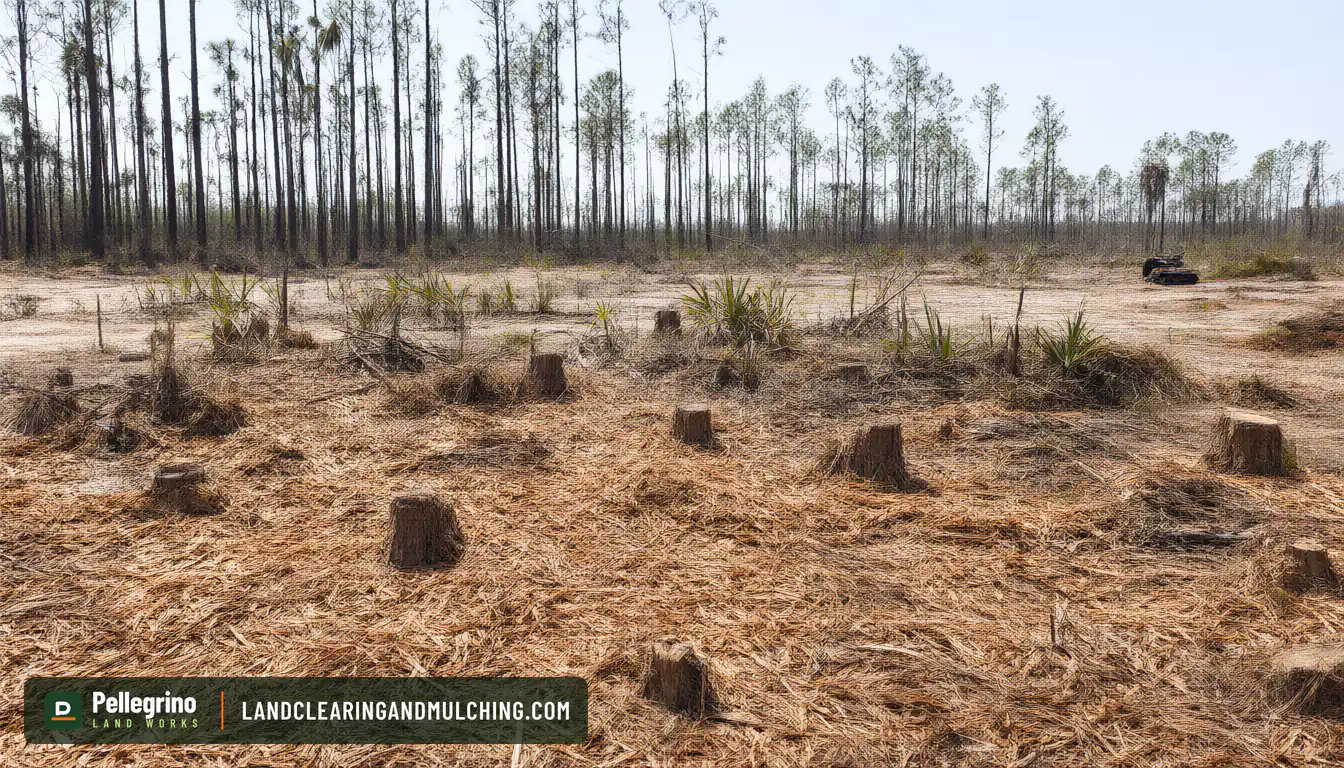
Florida soil decides how deep the wheel can go. In sugar sand it goes as deep as you ask. On flatwoods hardpan, 18 to 30 inches down, the wheel stops at the pan, which is fine, because the wood is gone well above it. In Collier and Lee the caprock sits 20 to 40 inches under the sand. On our jobs in Southwest Florida we grind to the rock and stop, and we budget a tooth change per lot in Golden Gate Estates.
What is left after stump grinding
Three things are left: grindings, a hole and the roots. Each one has its own timeline.
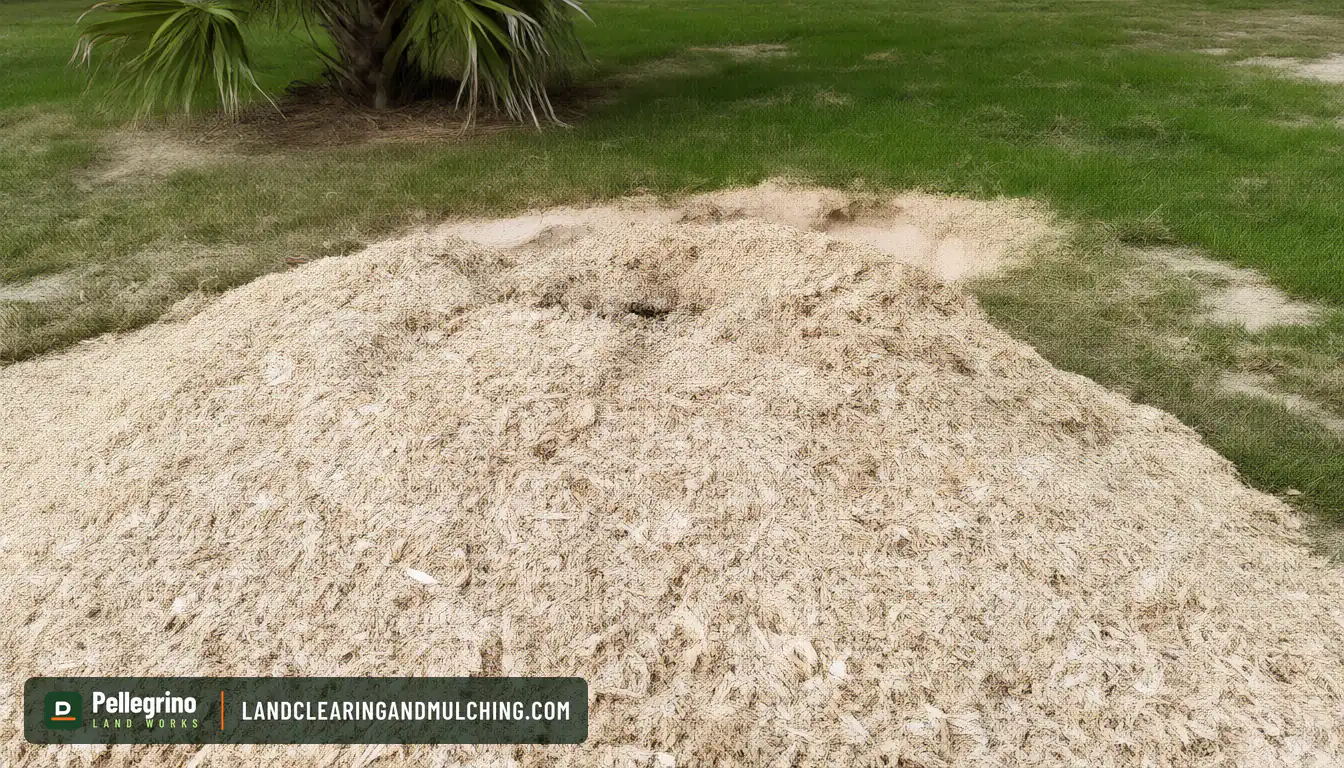
The grindings are wood chips mixed with sand and sawdust. Expect about three times the volume of the stump you saw. A 30-inch oak makes a pile that surprises people, the way a sleeping bag never fits back in its sack.
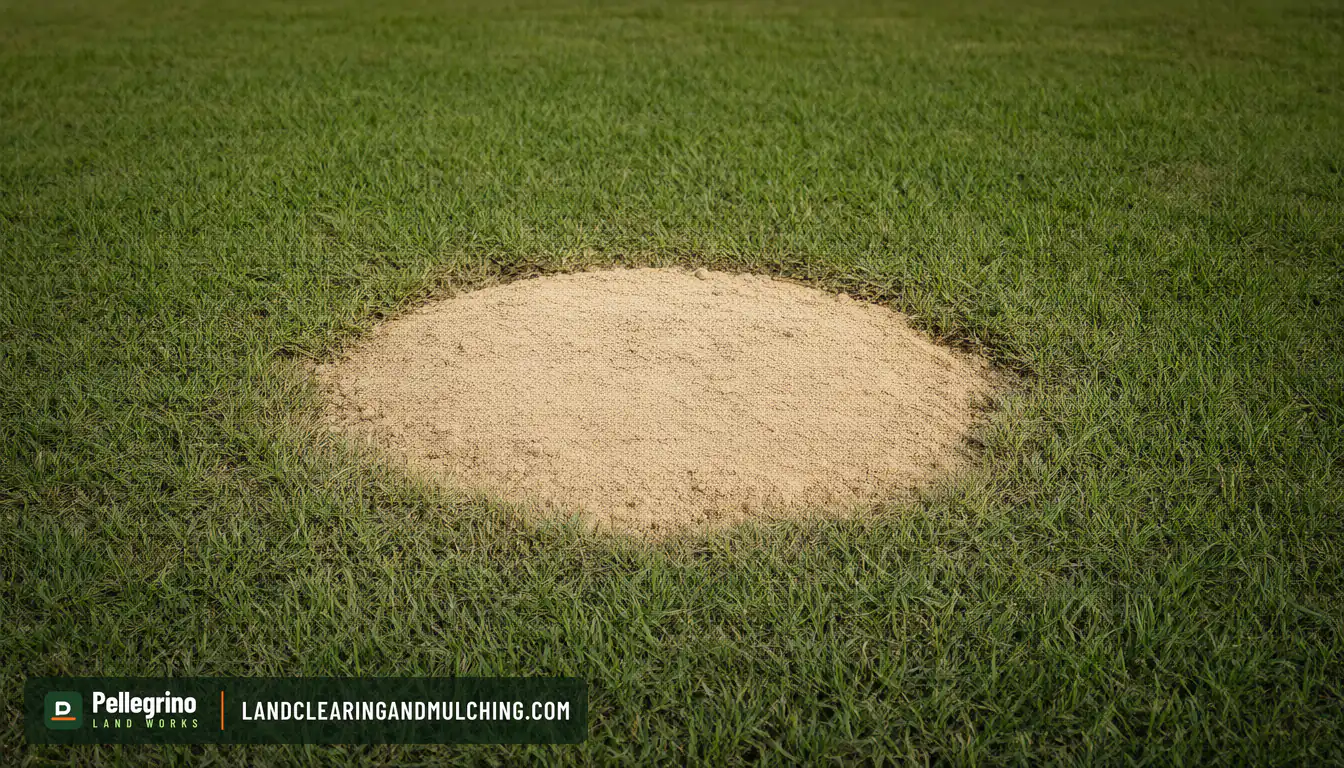
The hole is a shallow bowl, as wide as the stump plus its flare. It holds the chips at first. As they rot, it sinks.
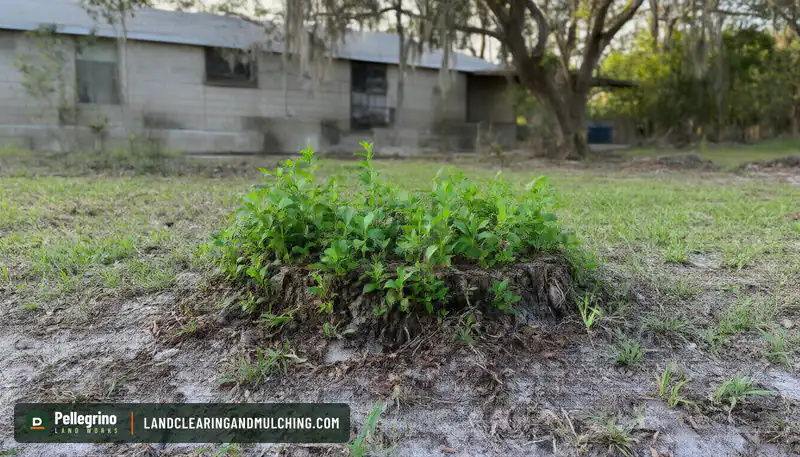
The roots stay. Lateral roots of a slash pine run well past the stump, and live oak roots run 30 feet. Once the stump is ground, pine roots die and rot in place. Live oak, pepper, camphor and a few others can still send up shoots from the roots, and that is a separate story, covered in do tree stumps grow back.
What to do with stump grindings
You have four choices for the grindings: rake them back, spread them as mulch, haul them, or dig them out of a lawn spot. Which one depends on what grows there next.
| Option | Best when | Cost | The catch |
|---|---|---|---|
| Rake back and mound in the hole | The spot will be a bed or stay rough | Included with grinding | Mound settles over a season; no sod on it |
| Spread as mulch | You have beds or paths to cover | Your labor | Keep it thin near the house and off stems |
| Haul away | The yard is finished and the chips have no place | $700 to 1,300 per 10-yard load | Only pays when there are many stumps |
| Dig out the top, add fill dirt | Grass or sod goes on top | Fill dirt plus labor | A shovel and wheelbarrow job by hand |
Raking the grindings back into the hole is our default. The crew mounds them about 4 inches high, and in our Florida heat and rain they settle flat in a season. That is fine for a bed or a mowed edge. It is not fine for a lawn.
As mulch, grindings work on top of the soil. Mixed into it, they do harm. Oregon State Extension notes that wood chips mixed into soil tend to tie up nitrogen, and fine particles like sawdust more so. Grindings carry a lot of sawdust. So spread them, do not till them in.
Near the house, keep the layer thin. UF/IFAS recommends under 2 inches of mulch within 12 inches of the foundation, with about a 6-inch inspection space so you can see termite tubes. Our crews keep grindings 10 feet off a slab and never pile them against a wall.
Haul-off makes sense on a cleared lot with a lot of stumps. After Ian we hauled 9 loads off one acre in Punta Gorda, $8,100. Grindings ride by the same 10-yard load. Prices for every line are on our land clearing cost page.
What to do after stump grinding: filling the hole
Pull the loose chips, fill the hole with sand or fill dirt in layers, and leave it mounded so it can settle. That is the whole job for a lawn spot.
- Shovel the grindings out into a wheelbarrow. Go down until you hit sand with only a few chips in it.
- Spread the chips you pulled on beds or paths, thin, or bag them for yard waste.
- Cut any root ends that stick up above the bottom of the hole with loppers or a saw.
- Fill with clean fill dirt or sand in layers of a few inches. Tamp each layer with your boot or a hand tamper.
- Soak it with the hose so the fill drops, then top it up.
- Leave the finished fill an inch or two above grade. It will sink to level.
In Florida a hole in the lawn is a pond that is waiting for June. If the spot sits low after the first summer storm, add more fill and tamp again. A whole yard with low spots after a clearing is a grading job, and how to level a yard covers that.
What happens to roots after stump grinding?
The roots die and rot in the ground, and that takes years. Slash pine roots in Florida sand are mostly gone in two to five years. Live oak is dense and takes much longer.
While they rot, two things show up. The first is small dips in the lawn along the old lateral roots, an inch or so at a time. Top them with sand when you see them. The second is mushrooms. UC IPM says lawn mushrooms often grow from dead tree roots and buried wood, and they are usually harmless to grass. They mean the fungus is doing the job you are paying nobody for.
Surface roots that stick up after grinding are a mower problem, not a tree problem. Our crews grind them on the same visit by the hour. A root you can see from the porch is a root that will find the mower blade.
How soon after stump grinding can you plant grass?
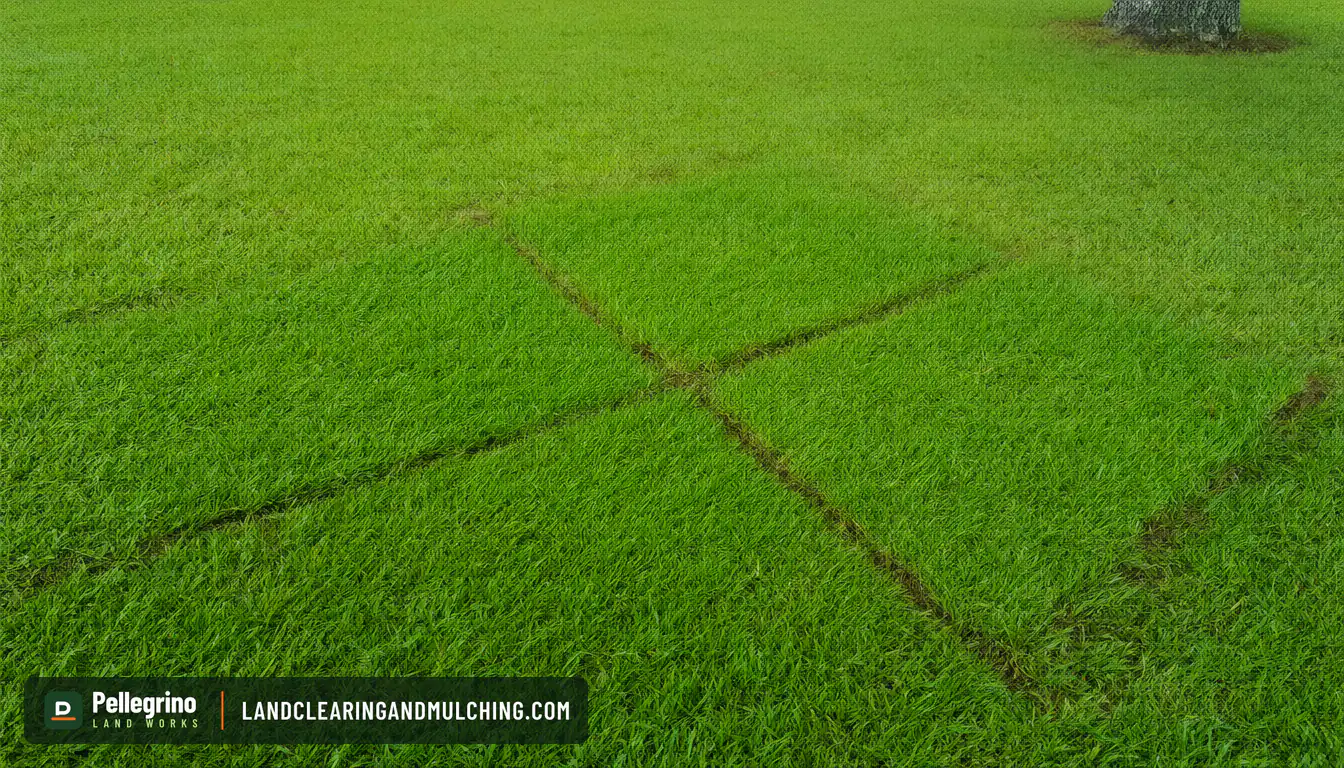
You can lay sod as soon as the chips are out, the hole is filled with dirt, and the fill has had one good soaking to settle. Sod over grindings sinks, so the dirt comes first.
Most Florida lawns are St. Augustinegrass. UF/IFAS Florida-Friendly Landscaping says it is easy to establish from sod or plugs. It is not a seed grass, so plan on a few pieces of sod from the garden center.
- Rake the filled spot level with the lawn around it, a half inch high at most.
- Cut the sod pieces to fit tight against the old grass edge. No gaps.
- Press each piece down with your foot so the roots touch the soil.
- Water every day for the first 7 to 10 days, unless rain gives you 3/4 inch that day.
- Then water every other day for two weeks, then once a week when rain falls short.
That watering schedule comes from UF/IFAS Extension in Broward County, which puts sod establishment at about one month and plugs at about three. If the patch sinks after a month, lift the sod, add sand under it and lay it back.
Can you plant a tree where a stump was ground?
Yes, but I would plant it a few feet off the old center and not on top of the stump. The ground right over the stump is chips and rotting wood for years. The old roots also run where you want the new ones.
- Call 811 two full business days before you dig, as Sunshine 811 requires of anyone digging in Florida.
- Pick a spot off the old stump where a probe or shovel goes down without hitting wood.
- Dig the hole about 2 times as wide as the root ball and about 90 percent as deep, per UF/IFAS Extension.
- Pull soil off the top of the root ball until you see the first root, the root flare.
- Set the tree so that flare sits at or just above the ground. Backfill with the soil you dug, not with grindings.
- Water it in, then mulch 3 inches deep and keep the mulch 3 inches off the trunk.
UF/IFAS puts tree establishment at 6 to 12 months for every inch of trunk diameter. A 2-inch live oak needs one to two years of care before it fends for itself. Plant in the dry season and you will be hauling the hose until June does it for you.
Stump grinding vs stump removal
Grinding leaves the roots and costs less. Removal pulls the stump and roots with a dozer and a root rake, and leaves a bigger hole to fill.
Grind when the spot stays a yard, a bed or a fence line. Pull it when a house pad, a driveway or a septic field is going on top, because buried wood under a slab rots and leaves a void. Root rake work runs $170 an hour with operator and belongs to site prep and dirt work. On a lot where a stand of pine comes down first, the stumps are priced with the tree clearing on one sheet. For every method side by side, including chemicals and burning, see how to get rid of a tree stump.
When to call a pro
A rented grinder handles a 12-inch pine in sugar sand in an afternoon. It will not handle a 40-inch live oak, a cabbage palm boot that clogs the wheel, or caprock that eats teeth. Three stumps or more, the rental math usually loses.
Call a crew when the stump is near a wall, a fence or a buried line, when there are more than a few, or when you want the chips gone and the hole filled the same day. Our crews grind, rake back or haul, and tell you which spot needs dirt before sod.
Count your stumps, measure the widest one at ground level, and tell us what goes there next. Send the form or call (352) 619-3597. Brandi texts you a scheduling window within the hour.
Questions people ask
Can you use stump grindings as mulch?
Yes, as a thin layer on top of beds or paths, not mixed into the soil. Oregon State Extension notes that wood chips mixed into soil, and fine particles like sawdust, tend to tie up nitrogen. Grindings are part sawdust and part sand, so spread them 2 to 3 inches thick and keep them off plant stems.
Will stump grindings attract termites?
Termites can live in wood mulch, but UF/IFAS says their survival there is poor and the bigger risk is a colony already on your lot. Keep it thin near the house: UF/IFAS advises under 2 inches of mulch within 12 inches of the foundation, with an inspection gap. Our crews keep grindings 10 feet off a slab.
How long does the ground keep settling after stump grinding?
Expect one season for the hole and a few years for small dips. The chips break down first, then the old lateral roots rot and leave voids. On our jobs a 4-inch mound of grindings settles flat in about a season. Top up low spots with sand or fill dirt when they show, and tamp them.
Do I need to call 811 before stump grinding?
Call before any digging around the old stump, including a planting hole. Sunshine 811 says anyone who is digging in Florida must notify it at least two full business days ahead, not counting the day you call, weekends or holidays. A grinder works 6 to 12 inches into the ground, so ask your crew about the ticket.
Why are mushrooms growing where my stump was ground?
The fungus is eating the buried wood. UC IPM says lawn mushrooms often grow from dead tree roots and other buried organic matter, and they are usually harmless to grass. Picking them does not kill the fungus underground. They fade when the roots are gone, or sooner if you dig the wood out.
How we made this guide
Marc Pellegrino wrote this from 14+ years of clearing Florida lots and right-of-way corridors, and checked the facts against these sources:
- UF/IFAS EDIS: The Facts About Termites and Mulch (ENY-832/IN651)
- UF/IFAS Extension Broward County: Planting Recommendations for Trees and Shrubs (2025)
- UF/IFAS Florida-Friendly Landscaping: St. Augustinegrass
- Oregon State University Extension: Wood chips for mulch?
- UC IPM (University of California): Mushrooms in Lawns
- Sunshine 811: Frequently Asked Questions