To kill a tree stump, paint a systemic herbicide such as glyphosate or triclopyr on the living ring just inside the bark within five minutes of the cut. That kills the roots and stops the sprouts. It does not make the wood go away. Potassium nitrate stump removers only speed the rot of a stump that is already dead, and Epsom salt has no research behind it.
Those are two different jobs, and most of the confusion starts there. Killing a stump means the roots stop pushing up green shoots. Getting rid of it means the wood leaves your yard. One bottle rarely does both. If you want the stump gone this week, our crews run stump grinding across Florida at $4.50 per inch of diameter, $150 minimum per stump. If you want to do it yourself, read on. The chemistry is cheap. The timing is everything.
Why Florida stumps refuse to die
A stump stays alive because the roots are still full of stored food and dormant buds. Cut the top off and the buds wake up.
Live oak is the champion. The USDA Forest Service silvics manual says live oak “sprouts abundantly from the root collar and roots,” and that when the top is killed, surface roots “send up numerous sprouts.” The same page adds the line every Florida homeowner learns the hard way: the capacity to sprout makes live oak difficult to kill by mechanical or chemical means.
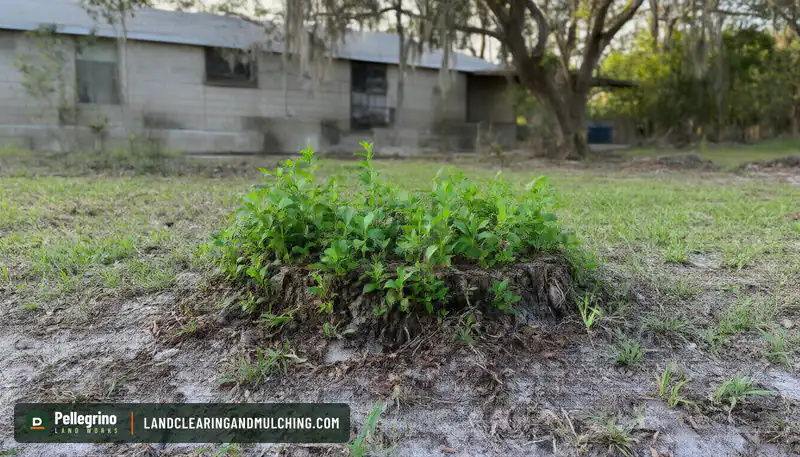
Brazilian pepper is worse. Florida lists it as a noxious weed, and UF/IFAS says to cut it low and treat the stump within five minutes. Brazilian pepper treats a chainsaw as a pruning suggestion. Skip the herbicide and you get a dozen stems where one trunk stood.
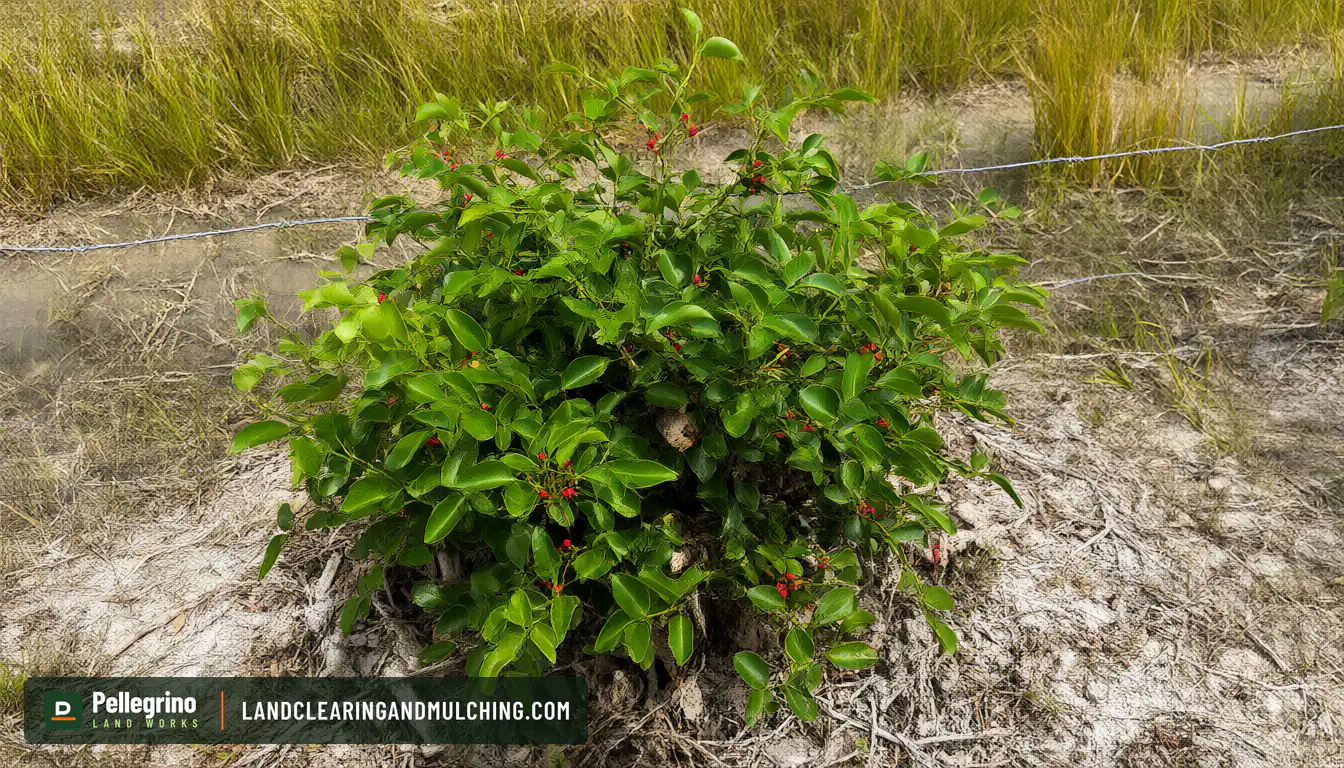
Slash pine is the easy one. Pines rarely regrow from a stump, so a pine stump mostly needs rotting or grinding, not killing. For the full list of which trees come back, see our post on whether tree stumps grow back.
How to poison a tree stump with herbicide
The only reliable way to kill a stump is a systemic herbicide on the cambium of a fresh cut. Systemic means the plant moves it down into the roots for you. UF/IFAS puts it plainly: apply the herbicide to the stump as quickly as possible after cutting, because a fresh stump “will seal itself very quickly.”
- Read the label first. Confirm it lists cut-stump use and wear the protective gear it names. The label is the law; using a product in a way the label does not allow is illegal.
- Cut the trunk as close to the ground and as level as you can. A flat top holds the liquid.
- Brush off the sawdust. Sawdust soaks up herbicide that should be going into the wood.
- Within five minutes, wet the ring of living tissue just inside the bark. On a big stump that outer band is all that matters. On a small stump you can treat the whole top.
- Use the right strength. For glyphosate, UF/IFAS calls for a product with 41 percent active ingredient or higher. Ready-to-use spray bottles are too weak.
- Missed the window? Use a triclopyr ester product and treat the bark, the exposed roots and the top. UF/IFAS notes the 9.81 percent ready-to-use triclopyr ester is applied undiluted for cut stumps.
- Check it a month later. A sprout means a stretch of ring went untreated. Cut the sprout and paint the new cut.
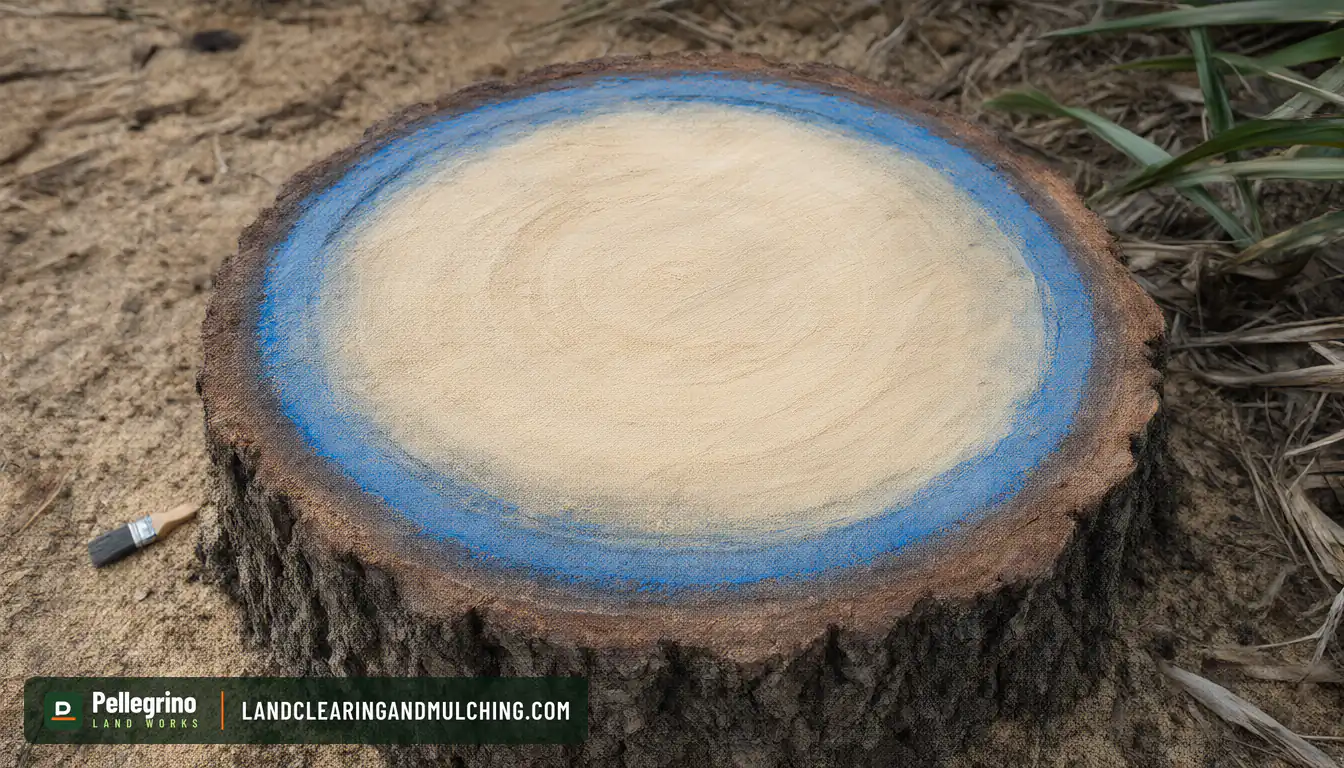
Glyphosate and triclopyr are the two active ingredients you will find at the farm store. Either works on most Florida hardwoods if it goes on fresh. A tip from the corridor years: add marker dye so you can see which stumps you already did. On the right-of-way we cut and treated in the same pass, saw first, sprayer right behind. Nobody walked back the next day, because the next day was too late.
Herbicide does one thing. Iowa State University Extension is blunt about it: herbicides can prevent resprouting, but they are not beneficial for promoting decay of the stump. The dead stump still sits there and rots on its own clock.
Does potassium nitrate stump remover work?
Potassium nitrate stump remover works as a rot accelerator on a dead stump, not as a killer of a live one. Iowa State Extension notes these products tend to be a form of fertilizer, often potassium or sodium nitrate. The nitrogen feeds the fungi that eat the wood.
That is why the bags want an old stump. Read a few and the same rule shows up. Bonide’s Stump-Out, which uses sodium metabisulfite instead of potassium nitrate, says it works only on stumps seasoned 12 to 18 months and tells you to kill a fresh one with a stump killer first. Granule labels typically call for holes in the top, water, and a wait of four to six weeks before the wood is soft.
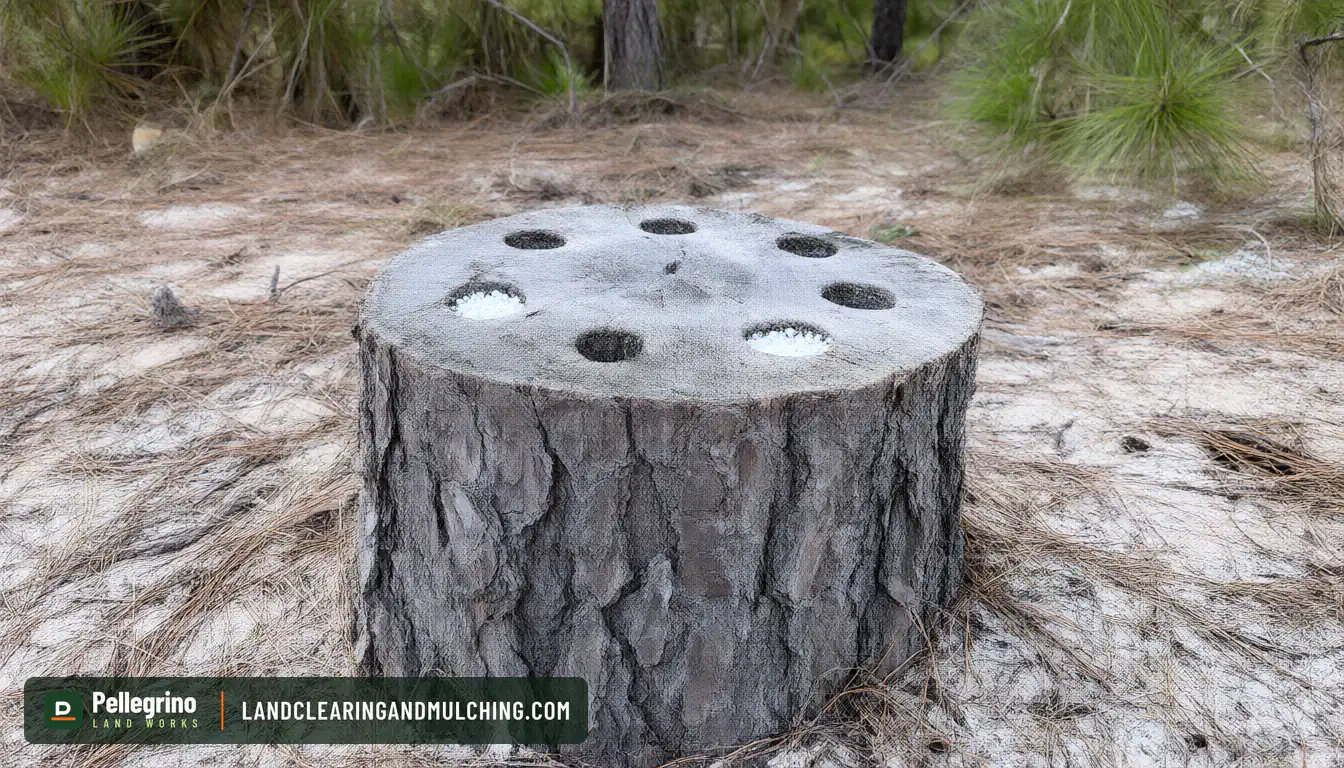
How to use a stump remover on a dead stump
- Confirm the stump is dead. No green shoots, bark loose, wood gray.
- Drill one-inch holes at least ten inches deep, no more than 12 inches apart. That spacing comes from Iowa State Extension.
- Fill the holes with the product at the rate on the label, then add water.
- Keep the stump damp. Fungi do the real work, and they need moisture.
- Test the wood with an axe or a mattock after the label’s waiting period. Chop out what is soft.
How long does stump remover take?
Longer than the box suggests. Iowa State Extension says the same drill-and-fertilize method usually leaves a stump soft enough for a spade in one to three years. Four to six weeks gets you a spongy top, not a hole in the ground.
One safety point. NOAA’s chemical database lists potassium nitrate as noncombustible but able to accelerate the burning of combustible materials. Some labels pair the granules with kerosene and a match afterward. In a Florida subdivision that is a different conversation with different rules, and I cover it in how to burn a tree stump. Store the bag dry, away from gas cans and the mower.
Does Epsom salt kill tree stumps?
There is no university research showing that Epsom salt kills a stump. An Ask Extension expert went looking and wrote, “I could find no university based research that would support the claim that Epsom salts are effective.” Epsom salt is magnesium and sulfate, nothing more.
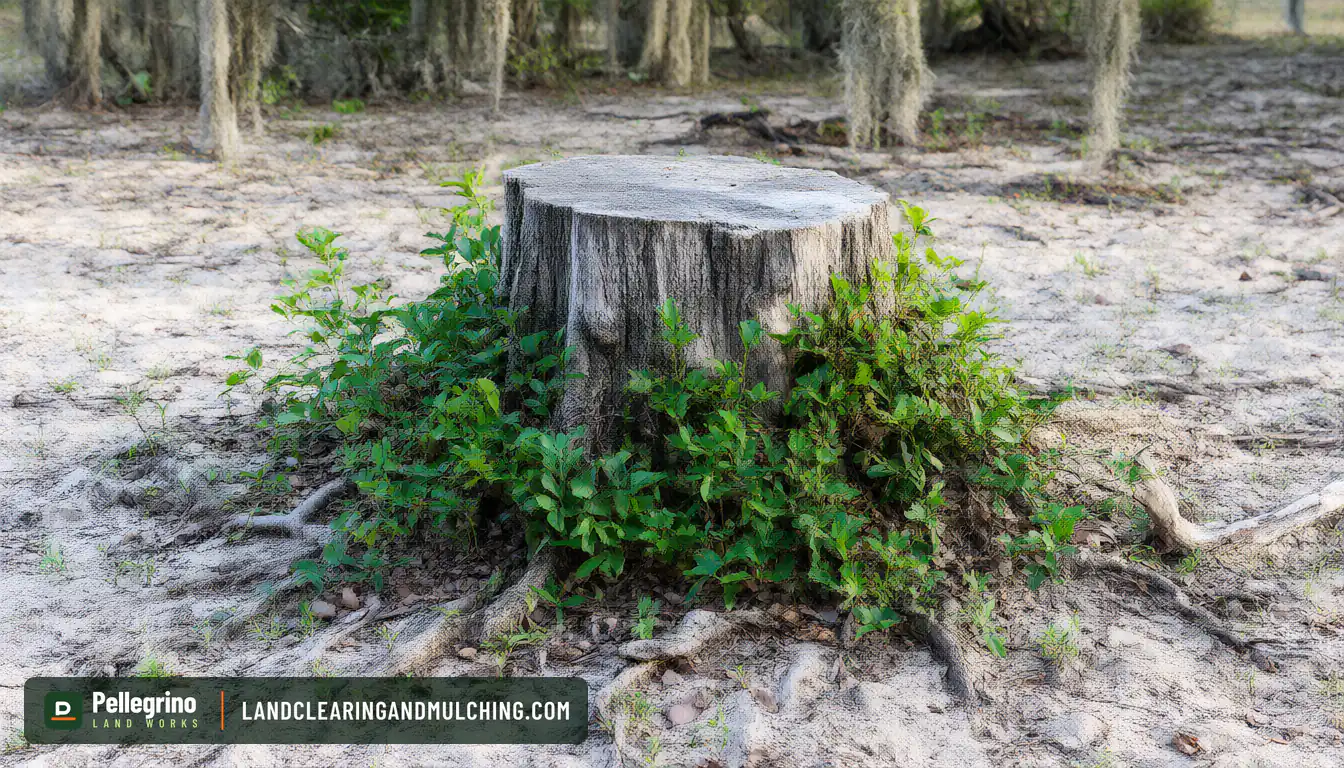
The internet loves it anyway. The recipe is always the same: drill holes, pack them with salt, cover with a tarp, wait. The tarp may be the useful part, since shade slows new shoots. The salt mostly sits there. On a live oak or a pepper stump, the roots will outlast the bag. Spend the money on a glyphosate concentrate and a paintbrush instead.
Stump removal chemicals and methods compared
Here is each option side by side, with what it actually does to the stump.
| Method | What it does | How long | Cost | Best for |
|---|---|---|---|---|
| Glyphosate or triclopyr on a fresh cut | Kills the roots, stops sprouts | Minutes to apply; wood still rots on its own | One bottle of concentrate | Oak, pepper, any hardwood cut today |
| Triclopyr ester on bark and roots | Kills a stump you missed the window on | Minutes to apply | One bottle | Stumps cut days or weeks ago |
| Potassium nitrate stump remover | Feeds rot in a dead stump | 4 to 6 weeks on the label; often 1 to 3 years | One bag per stump | Seasoned, dead stumps |
| Fertilizer in drilled holes | Same as above, slower | 1 to 3 years (Iowa State) | A bag of slow-release fertilizer | Patient owners |
| Epsom salt | Nothing proven | Unknown | One bag | Nothing |
| Stump grinding | Removes the stump 6 to 12 inches below grade | About 10 minutes for a pine, an hour for a big oak | $4.50 per inch, $150 minimum | Lawns, fence lines, anything you mow |
Notice what the table says about speed. Chemicals are cheap but slow. Only a grinder makes the stump disappear the same day. For a side-by-side of every removal method, including digging and letting it rot, see how to get rid of a tree stump.
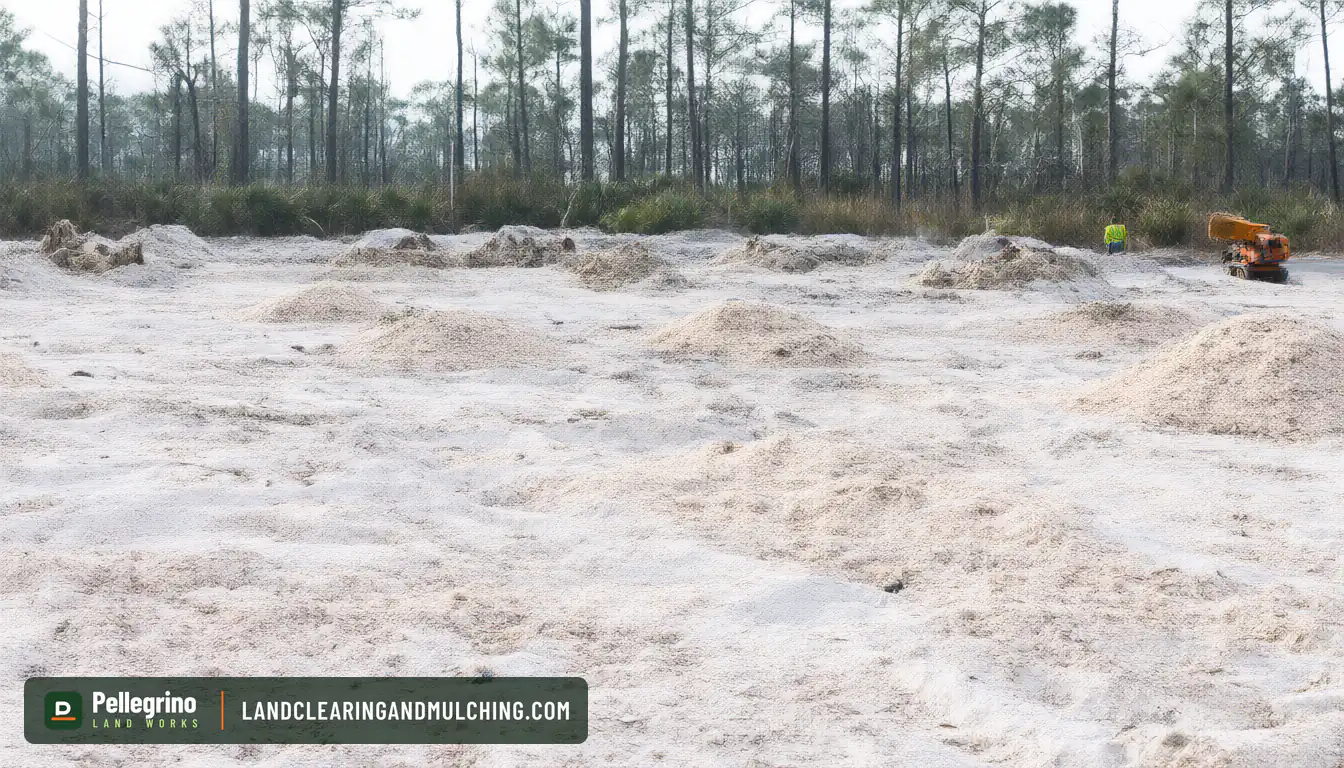
How do you kill tree stump roots?
You kill the roots through the stump, by getting herbicide into the cambium while the tree is still moving water. The fresh stump top is the door to the root system, and it shuts within minutes.
Two cautions. Never pour herbicide into drilled holes in an old stump and hope it finds the roots. Iowa State Extension notes herbicides do nothing for decay, and a dead stump has no living tissue left to carry anything down. And skip picloram products like Tordon in a yard. Iowa State warns picloram persists in soil, and in sugar sand your hedge, your sod and your neighbor’s oak all drink from the same ground. Glyphosate and triclopyr are the yard tools.
In June the rain comes daily and the sand drains fast. Treat on a dry morning so the herbicide has time to soak in before the afternoon storm.
When to call a pro instead
Call a crew when the stump is big, when there are many of them, or when the plan is to mow, build or plant on the spot soon. Chemicals never clear the ground. They only stop the green.
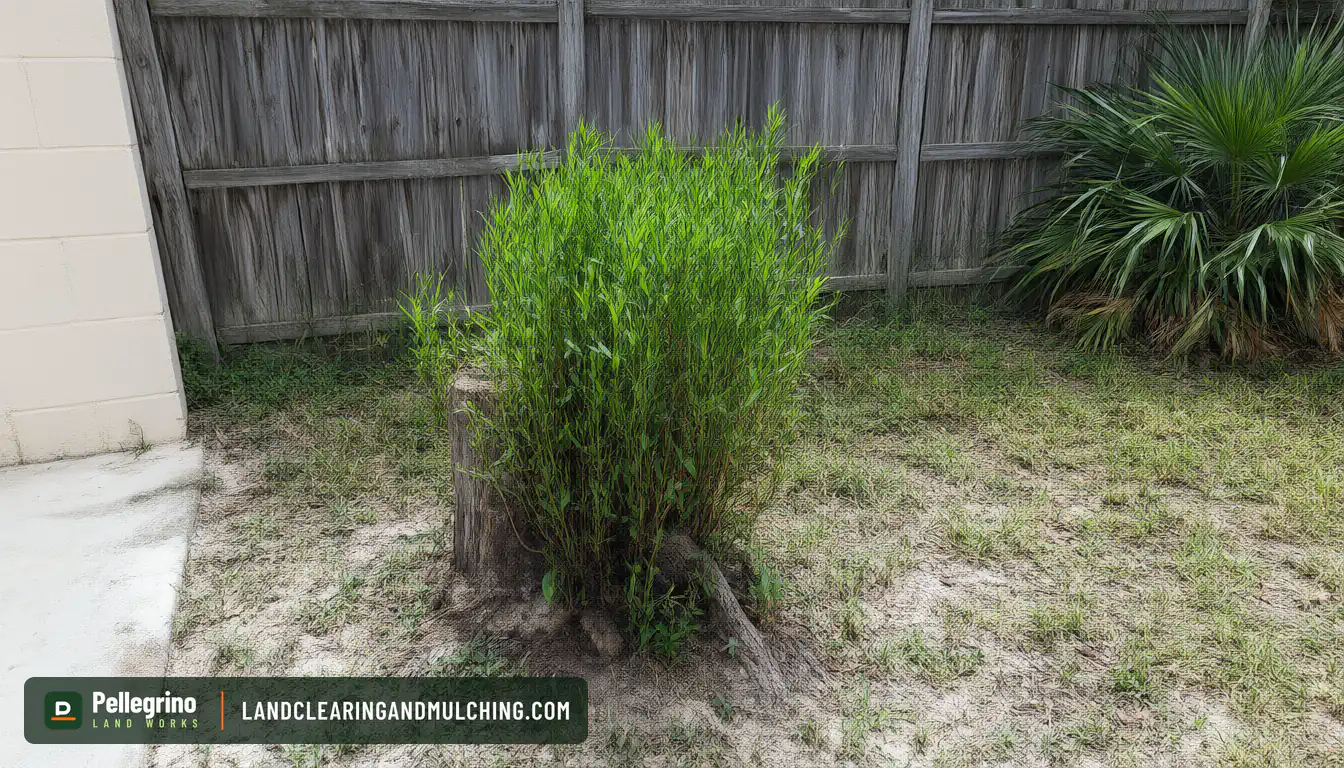
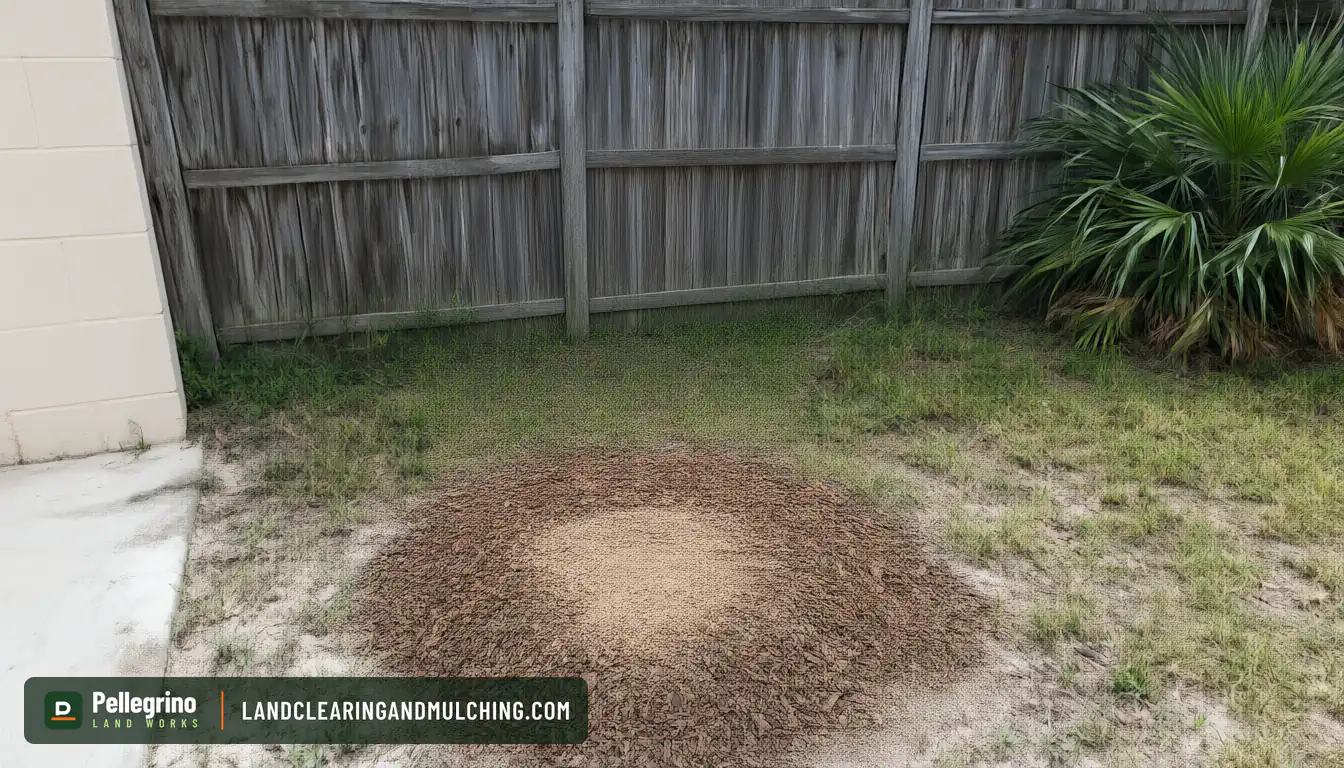
Grinding takes the stump 6 to 12 inches below grade. Brazilian pepper, melaleuca and camphor can still push up shoots from what is left, so on those we grind and treat the roots the same hour. On a 2.5-acre pepper thicket in Port Charlotte that meant 2 days and $6,700, including the $500-an-acre surcharge for cut-stump treatment. Pepper is the reason brush clearing in Southwest Florida costs more than palmetto. When the stumps are part of a larger tangle, our brush clearing crews mulch and treat in one visit.
Lots with 10 or more stumps go by the day: $2,600 with the skid steer and grinder, transport included within 75 miles of Ocala or Punta Gorda. Full numbers are on our land clearing cost page.
I would rather you paint a fresh oak stump today for the price of a bottle than pay me later to grind a hedge. If the stump is already old, already sprouting, or sitting where the sod goes, send the form or call (352) 619-3597. Brandi texts you a scheduling window within the hour.
Questions people ask
Will diesel kill a tree stump?
Diesel is a poor choice and you should skip it. Iowa State University Extension warns that accelerants like diesel fuel can leach into the soil, and it lists burning stumps first among methods to avoid. Diesel is not labeled to kill stumps, so it does nothing a cut-stump herbicide cannot do better and cleaner.
What is stump remover made of?
Most granular stump removers are potassium nitrate, a nitrate fertilizer. Iowa State University Extension says these products are often a form of potassium or sodium nitrate fertilizer. Potassium nitrate is an oxidizer: NOAA lists it as noncombustible but able to accelerate the burning of combustible materials, so store it away from fuel and wood.
How do you make a tree stump rot faster?
Drill holes and feed the stump nitrogen. Iowa State University Extension suggests one-inch holes at least ten inches deep, no more than 12 inches apart, filled with slow-release fertilizer, then covered with soil or sod. Expect one to three years before a spade goes through it. In Florida heat and rain, a pine stump rots faster than an oak.
Does Roundup kill tree stumps?
Yes, if it is a glyphosate concentrate painted on a fresh cut. UF/IFAS advises a glyphosate product with 41 percent active ingredient or higher, applied to the living tissue just inside the bark within five minutes of cutting. Ready-to-use spray bottles are too weak for stumps. Always check that the label lists cut-stump use.
Can you use Tordon on a tree stump in a yard?
Avoid picloram products like Tordon near anything you want to keep. Iowa State University Extension warns that picloram can persist in soil, and roots of nearby trees and shrubs share that soil. Glyphosate or triclopyr products labeled for cut stumps do the job in a yard with far less risk to the plants around them.
How we made this guide
Marc Pellegrino wrote this from 14+ years of clearing Florida lots and right-of-way corridors, and checked the facts against these sources:
- UF/IFAS EDIS SS-AGR-127: Herbicides to Kill Invasive Trees in Home Landscapes and Surrounding Natural Areas
- UF/IFAS EDIS SS-AGR-17: Brazilian Peppertree Control
- Iowa State University Extension: How to Remove Tree Stumps
- USDA Forest Service, Silvics of North America: Live Oak
- NOAA CAMEO Chemicals: Potassium Nitrate
- Ask Extension: Using Epsom Salts to Kill Stumps