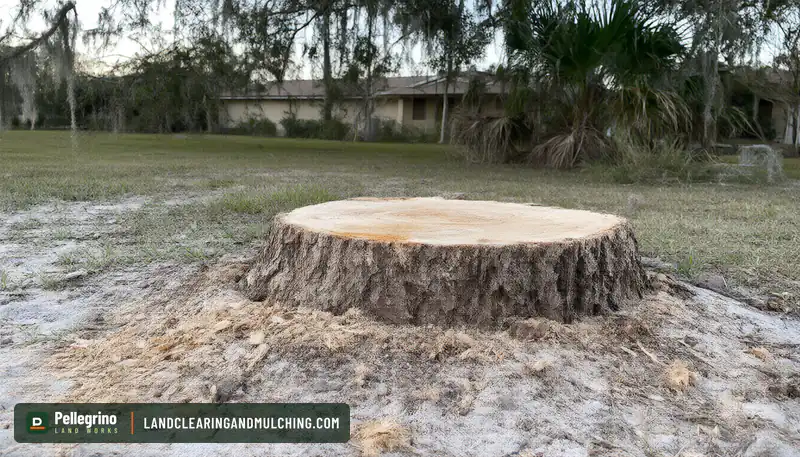
The quickest way to get rid of a tree stump is to grind it 6 to 12 inches below the ground, which takes minutes to an hour per stump. Digging, a chemical stump remover, burning and plain rot also work. They trade cash for weeks or years. The exception is a stump under a future slab or driveway: that one gets pulled, roots and all.
How to get rid of tree stumps: six ways compared
Getting rid of stumps comes down to six methods, and the real difference between them is time. The table puts them side by side. Costs are ours where we do the work, and plain materials where you do.
| Method | Time until the spot is usable | Cost | Your effort | Best for |
|---|---|---|---|---|
| Grinding | Minutes to an hour per stump | $4.50 per inch, $150 minimum | Low, if hired | Lawns, beds, fence lines |
| Digging out by hand | Hours of shovel work per stump | Your tools | Very high | Stumps under about 12 inches |
| Pulling with a dozer and root rake | Same day, root ball included | $170 an hour with operator | Low, if hired | Slabs, driveways, septic fields |
| Chemical stump remover | 4 to 6 weeks by the label, often months | A drill and a jar of granules | Low, but repeated | Dead stumps you can wait on |
| Burning | Days of smoldering | Near zero in cash | High: you watch it | Open rural ground where it is legal |
| Letting it rot | Years: 10 or more in Iowa, faster here | Free | None | Corners nobody mows |
Notice what the table leaves out. Every method except the root rake leaves roots in the ground. Grinding takes the stump and the big lateral roots near it. The rest stays and rots.
The ground under your stump matters as much as the wood. Sugar sand digs and grinds easily. On flatwoods soil, a hardpan sits 18 to 30 inches down. In Collier and Lee, caprock lies 20 to 40 inches under the sand. In June, any hole you open fills with water by supper.
Stump grinding: the quickest stump removal
Grinding is the quickest stump removal there is: a carbide wheel chews the wood into chips until the top sits below grade. Iowa State Extension puts the usual depth at 8 to 12 inches, large lateral roots included. Our crews grind to 6 inches for sod and 12 for a flower bed or a fence post.
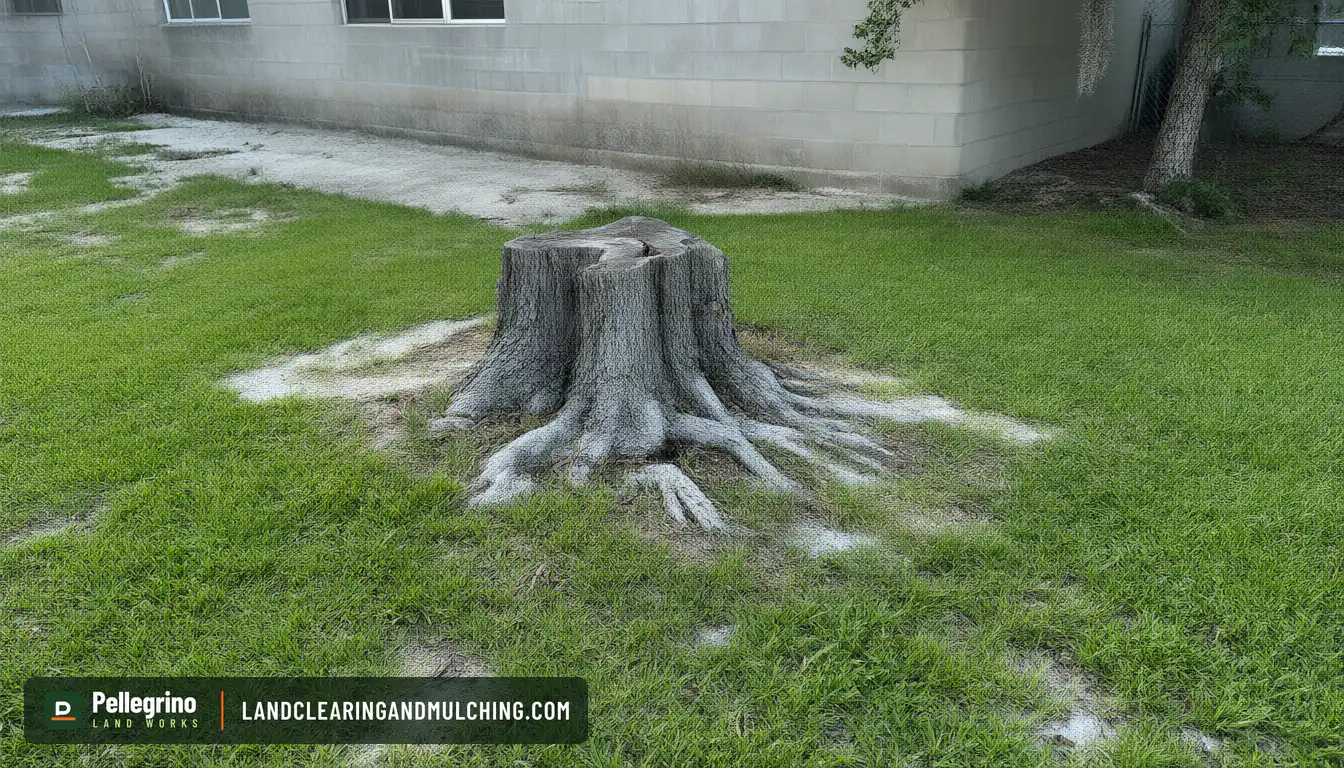
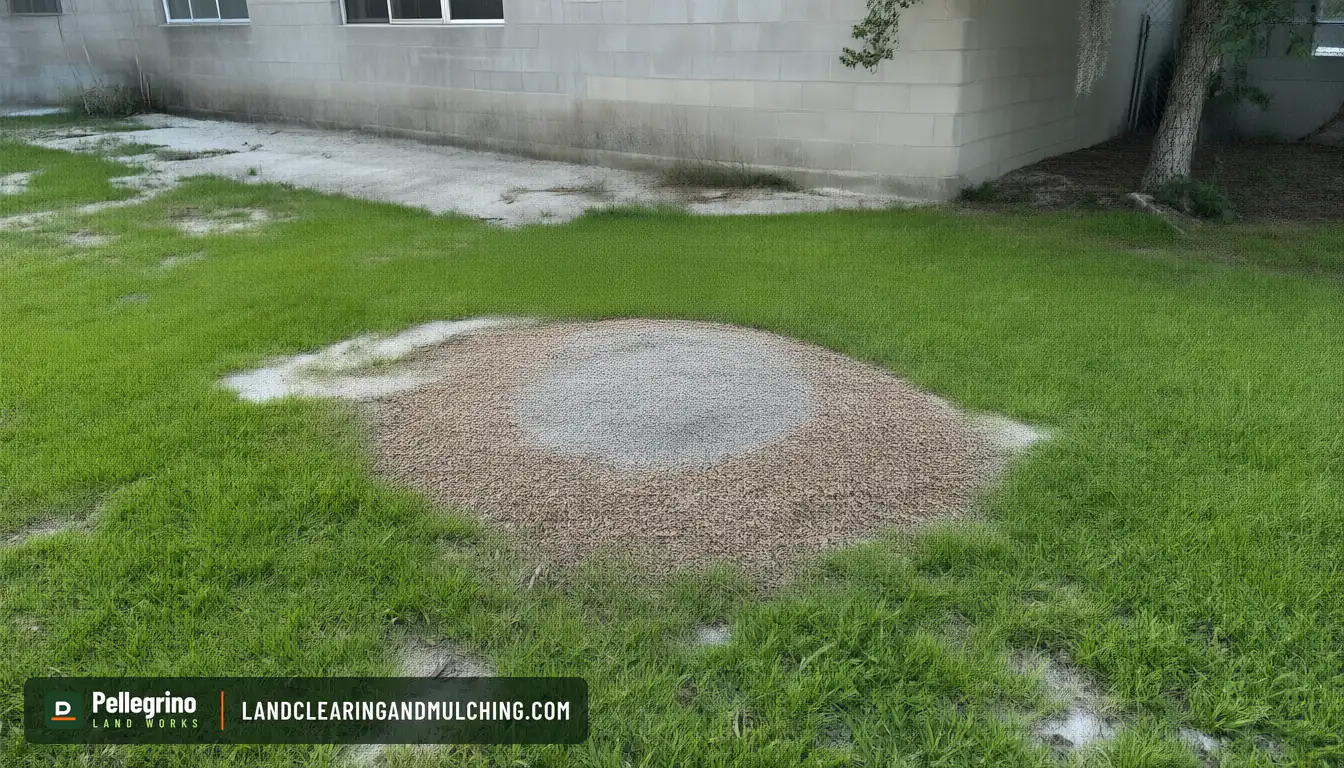
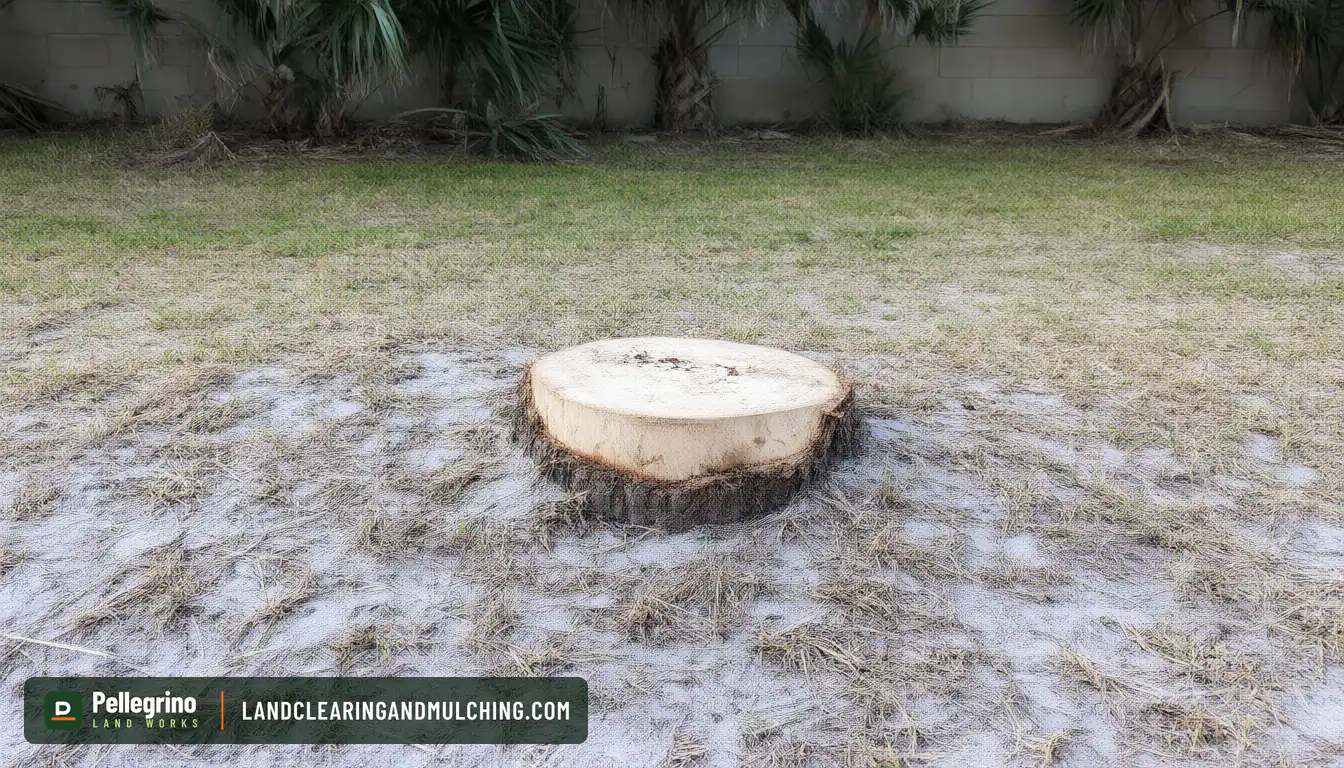
Species sets the clock. Slash pine grinds like butter, about ten minutes a stump. A 40-inch live oak takes an hour, and its roots can run 30 feet. Cabbage palm has no taproot, just a fibrous boot that clogs the wheel. We cut it low and grind it slow.
Our stump grinding service costs $4.50 per inch of diameter, measured at the widest point at ground level. The minimum is $150 a stump. A 20-inch pine lands on the minimum. A 40-inch oak is $180. Ten stumps or more go by the day, with the full sheet on our land clearing cost guide.
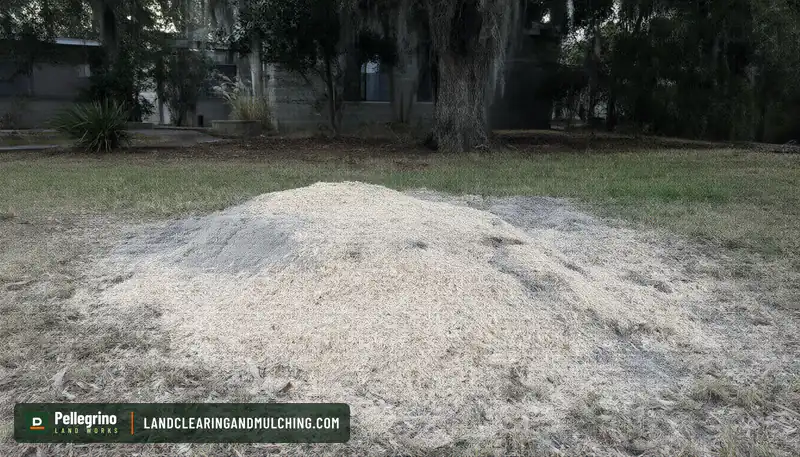
The grinder leaves a mound of chips and sand, roughly three times the volume of the stump. What to do with that pile, and the hole under it, is its own story: what happens after stump grinding.
How to remove a tree stump by hand
Digging works on stumps under about 12 inches across; Iowa State Extension sets the line there, and I agree. Above that size the roots win most arguments. Here is the order that works.
- Call 811 at least two full business days before you dig. Florida Statutes section 556.105 requires it, and the call is free.
- Leave 4 to 6 feet of trunk standing when the tree comes down. That trunk is your lever.
- Dig a trench around the stump, one to two feet deep.
- Cut each lateral root with a pruning saw as you expose it. Sand dulls an axe fast.
- Push the trunk back and forth. Find whatever still holds it, usually a root straight down, and cut that too.
- Rock the stump out. Backfill with clean sand and tamp it. The first rain will settle it some more.
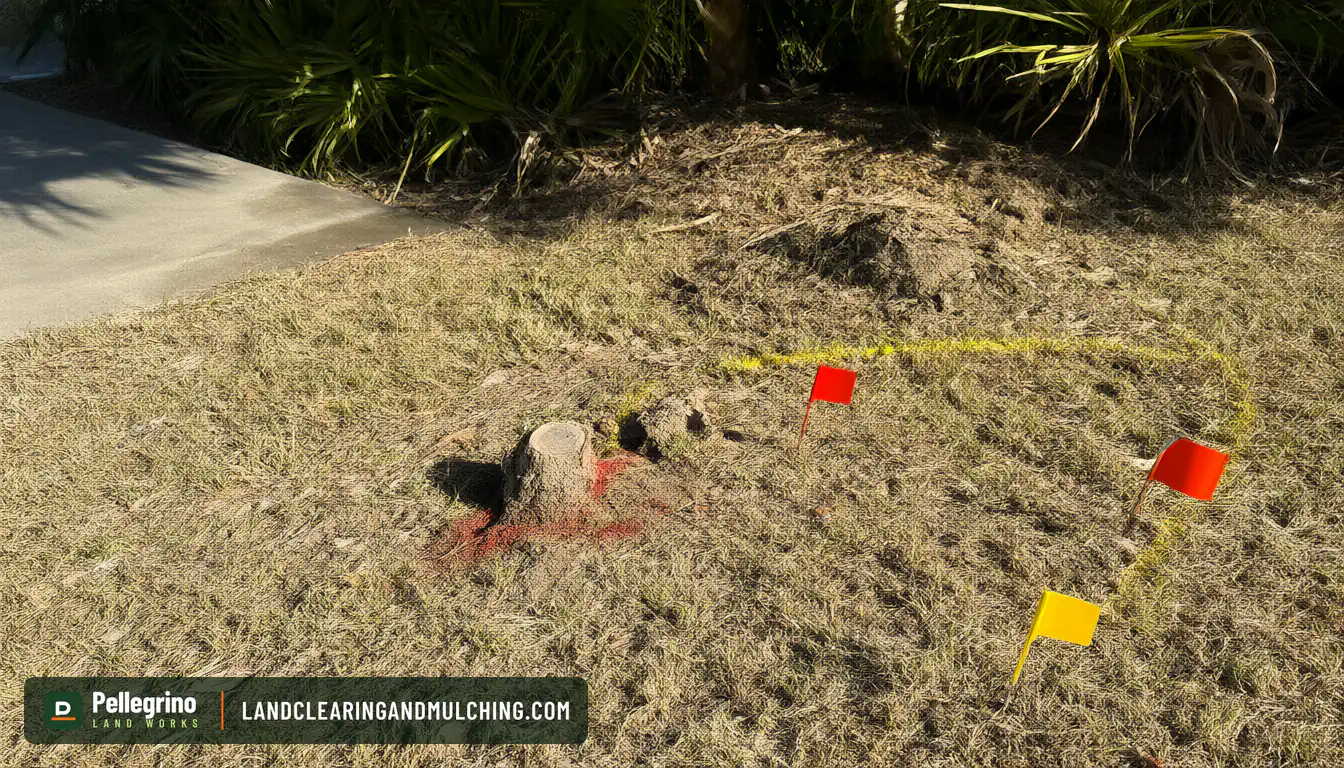
Skip the chain and the pickup. Iowa State warns that chains and ropes can snap under load, and a snapped chain travels. Pulling also tears up far more lawn than a trench.
Pulling stumps with a dozer and root rake
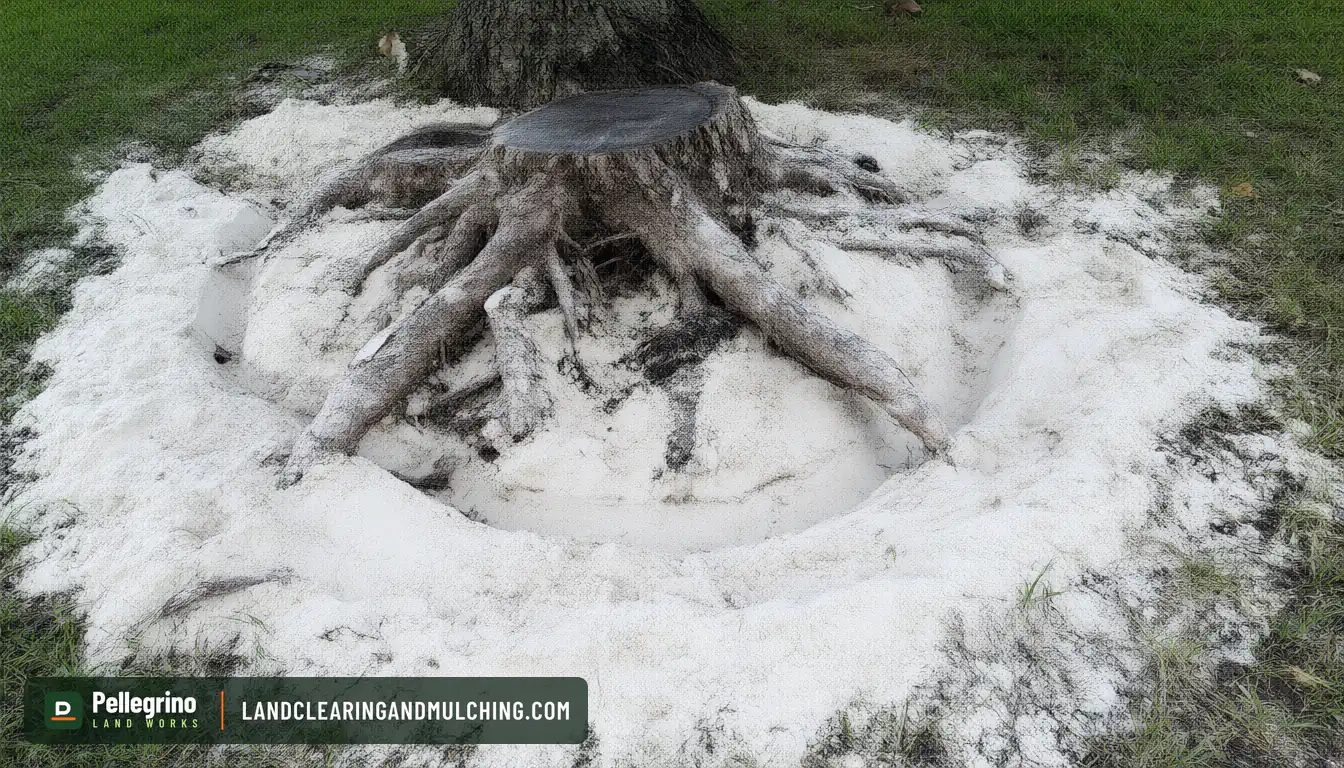
A dozer with a root rake pulls the stump and its root ball in one move. It is the right tool when a slab, a driveway or a septic field goes on top. Grindings and old roots under a footer are a settling problem waiting for a wet year.
The cost is $170 an hour with operator. It leaves a hole to fill and grade, which is why it pairs with site prep and dirt work. For scale: 20 acres of dead citrus near Lake Wales, in Central Florida. The trees were pushed and the roots raked, 4 days with the big mulcher and a dozer. The bill was $21,000 plus haul, and nothing was left to grind.
Do chemical stump removers work?
Chemical stump removers work slowly, and only on a stump that is already dead. The Spectracide label says it plainly: “This is not an instant product. It is an aid to natural decomposition.” The active ingredient is potassium nitrate.
The label’s directions, in short:
- Kill a freshly cut stump first with a brush killer.
- Drill several 1-inch holes up to 12 inches deep into the top.
- Drill a 1-inch hole into the side, 3 to 4 inches below the top, slanting down to meet the bottom of the center hole.
- Pour about 4 ounces of granules into each hole. Fill with hot water.
- Keep adding water for several days, then wait four to six weeks.
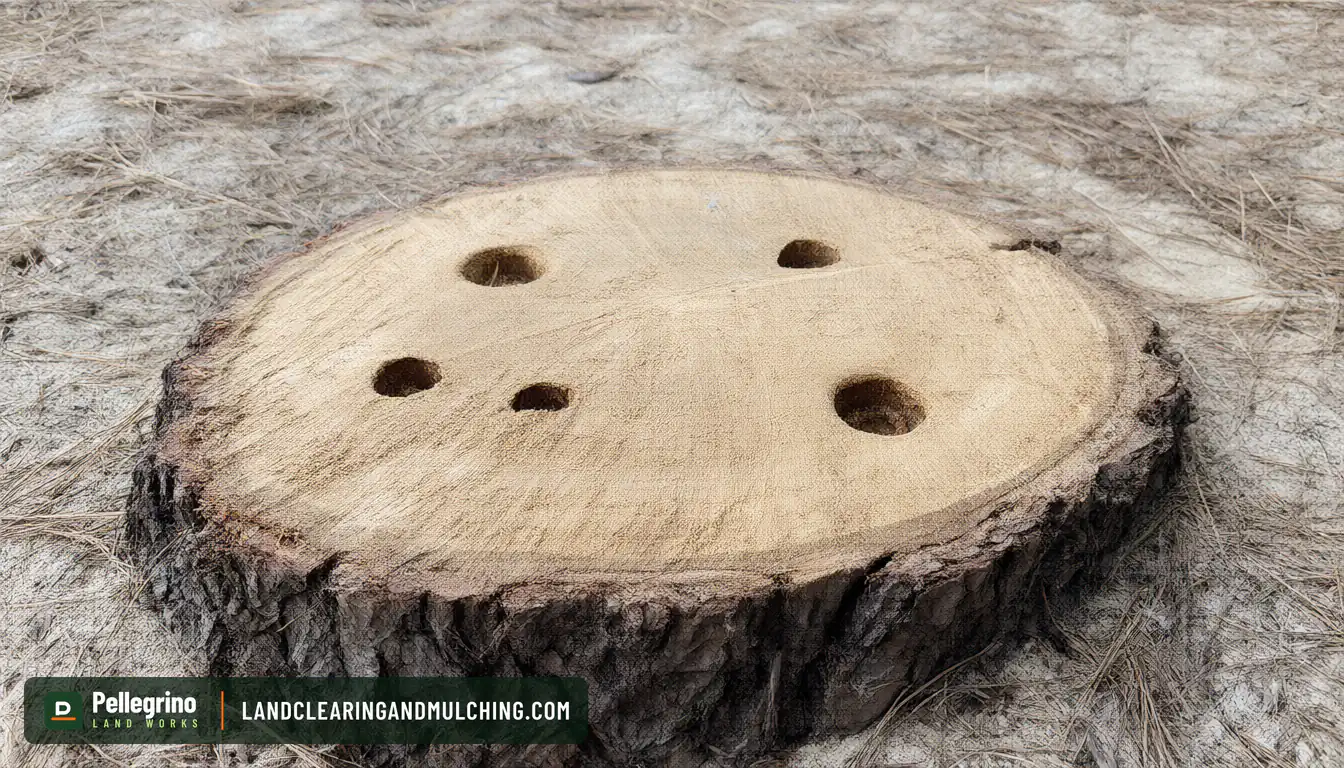
The label also says it works best when weather is warm and stumps are dry. Florida offers warm. Dry is a seasonal arrangement. Iowa State notes that commercial removers are mostly fertilizer, and that with nitrate in the holes a stump often breaks up with a spade in one to three years. Four weeks is the label’s floor, not a promise.
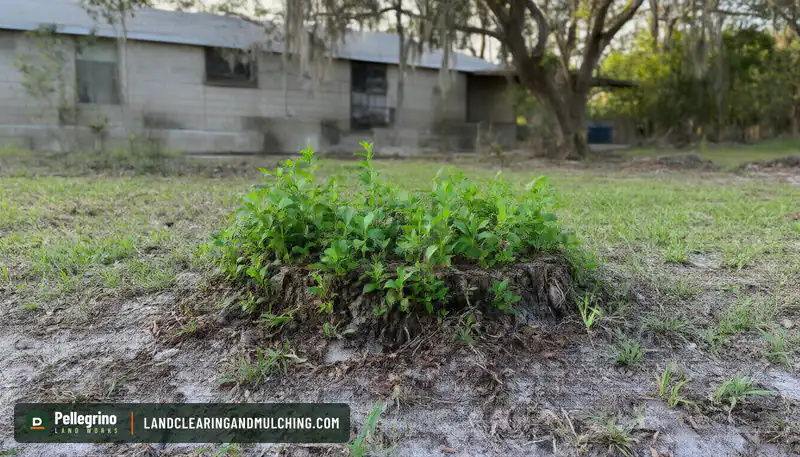
For a live stump that keeps sprouting, the tool is herbicide on the fresh cut, not granules. UF/IFAS says to treat the cut surface as quickly as possible, after brushing off the sawdust. On stumps over 3 inches, wet the outer edge, because that ring is the only living tissue. Glyphosate and triclopyr are the usual active ingredients. The label is the law, rates included. Brazilian pepper is the Florida case: treat the stump the same hour or you get a hedge by fall. Products, timing and the Epsom salt question are in how to kill a tree stump.
Can you burn a tree stump in Florida?
Sometimes, on open rural ground, and never next to a house. The Florida Forest Service lets you burn yard waste without an authorization only under set conditions. The pile must be under 8 feet across. It must sit 25 feet from your house and from forest, 50 feet from a paved public road, and 150 feet from other occupied buildings. Light it after 9 a.m. Eastern and put it out an hour before sunset.
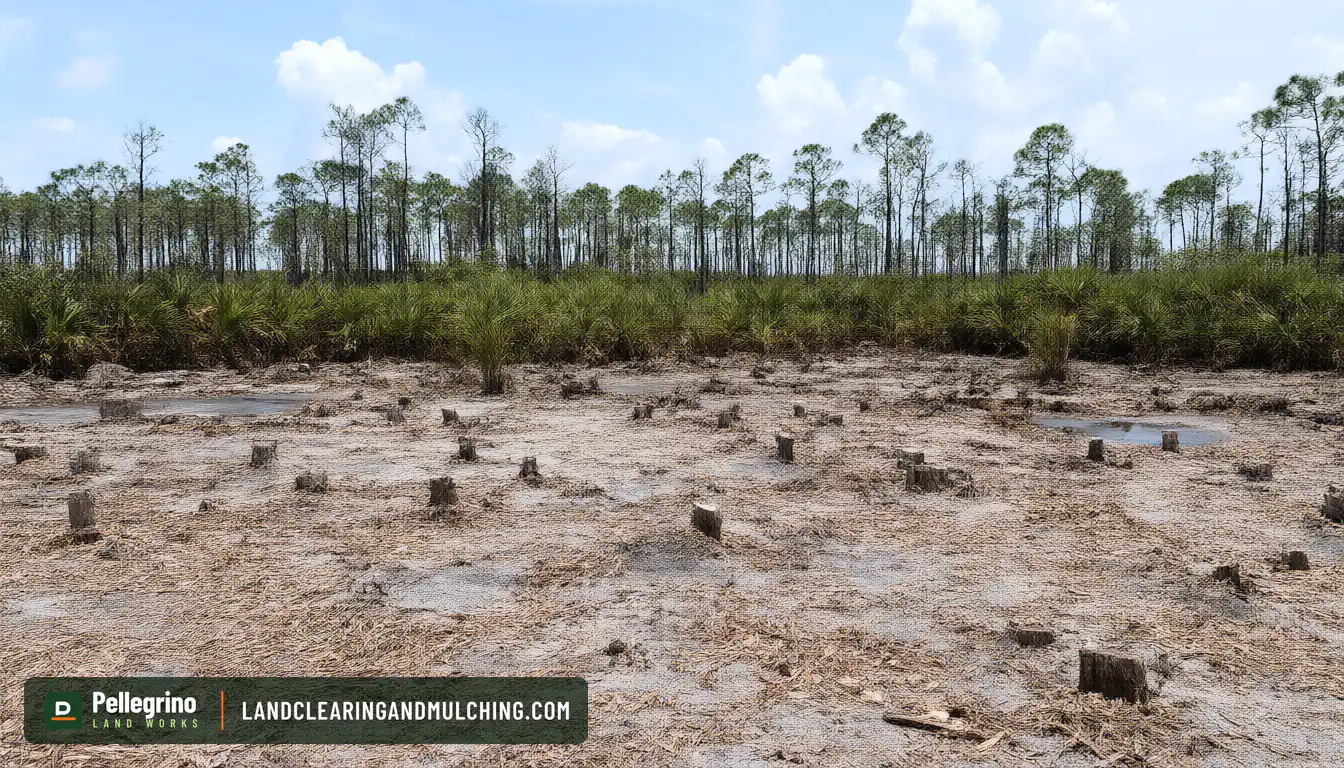
A stump is not on the Forest Service’s yard waste list, which is grass, brush, leaves, limbs and palm fronds. Land clearing and big piles need an authorization from your local field unit. Platted urban areas are generally no-burn. Iowa State adds the practical warning: stump fires can burn for days and are hard to put out. Potassium nitrate is classed as an oxidizer, which means it can intensify a fire. The full Florida rules and a safe setup are in how to burn a tree stump.
Letting a tree stump rot on its own
Letting it rot is free and slow. Iowa State Extension says natural decay can take 10 years or more, depending on moisture, fungi and species. Florida heat and rain cut that down. On our jobs pine goes in about two to five years. Oak takes far longer, and a cabbage palm boot hardly rots at all.
In Florida the termites will finish a pine stump for you. They just never give you a date.
Rot suits a back corner of your acreage, not a lawn you mow every week in July.
What is the best way to remove a tree stump?
The best way depends on what goes on that spot next. I ask that question before I ask the size.
- Sod or lawn: grind to 6 inches, then fill dirt on top of the chips.
- Flower bed or fence post: grind to 12 inches.
- Slab, driveway or septic field: pull it with the root rake.
- One small stump and a free Saturday: dig it out by hand.
- A dead stump nobody is in a hurry about: stump remover, then a spade.
- Back acreage: leave it and let the fungi work.
When to call a pro for stump removal
Call a pro for removing tree stumps when one is over 12 inches, sits near a foundation, a driveway or marked lines, or when there are more than a handful. Caprock in Collier and Lee is another reason. It eats a set of carbide teeth in two stumps if the operator pushes.
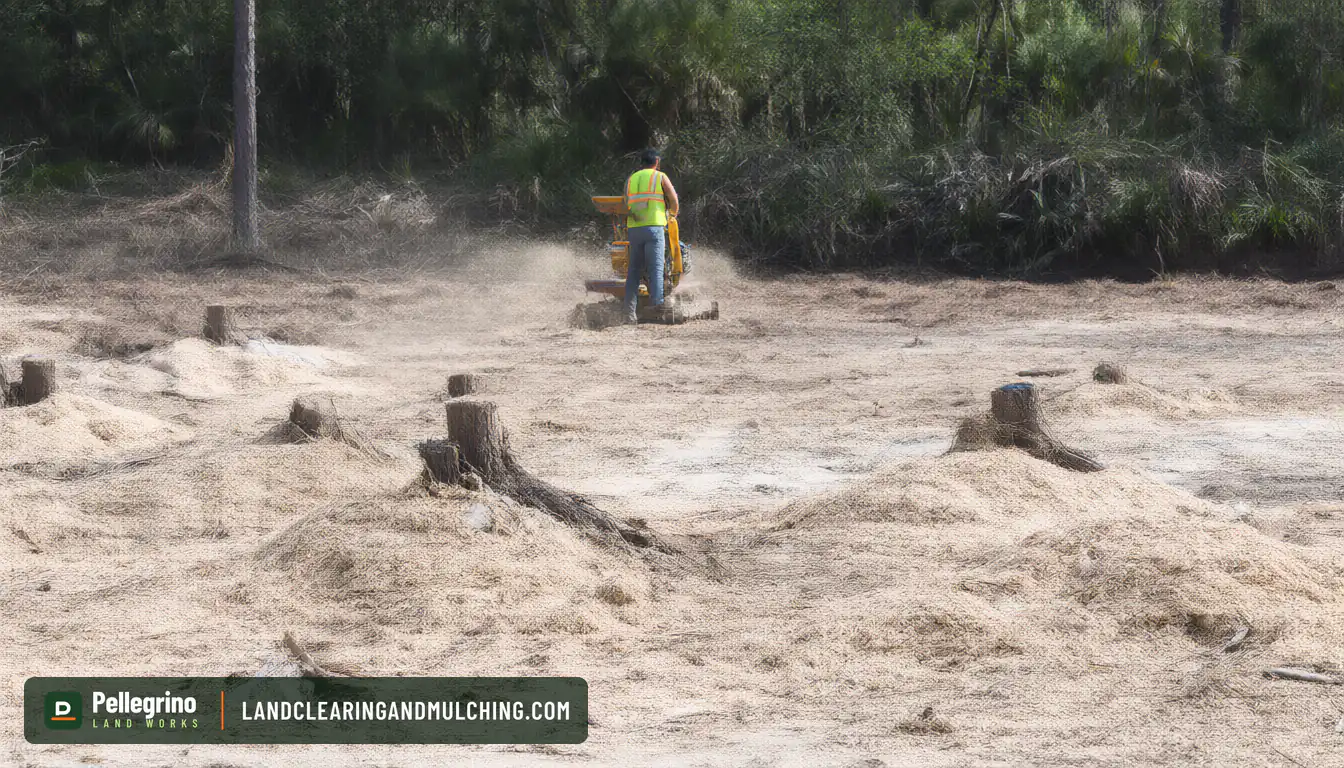
Here is where we stop. We are a clearing outfit, not a tree service. We do not trim trees or take down the oak over your roof. Our crews grind and pull what is left, often the day after our own mulcher clears a lot, as part of tree clearing on Florida land. Ten or more stumps run $2,600 a day with the skid steer and grinder. Transport is included within 75 miles of Ocala or Punta Gorda. The estimate is free inside that range.
Count the stumps, measure the widest one at the ground, and tell us what goes on that spot next. Send the form or call (352) 619-3597. Brandi texts you a scheduling window within the hour.
Questions people ask
How do you get rid of a stump without grinding?
Dig it out, pull it with a machine, treat it with a stump remover, burn it where that is legal, or let it rot. Digging suits stumps under about 12 inches across. A potassium nitrate remover needs four to six weeks by its label, and plain rot takes years. Under a slab, a root rake pulls it all.
How do you get rid of small tree stumps?
Dig small tree stumps out by hand. Call 811 first, trench one to two feet deep around the stump, cut each lateral root with a saw, then rock the trunk loose. Iowa State Extension puts the practical limit near 12 inches in diameter. Leave four to six feet of trunk standing, and it becomes your lever.
What is the quickest way to remove a tree stump?
Grinding is the quickest way to remove a tree stump. On our jobs a slash pine stump grinds out in about ten minutes, and a 40-inch live oak takes about an hour. The wheel takes the wood 6 to 12 inches below grade and leaves chips. Our price is $4.50 per inch of diameter, $150 minimum per stump.
Do I need to call 811 before digging out a stump in Florida?
Yes. Florida Statutes section 556.105 requires notice through Sunshine 811 at least two full business days before you dig. The statute defines excavation broadly, as any cut or trench meant to disturb the surface of the earth. The call is free. Wait for the utility marks before a shovel or a grinder goes in.
Is it OK to leave a tree stump in the ground?
Yes, if nothing needs to go there and it does not sprout. Iowa State Extension says natural decay can take more than 10 years. Florida heat and rain move a pine stump faster, about two to five years, while oak lasts much longer. Keep it out of the mower path and cut any sprouts early.
How we made this guide
Marc Pellegrino wrote this from 14+ years of clearing Florida lots and right-of-way corridors, and checked the facts against these sources:
- Iowa State University Extension and Outreach: How to Remove Tree Stumps
- UF/IFAS Ona REC: Control of Woody Brush Along Fence Rows (cut-stump treatment)
- Spectracide Stump Remover Granules: product label and directions for use
- PubChem (NIH): Potassium nitrate, GHS hazard classification
- FDACS Florida Forest Service: Burn Authorizations and yard waste rules
- Florida Statutes 556.105: notice to Sunshine 811 before excavation