Emergency tree removal after a hurricane means taking down a tree before it does more harm. That is a tree on your house, across your only way out, or about to fall on someone. Everything else can wait for daylight, photos and the adjuster. The exception is any tree touching a power line. That belongs to the utility, not to you, and not to us.
I spent six months on Ian debris in Charlotte and Lee, and the first morning after a storm looks the same everywhere. Slash pine snapped at thirty feet. A laurel oak on its side with a root plate the size of a pickup bed, sand still in it. Our crews do storm tree clearing on lots and acreage. Pine down across a drive. A blowdown in the back two acres. Debris by the load. This page covers the hours before anyone, us included, should start a saw.
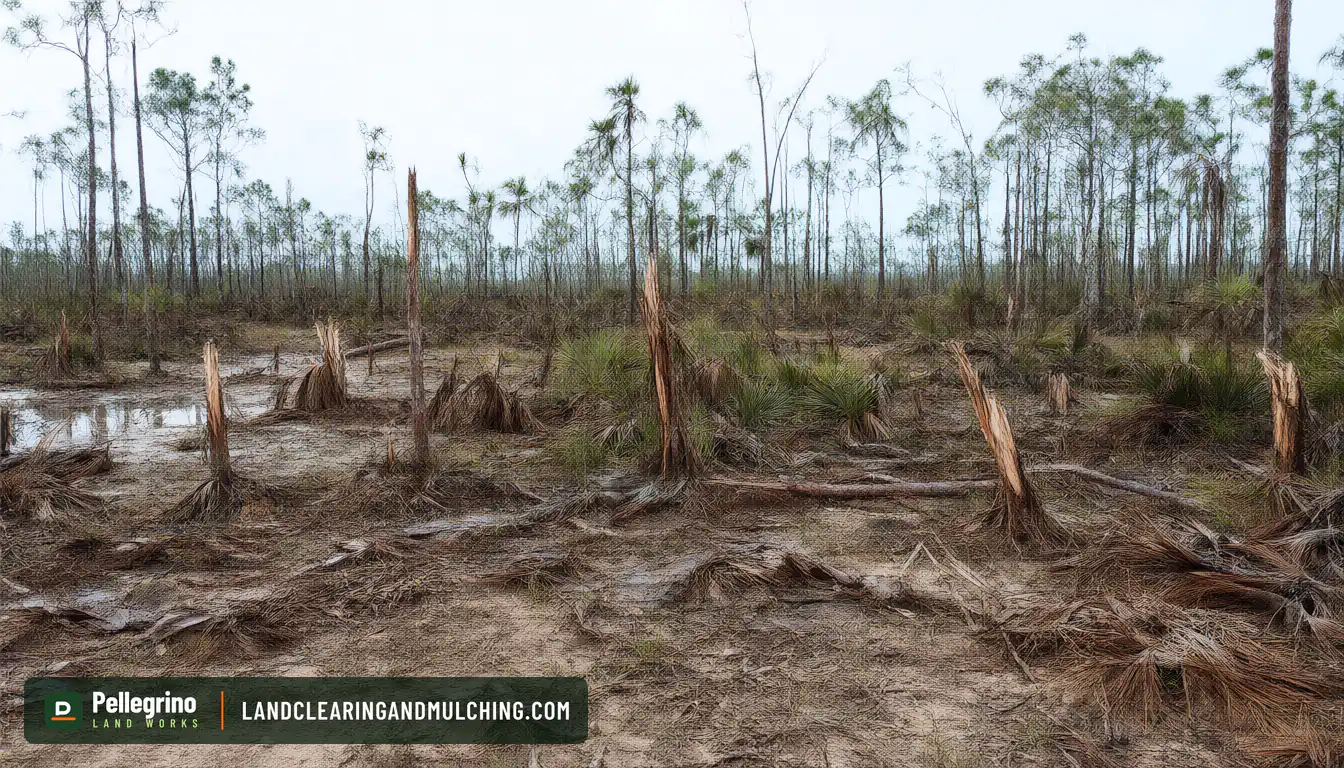
What counts as emergency tree removal after a hurricane?
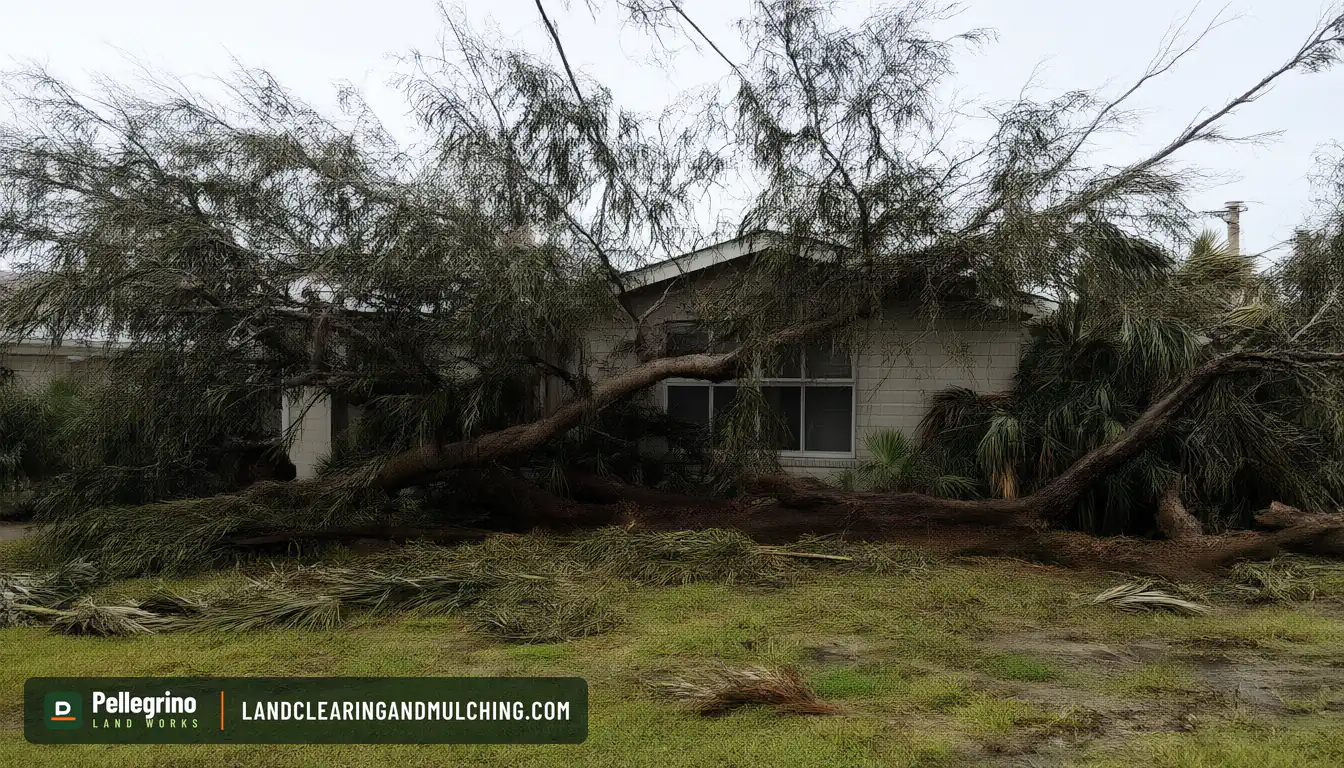
A tree is an emergency when it threatens a person, blocks your exit, or sits on a structure that is still taking damage. That short list is what UF/IFAS foresters put first after a storm: trees that threaten people, buildings or power lines. A pine flat on the lawn is a cleanup job. The same pine leaning on the gable end, with rain coming through the roof, is not.
| What you see | Emergency? | Who to call first |
|---|---|---|
| Tree on a wire, or a wire on the ground | Yes | 911 or your utility. Nobody else touches it. |
| Tree through the roof, rain getting in | Yes | Your insurer, then an ISA certified arborist with a crane |
| New lean toward the house, soil heaved at the base | Yes | ISA certified arborist for a risk assessment |
| Broken limb hanging over a driveway or door | Yes | Arborist; keep people out from under it |
| Trees across your only driveway | Yes, if it is your only way out | A crew with a saw and a loader |
| Pine down in the yard, nothing hit | No | Photos, then your insurer, then a cleanup quote |
| Blowdown across acreage or a vacant lot | No | Photos, then a load count |
The UF/IFAS guide is blunt about leaners. A tree leaning over a house, a road or a power line should come down right after the storm. A lean that showed up overnight usually means the roots partly failed.
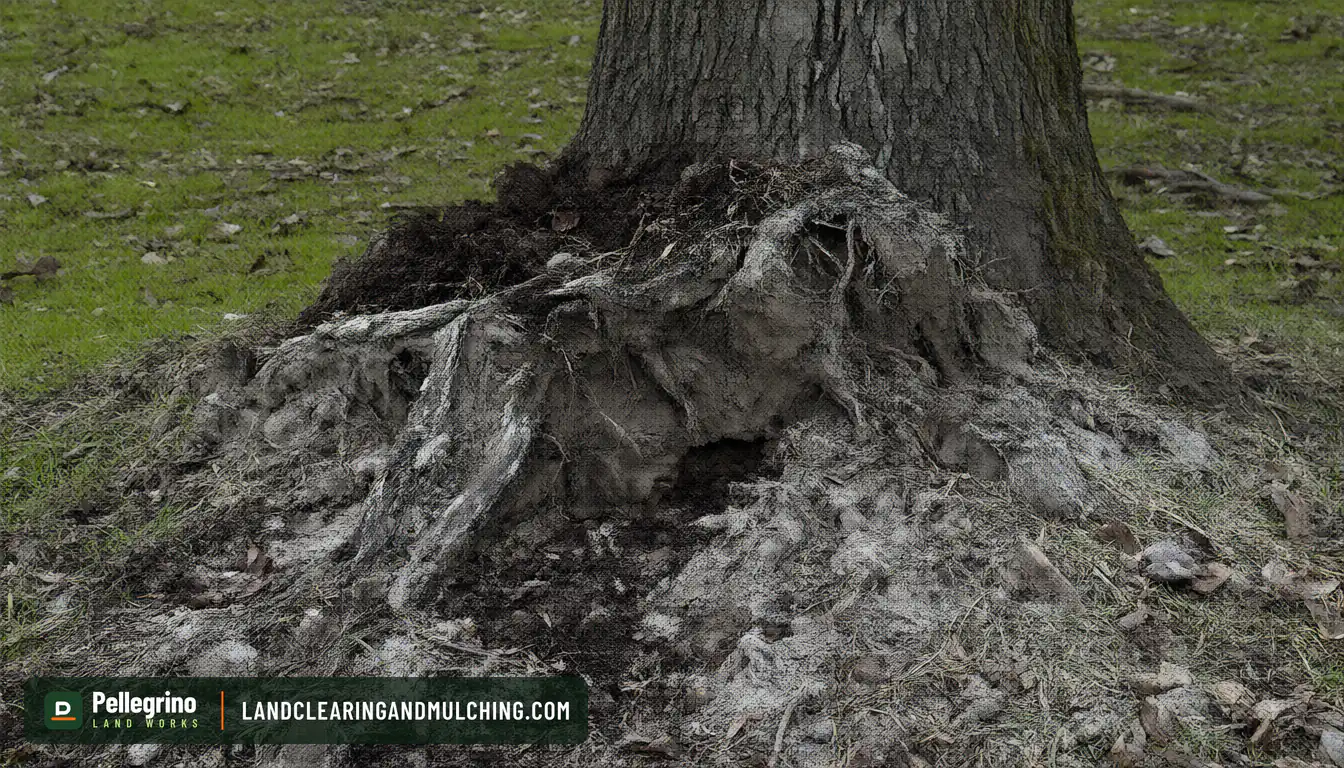
What to do first when a tree falls on your house
Get everyone out of the rooms under the tree, then call 911 if anyone is hurt or a wire is involved. After that, the order below protects your family first and your claim second.
- Leave the rooms under the tree and keep everyone out of them.
- Look for wires before you walk outside. If one is down, call 911 or your utility and stay inside.
- Photograph and video everything before anything moves: the whole house from each corner, then close-ups of every contact point.
- Call your insurer and get a claim number.
- Stop more damage you can stop safely: a tarp over an opening, a towel line under a leak.
- Keep every receipt for tarps, plywood and emergency labor.
- Get the tree off the roof with a crane crew. Leave permanent repairs until the adjuster has seen the damage.
Florida gives you one year from the date of loss to report a new property claim, under Florida Statutes 627.70132. A supplemental claim gets 18 months. That is a deadline, not advice. The photos you take the first morning carry more weight than anything you remember in March.
The hurricane leaves by breakfast. The pine it parked on your carport waits for the adjuster.
Who pays for a fallen tree in Florida?
Your homeowners policy pays when a tree damages an insured structure, and usually nothing when it lands on open ground. The Insurance Information Institute says a standard policy covers the house and contents when wind drops a tree on them. Removal of that tree is covered too, generally up to about $500 to $1,000 depending on the insurer and the policy.
A tree that hits nothing is different. The III says there is generally no coverage for that debris removal. Some insurers will pay to clear a tree blocking a driveway or a wheelchair ramp. Trees and shrubs themselves are covered for named perils such as fire, lightning and vandalism, generally capped at 5 percent of the dwelling amount. Wind is not on the III’s list, so plan on replacing the dead oak yourself.
The neighbor’s tree on your roof still goes to your insurer. Your company can then chase the neighbor’s company through subrogation, and if that works you may get your deductible back.
FEMA does not clear your yard. Its Irma guidance for Florida says debris removal from private property is generally the owner’s responsibility, the same as before the hurricane. Your county may pick up debris you carry to the curb, inside the window it announces.
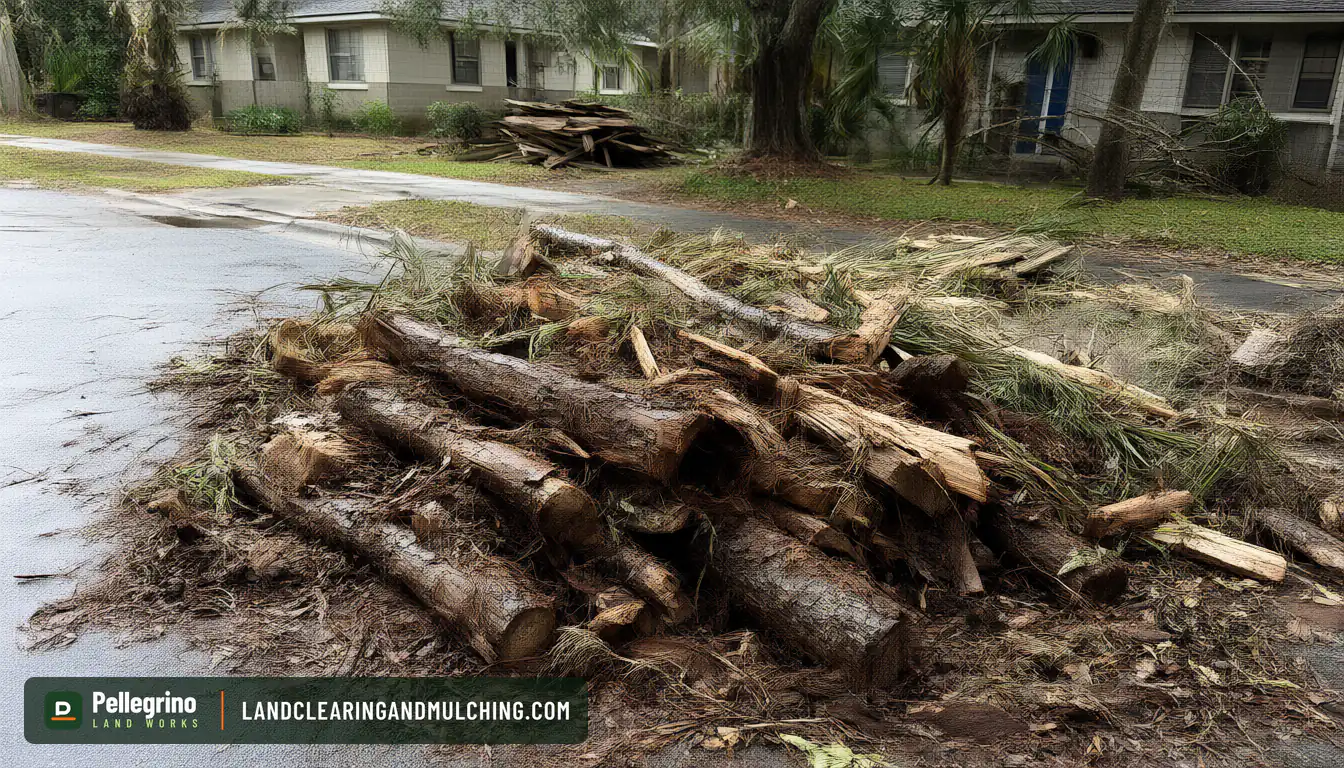
FEMA asks for six separate piles: vegetative debris, construction debris, appliances, electronics, hazardous waste and household garbage. Keep them away from trees, poles, hydrants and meters. On acreage nobody comes to the curb, so the wood goes by the truck. After Ian we hauled 9 loads off one acre in Punta Gorda, $8,100, mostly snapped slash pine. Our storm rate is $700 to 1,300 per 10-yard load; the land clearing cost guide has the rest of the sheet.
Hazardous tree removal: the trees still standing
The trees still standing a week later are the ones that hurt people, because they look fine. UF/IFAS lists the signs worth a second look. Cracks in the main trunk. Broken limbs hung up in the crown. Roots broken or lifted on a leaner. Cracked trunks get removal, not repair.
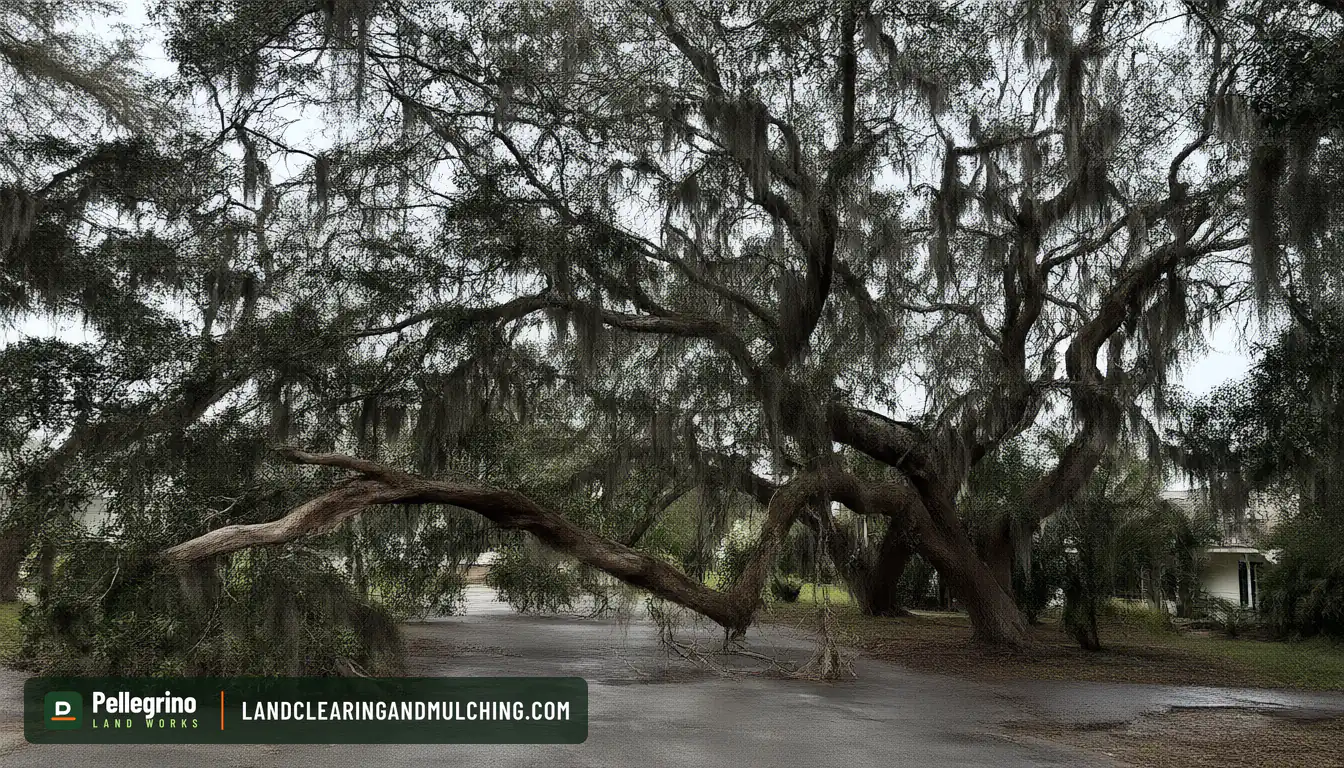
Pines fool everybody. The UF/IFAS guide says pines often die over 6 months to 2 years after a windstorm. A pine with all brown needles is dead and should come out. A pine that lost 30 to 50 percent of its crown may not recover either. Live oak is tougher, but one that lost 50 to 70 percent of its crown may be past saving. I tell owners to circle the doubtful pines with tape and look again in spring. On a wooded lot, the dead ones come out with a mulcher in a day instead of one at a time.
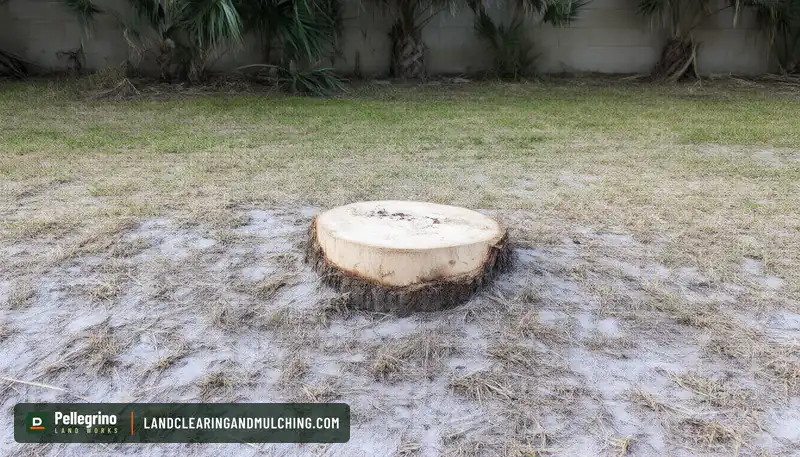
When they do come out, the stumps stay. Grinding runs $4.50 per inch of diameter, $150 minimum, and our stump grinding crews price lots with 10 or more stumps by the day. For a single stump you want gone without a machine, the ways to get rid of a tree stump are compared side by side.
Do you need a permit to remove a storm-damaged tree in Florida?
Not if a certified professional documents the danger first. Florida Statutes 163.045 covers single-family home lots. If the owner has documentation that a tree poses an unacceptable risk, the local government may not require a notice, application, permit, fee or mitigation to remove it. The paper must come from an ISA certified arborist or a Florida licensed landscape architect, after an onsite assessment. Your county cannot make you replant either.
Keep that signed assessment with your claim photos. The law does not cover mangroves, and it does not cover a vacant lot or acreage that is not a home. A blowdown on raw land falls under your county’s normal clearing rules.
Storm tree removal by homeowners: where the chainsaw stops
A homeowner with a saw can safely clear small limbs on the ground, and nothing more. CDC chain saw guidance after storms is specific. Wear a hard hat, safety glasses, hearing protection, heavy gloves, chain saw chaps and boots that cover the ankle. Keep the saw at waist height or below. Keep other people 30 feet from anyone cutting limbs, and two tree lengths, at least 150 feet, from anyone felling a tree.
The trap is the spring pole: a trunk or limb bent under another tree, loaded like a bow. Cut it wrong and it lets go into you. CDC says to find the point of most tension and shave the underside slowly. I would rather you leave it. On the corridors we treated every bent stem under a downed crown as loaded until it proved otherwise.
Your limit is simple. Ground level, small wood, no tension, no wires, nothing over your head.
Hiring an emergency tree service after a storm
Hire the crew that answers your questions in writing, not the one that knocks first. Ask for a written estimate that says whether hauling is included. Ask for a certificate of insurance, then call the insurer and confirm the policy is current. Do not pay the full amount up front.
For a tree on a house, ask for an ISA certified arborist. UF/IFAS names them for leaning trees and broken limbs near buildings. Get two written prices. A bid far under the other one usually left something out, and hauling is the usual thing.
When to call a pro, and which one
Call the utility for anything on a wire, an arborist for anything on a house, and a clearing crew for anything on open ground. That split is honest. We do not do backyard crane takedowns over a roof or trim around wires. I know people who do.
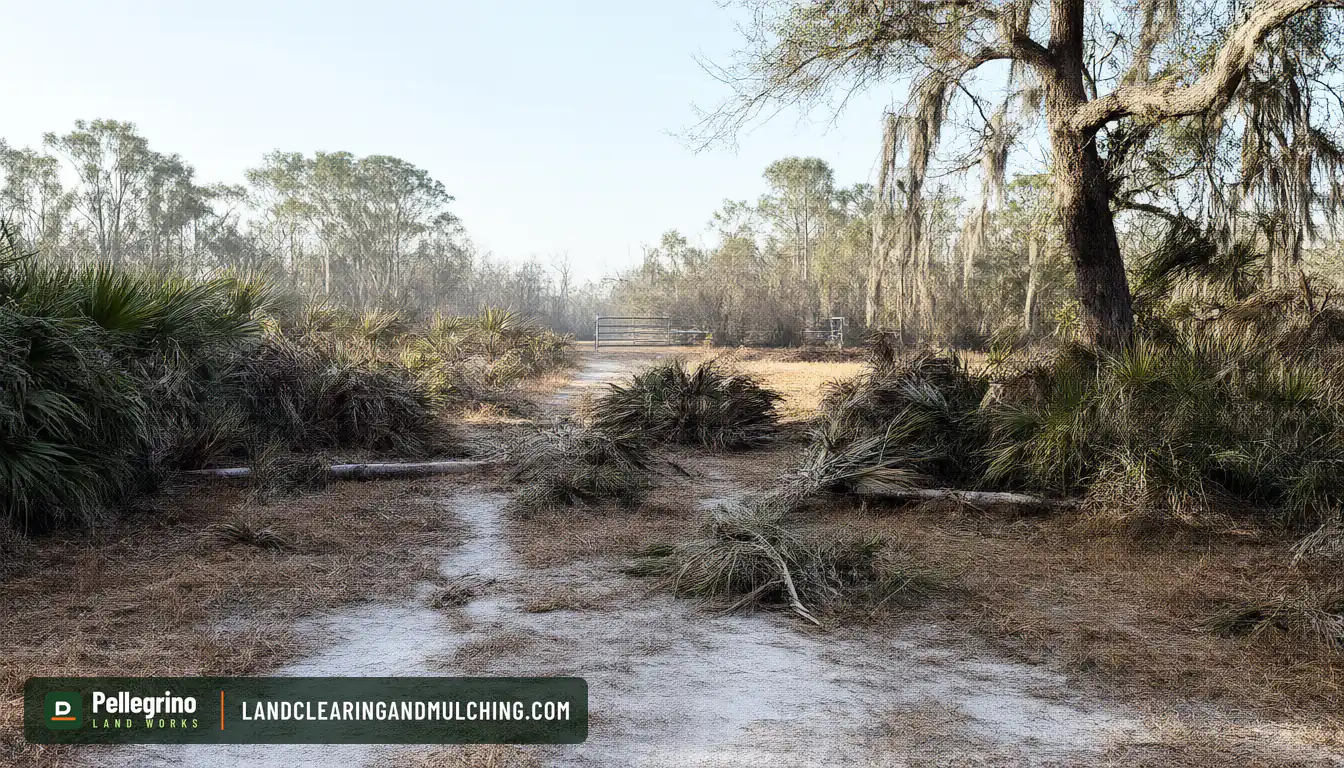
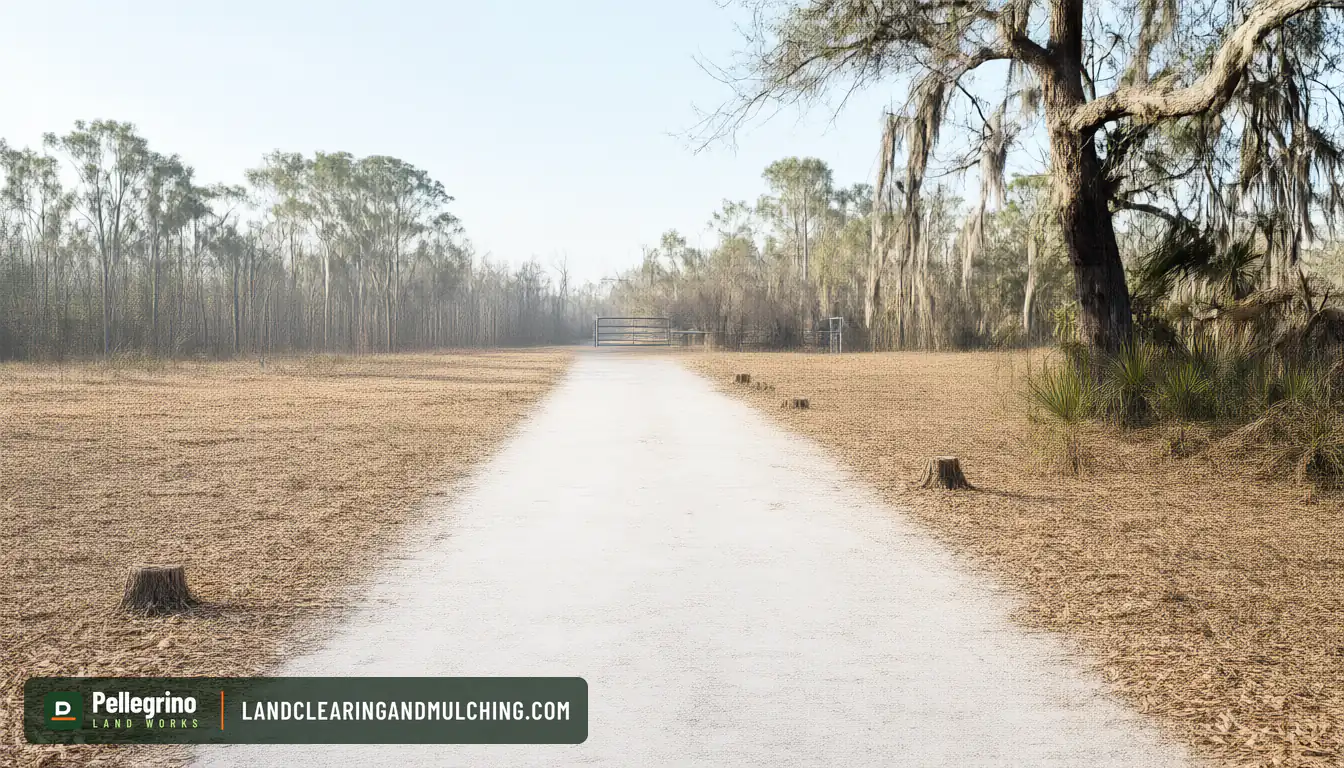
What our crews do well is the ground the storm flattened. Pine across a long drive on acreage. A blowdown across two acres of flatwoods. Standing dead pine on a vacant lot you want built on next year. The skid steer mulcher, $2,600 a day, takes tops and trunks to about 8 inches into chips on the spot. Bigger trunks get bucked and loaded by the 10-yard truck. If the storm already took half the stand, a full land clearing job often costs less than cleaning around what is left. Across Southwest Florida, Ian’s dead pine still stands on half the vacant lots.
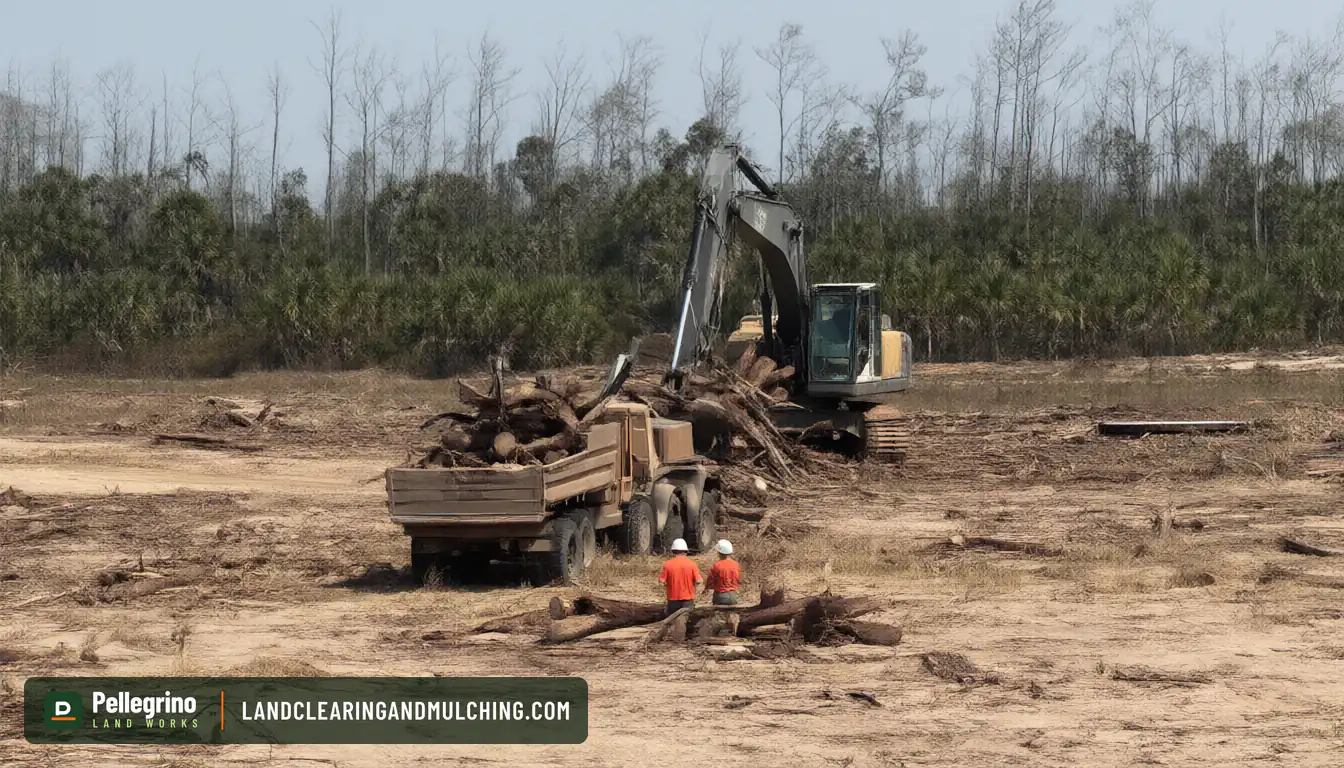
Send one photo of the pile and the acreage. I can count loads from a picture. Send the form or call (352) 619-3597. Brandi texts you a scheduling window within the hour.
Questions people ask
How much does emergency tree removal cost?
On acreage and lots, storm debris runs $700 to 1,300 per 10-yard load with our crews, hauled and dumped. Stumps ground afterward cost $4.50 per inch of diameter, $150 minimum. A tree resting on a roof is a crane and climber job, and a tree service prices that one tree by itself.
Will insurance pay to remove a tree that fell but hit nothing?
Usually not. The Insurance Information Institute says a tree that falls without hitting an insured structure generally carries no coverage for debris removal. Some insurers will pay to clear a tree blocking a driveway or a ramp, so read your policy and ask your agent before you write it off.
My neighbor's tree fell on my house. Whose insurance pays?
Yours does. You file with your own insurer, and your policy covers the structure and contents. If the neighbor was at fault, your insurer may try to collect from the neighbor's insurer through subrogation. When that works, you can get your deductible back. Keep your photos of the tree and the damage.
How long do I have to file a hurricane claim in Florida?
One year from the date of loss for a new claim, under Florida Statutes 627.70132. A supplemental claim, for damage you find later on the same loss, gets 18 months. Do not wait that long on a tree, though. Photos taken the first week are the ones an adjuster believes.
Can I cut a tree off a power line myself?
No. Treat every wire as energized until the utility says otherwise, and stay off anything touching it, including the tree. CDC guidance says to avoid contact until lines are verified dead. UF/IFAS says only qualified line-clearance arborists should work near utilities. Call 911 or your utility.
How we made this guide
Marc Pellegrino wrote this from 14+ years of clearing Florida lots and right-of-way corridors, and checked the facts against these sources:
- UF/IFAS EDIS FR172: Assessing Hurricane-Damaged Trees and Deciding What to Do
- Florida Statutes 163.045: Tree pruning, trimming, or removal on residential property
- Florida Statutes 627.70132: Notice of property insurance claim
- Insurance Information Institute: If a tree falls on your house, are you covered?
- FEMA: Hurricane Debris Pick-Up a Priority for Florida Recovery
- CDC: Chain Saw Safety