Cutting tree roots is safe when the root is small, the cut is far from the trunk, and the tree is healthy and standing straight. UF/IFAS guidance puts the line at no closer than three times the trunk diameter, preferably five. Roots thicker than about one inch deserve caution, because roots of one to three inches can be the ones holding the tree up.
Most people searching this have one root in mind. It lifts the driveway, trips the kids, or sits where the new fence goes. The root is the easy part. The question is what the tree does next year, and in a June squall. I have cleared Florida ground since 2012, and my rule is simple. A tree you keep should lose as few roots as possible. A tree you remove can lose all of them. Our crews do the second kind of work, tree clearing on Florida lots and acreage, and this page covers both sides of that line.
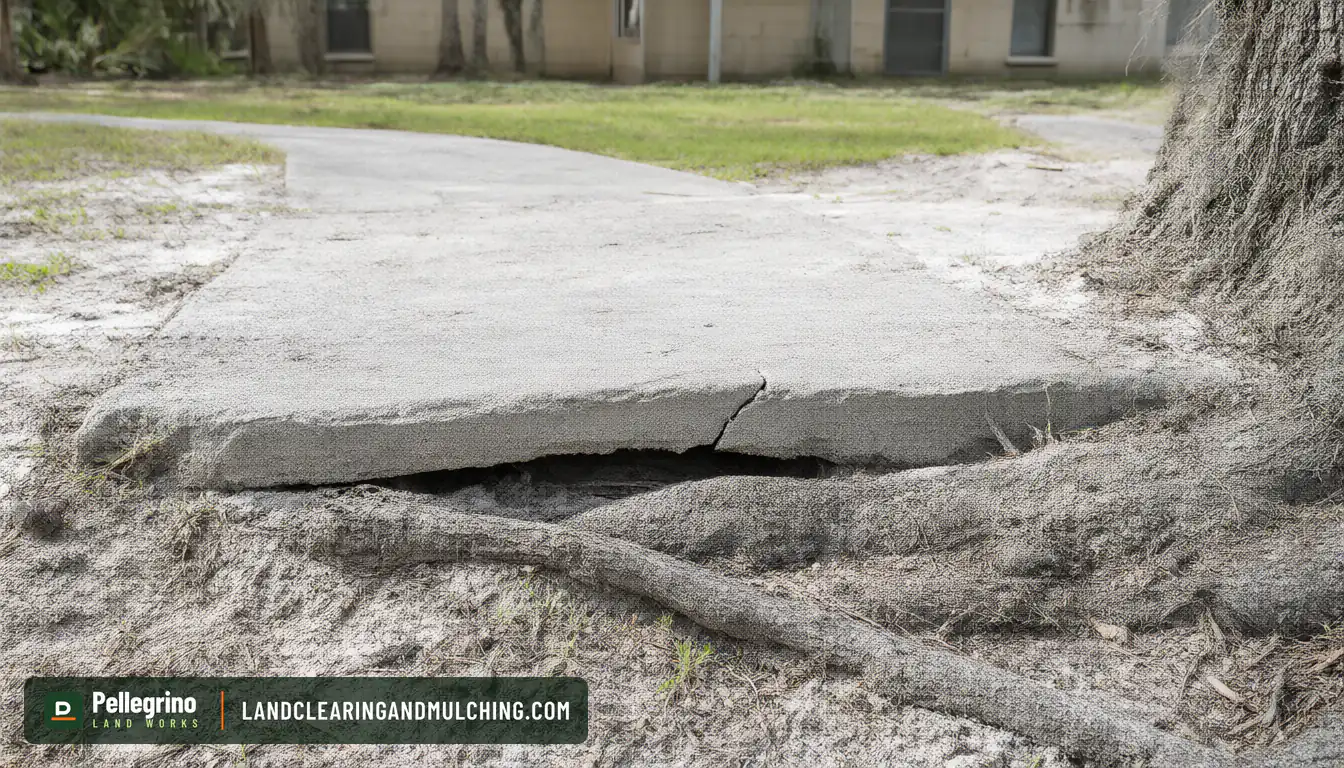
Will cutting tree roots kill the tree?
One small root cut far from the trunk rarely kills a tree; many cuts, big cuts, or cuts close to the trunk can. The UF/IFAS root pruning guidelines list what sets the damage: root size, the number of cuts, distance from the trunk, species, age, health, lean and soil.
Two of those matter more than people expect. Age first. Root pruning hurts old, mature trees more than young, vigorous ones. A forty-year live oak has less in reserve than the ten-year one by the mailbox.
Then the soil. UF/IFAS notes that root work near the trunk does more harm on shallow, compacted or poorly drained soils, because trees there grow shallow roots. That describes half of Florida. On flatwoods soil the water table sits just under the sand in summer, and on many lots a hardpan sits 18 to 30 inches down. Soil scientists call it spodosol. Roots spread sideways over that layer instead of diving.
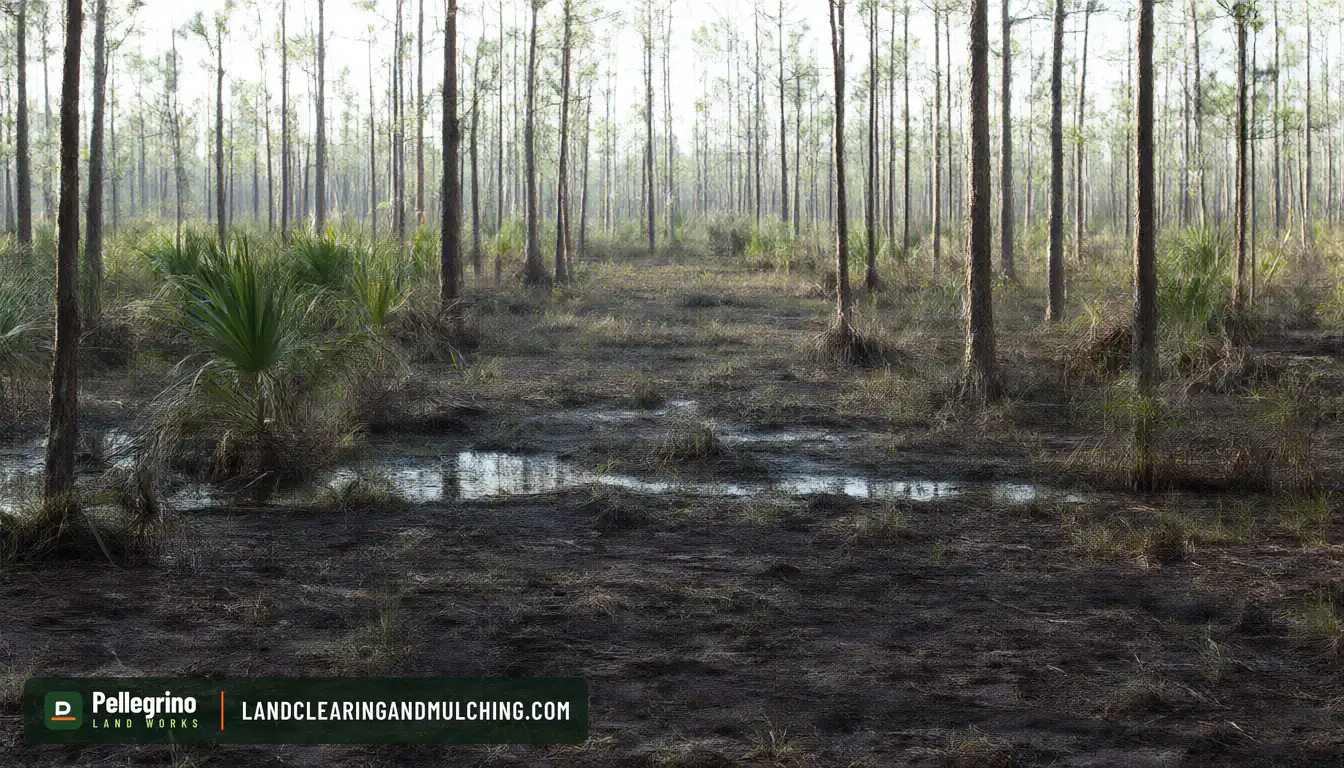
A tree on deep, well drained sand has sinker roots under the trunk. A tree on wet ground has fewer. Cut its laterals and less is left to hold it. The damage also hides. The International Society of Arboriculture warns that root damage from construction can take many years to show. If an oak you dug around a few summers ago is thinning at the top, our post on how to tell if a tree is dead walks through the signs.
How close to the trunk can you cut tree roots?
Stay at least three times the trunk diameter away, and five times is better. The UF/IFAS page admits the answer depends on who you ask. Some experts say 6 to 8 inches of distance for every inch of trunk diameter. Others settle on three times the diameter, preferably five. Whichever rule you pick, the page adds, cut roots can still make a tree fall over or die.
Here are those rules in feet. Measure around the trunk and divide by 3.14 to get the diameter.
| Trunk diameter | 3 times diameter (minimum) | 5 times diameter (preferred) | 6 to 8 inches per inch (cautious) |
|---|---|---|---|
| 10 inches | 2.5 feet | about 4 feet | 5 to 7 feet |
| 20 inches | 5 feet | about 8 feet | 10 to 13 feet |
| 30 inches | 7.5 feet | about 12.5 feet | 15 to 20 feet |
| 40 inches | 10 feet | about 17 feet | 20 to 27 feet |
The research behind the five-times figure used very young trees, with roots cut on one side only. Your old laurel oak on wet sand is none of those things, so treat the right-hand column as the safe side. And trees that lean are poor candidates for any root cutting, UF/IFAS says. If yours leans toward the house, skip to the last section.
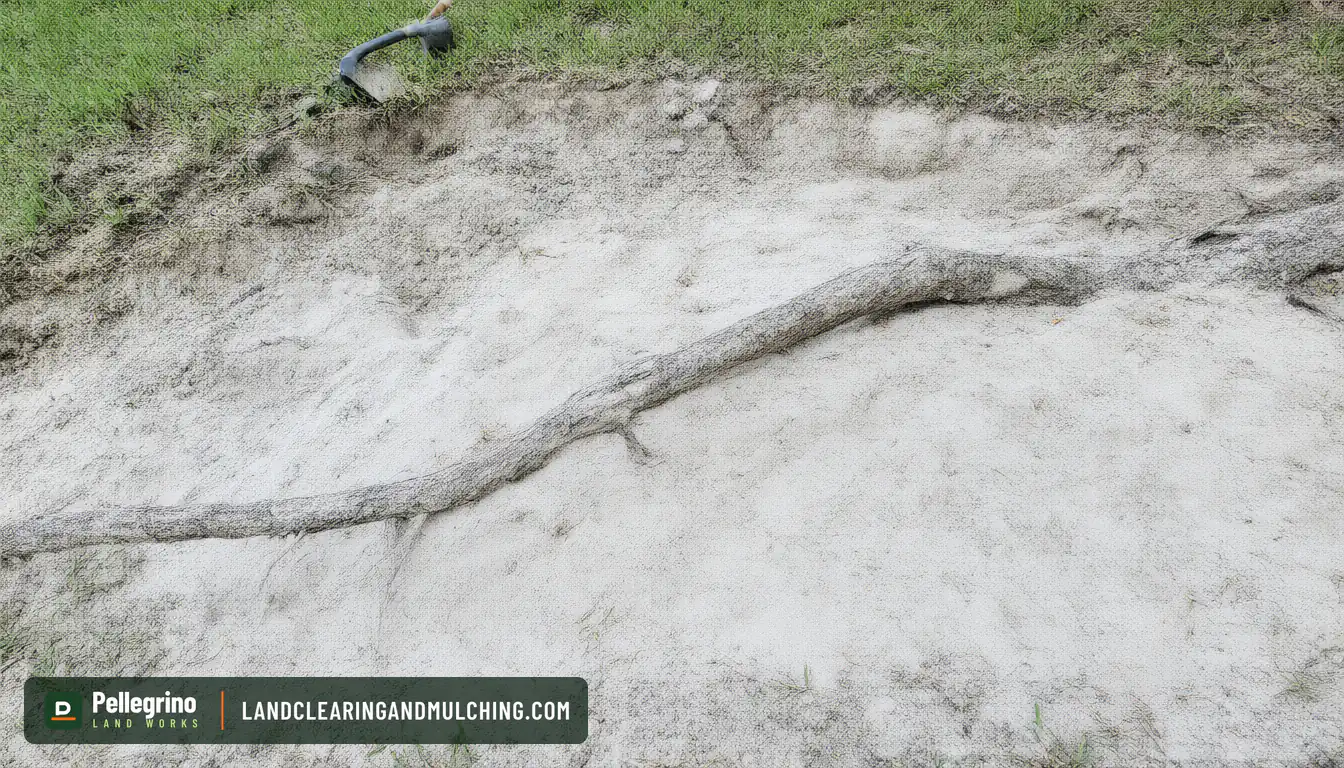
Why are tree roots showing above ground?
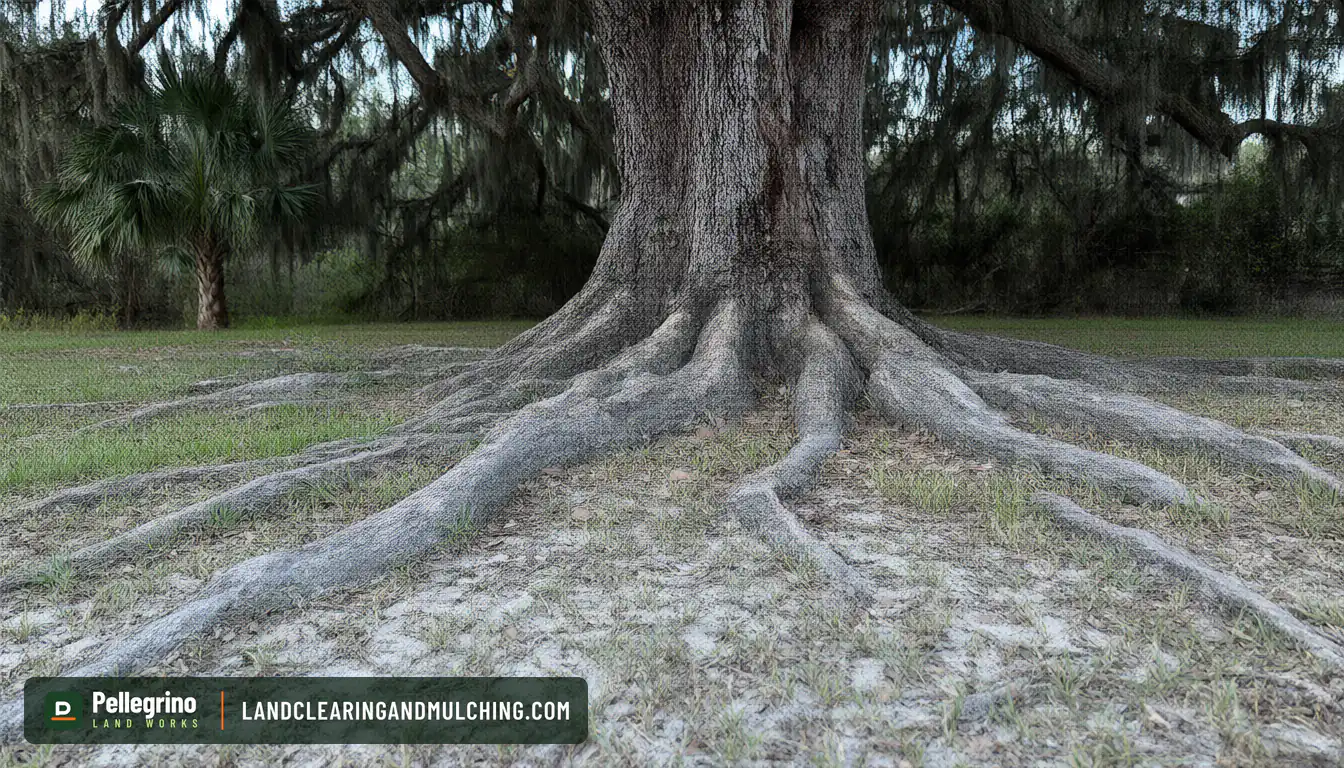
Roots show because they grow near the surface on purpose, then thicken until they break through. University of Wisconsin Extension says most of a tree’s roots run sideways in the top 4 to 15 inches of soil, where the oxygen is. Compacted or poorly drained soil pushes them shallower. Each year the roots add girth, and erosion strips soil off the top.
Florida adds its own reasons. Fill trucked in for a house pad is packed hard, and roots avoid it. Summer rain leaves flatwoods sand wet for weeks. And some trees simply do it more. UF/IFAS lists southern live oak as a tree that “can form large surface roots,” and notes that in time the roots lift sidewalks, curbs and driveways. A live oak’s roots have never once read a property line.
Surface roots are not a sign of a sick tree. They are a sign of a big tree, tight soil, or both.
What to do about tree roots above ground
Leave the roots in place and change what grows over them. Wisconsin Extension warns that hitting roots with a mower or pruning them away can seriously harm the tree.
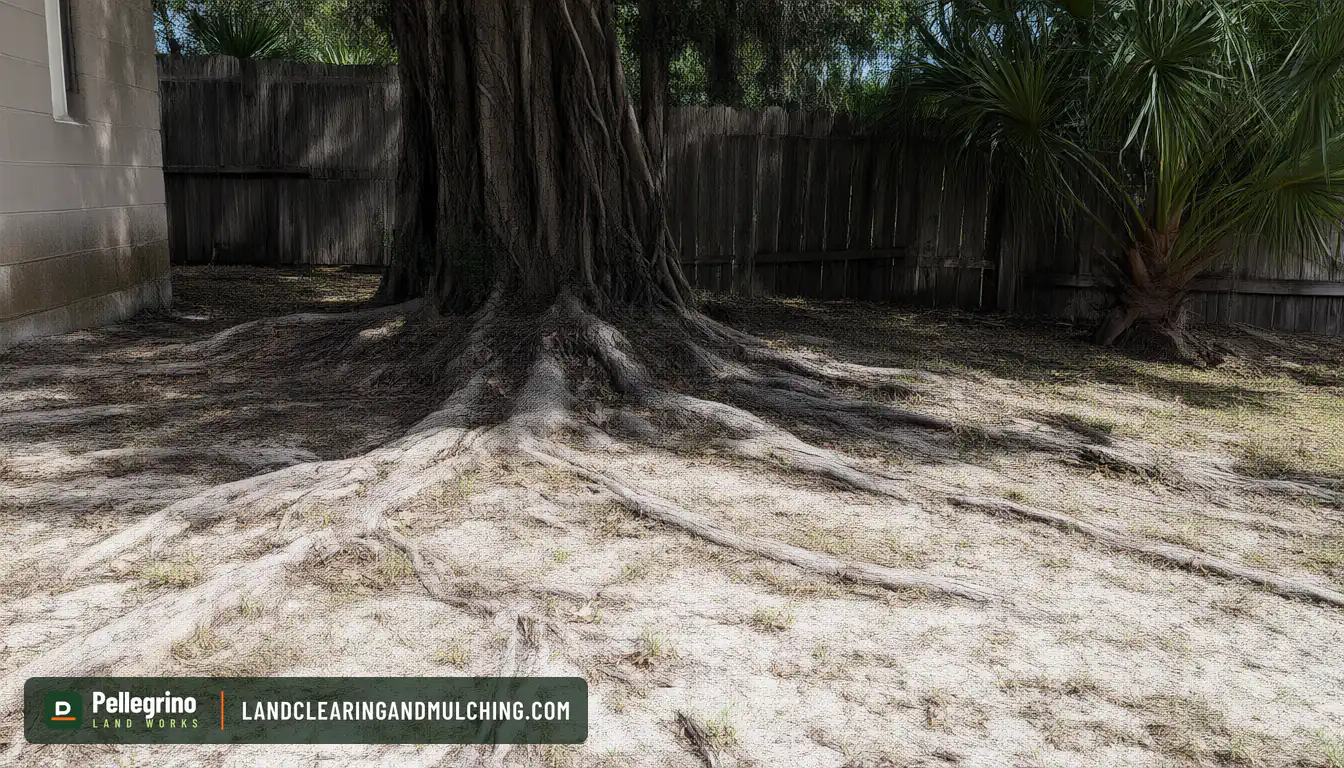
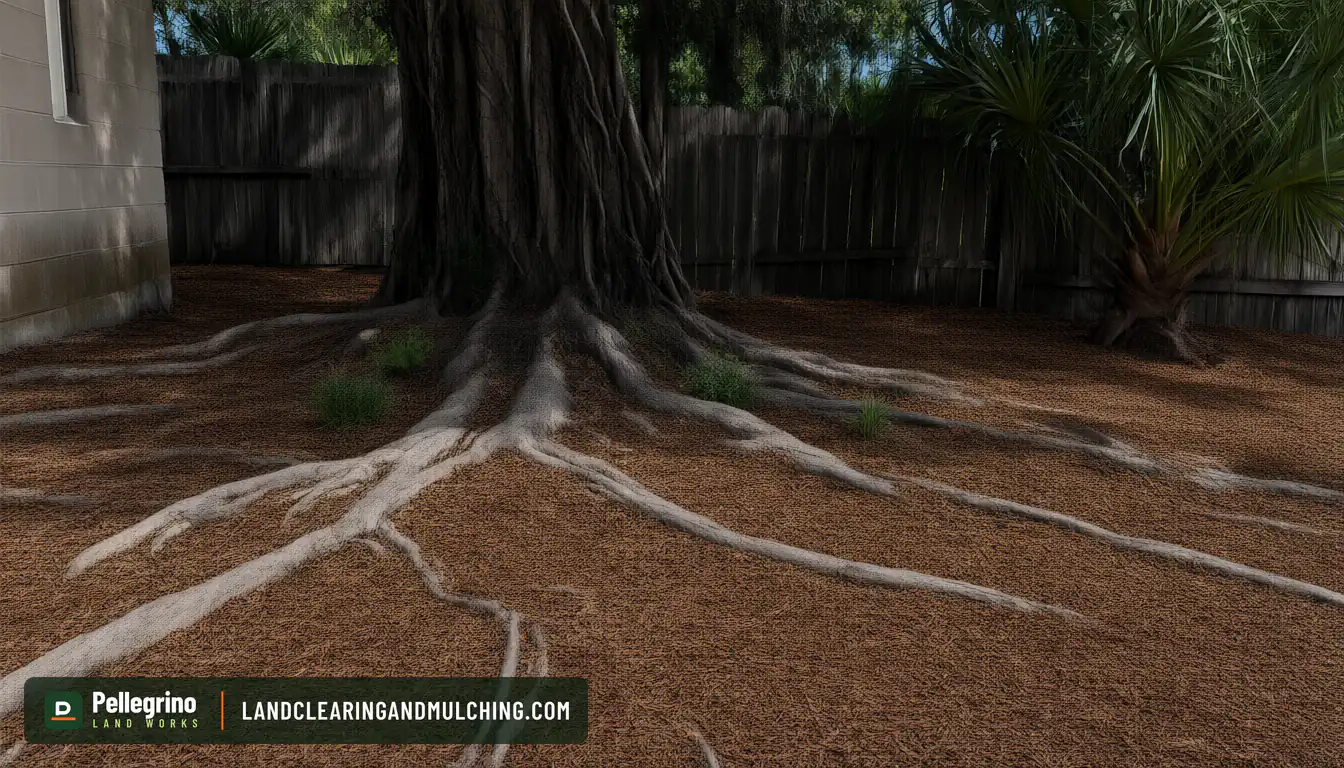
Its alternatives, in order of effort:
- Strip the grass under the tree and lay a mulch bed over the root area. No more mower scars.
- Add topsoil, just enough to cover the roots by about half an inch. More can suffocate them.
- Plant groundcover in the mulch. Hand-dig small pockets between the roots, and keep the rototiller out.
- Repeat the thin soil layer when the roots show again in a few years.
For a lifted walk, UF/IFAS offers better options than cutting: curve the walk around the roots, bridge it over them, grind the raised edge down, or live with the bump. Cutting roots so a walk or curb can be reset in its old spot, the same pages warn, causes severe health problems and can make the tree fall over.
How to cut a tree root safely
If a root has to go and the tree stays, cut it once, cleanly, as far out as you can. These steps follow the UF/IFAS and ISA guidance above.
- Call Sunshine 811 if you will dig to reach the root. Florida’s rule is two full business days of notice, not counting the day you call. Water, power and cable often share the strip of lawn the roots are in.
- Expose the root by hand with a spade, or wash the sand away with a hose. See how thick it is and which way it runs.
- Measure from the trunk. Use the table above, and move the cut out toward the root tip if you are inside the line.
- Check the size. Over about one inch, think twice. From one to three inches, the root may be a main anchor. Get an arborist first.
- Cut one side only. Leave the roots on the other sides alone this year.
- Use a sharp saw or loppers and make one clean cut. UF/IFAS says sharp tools only, so the root does not tear behind the cut. No trencher, no mattock, no backhoe bucket.
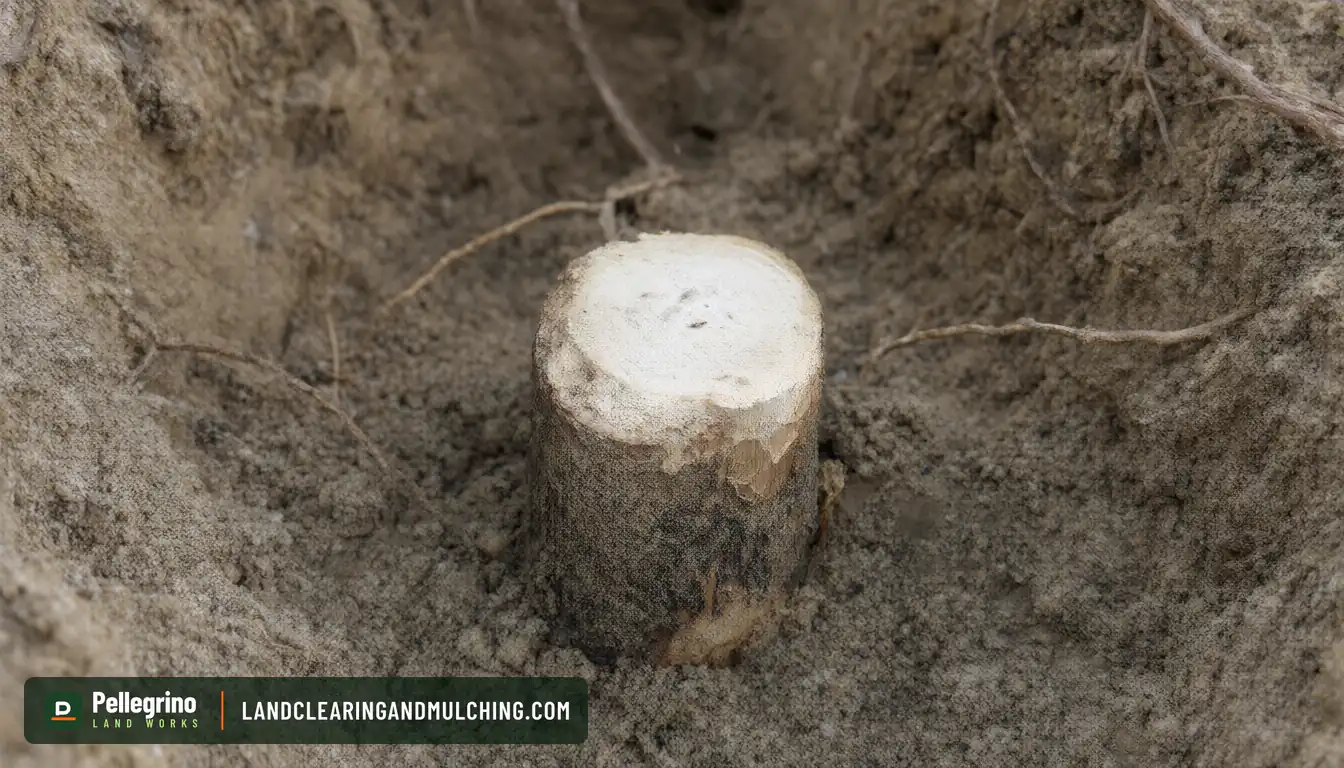
- Trim any torn end back to a smooth face, then backfill with the same sand.
- Water the tree through dry spells. The ISA notes an arborist may set up temporary watering when root loss is significant or the weather is dry.
- Watch the tree for years, not weeks. Thinning at the top or dead limbs mean the roots came up short.
Oak tree roots: why a live oak lifts the driveway
Live oak roots grow fast, far and shallow. In UF/IFAS field photos, live oak roots grew 8 feet in every direction in the first year after planting in hardiness zones 8 through 11, which covers Florida. The same pages show roots commonly reaching two to three times the distance to the dripline. A crown 10 feet wide can have roots 20 to 30 feet out.
That spread is also why live oak stands up to storms. UF/IFAS rates its wind resistance as very good once established. Cut the long laterals on one side and you hand that advantage back. UF/IFAS shows a tree whose roots a sidewalk had deflected. Its root plate broke free in a wind storm, because nothing grew on the sidewalk side to hold it. Roots cut for a driveway leave the same one-sided anchor. Our post on emergency tree removal after a hurricane shows what a lifted root plate looks like.
On the right-of-way we learned to read a tree from the ground up. A cracked lawn on one side of a trunk says more than the leaves.
Removing tree roots when the tree is coming out
Once the tree is going, root cutting is a cleanup job. What goes on that spot next picks the method.
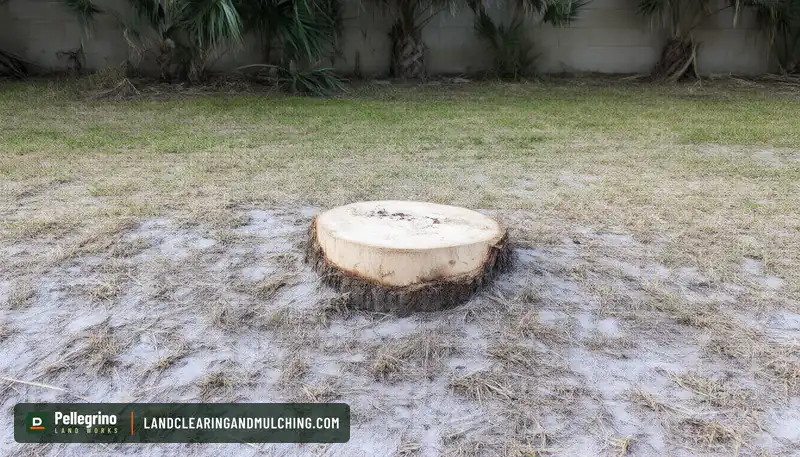
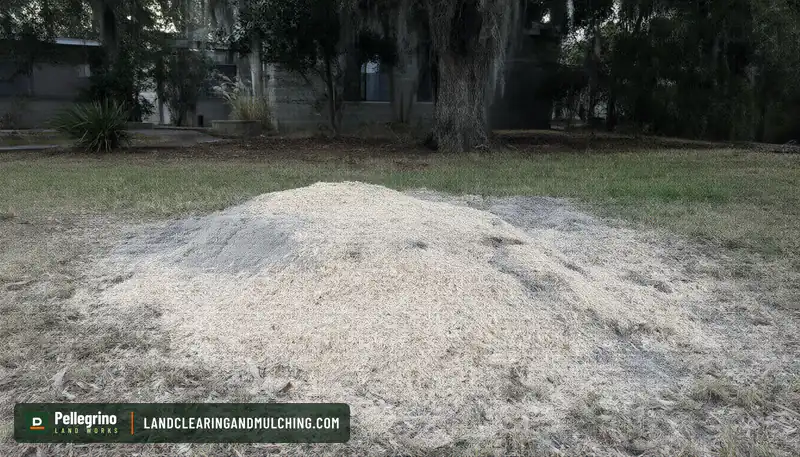
For a lawn or a bed, our stump grinding service takes the stump 6 to 12 inches below grade at $4.50 per inch of diameter, $150 minimum per stump. Surface roots from a removed oak get ground by the hour on the same visit. The rest stay in the ground and rot, as what happens after stump grinding explains.
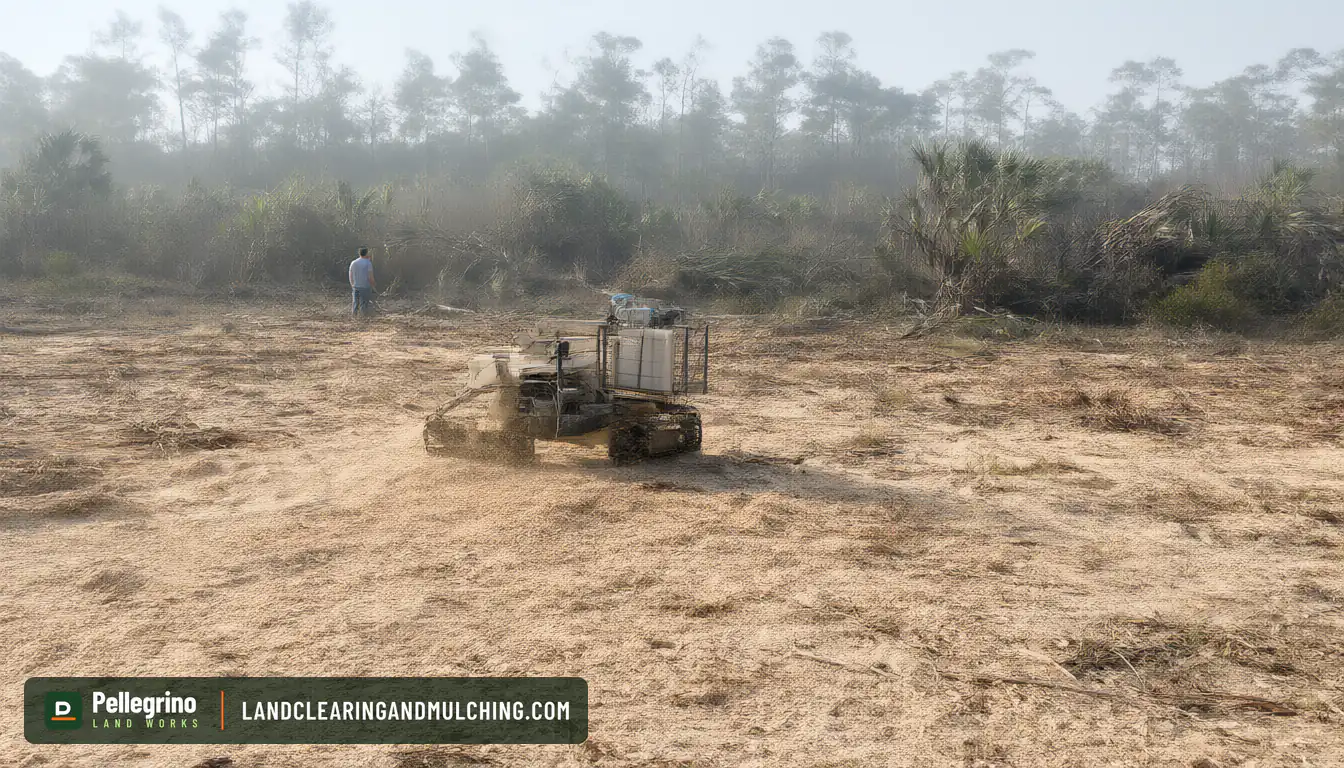
For a slab, a driveway or a septic field, the roots come out whole. That is root rake work with a dozer, $170 an hour with operator, part of site prep and dirt work. For scale: 20 acres of dead citrus in Lake Wales, in Central Florida, pushed and root raked in 4 days with the big mulcher and a dozer. The bill was $21,000 plus haul, and nothing was left to grind. Every line of our pricing is on the land clearing cost page.
When to call a pro, and which one
Call an ISA Certified Arborist for any root over about an inch thick, close to the trunk, or under a leaning tree you want to keep. The ISA says these arborists passed an exam and keep up continuing education, and its site can verify the credential. An arborist can prune roots out of the way before a trench goes in.
That is not us. We are a clearing outfit, not a tree service, and we do not root prune a keeper. Our crews take trees out of a lot, grind the stumps and surface roots they leave, and pull roots where a pad goes. When we clear around live oaks, we flag the keepers and keep the mulcher off the dripline when the ground is soft.
If the tree is coming out and the roots go with it, send the form or call (352) 619-3597. Brandi texts you a scheduling window within the hour.
Questions people ask
Can you cover exposed tree roots with dirt?
Yes, but only a thin layer. University of Wisconsin Extension says to add just enough topsoil to cover the roots by about half an inch. More than that can suffocate them, because roots need oxygen near the surface. Roots thicken every year, so expect them to show again and repeat the thin layer.
How far do oak tree roots spread?
Much farther than the branches. UF/IFAS research found tree roots commonly reach two to three times the distance to the dripline, so a crown 10 feet wide can have roots 20 to 30 feet out. Live oak roots can grow 8 feet in every direction in the first year after planting in Florida's climate zones.
Do you need to call 811 before cutting tree roots in Florida?
Yes, if you are digging to reach them. Sunshine 811 says anyone who is digging must notify it at least two full business days before the work starts. The day you call does not count, and neither do weekends or holidays. Service lines often run under the same strip of lawn as the roots.
Can you grind down tree roots above ground?
You can grind them, but on a living tree grinding a root is the same as cutting it. Every rule about size and distance from the trunk still applies. Root grinding makes sense after the tree is gone. Our crews grind surface roots from a removed oak by the hour on the same visit as the stump.
What happens if you cut a big tree root?
The tree loses part of its anchor and part of its water supply. UF/IFAS warns that cutting roots near the trunk can make a tree decline or fall over. The International Society of Arboriculture adds that construction damage to roots can take many years to show, so a healthy-looking tree is no proof.
How we made this guide
Marc Pellegrino wrote this from 14+ years of clearing Florida lots and right-of-way corridors, and checked the facts against these sources:
- UF/IFAS Landscape Plants: Root pruning guidelines
- UF/IFAS Landscape Plants: Lateral root spread in the landscape
- UF/IFAS EDIS ENH-722/ST564: Quercus virginiana, Southern Live Oak
- University of Wisconsin Extension: How to Deal with Surface Tree Roots
- International Society of Arboriculture (TreesAreGood): Avoiding Tree Damage During Construction
- Sunshine 811: Frequently Asked Questions