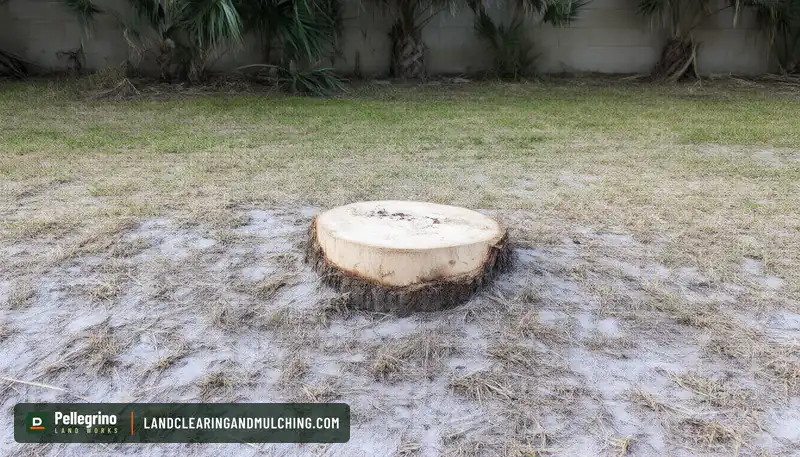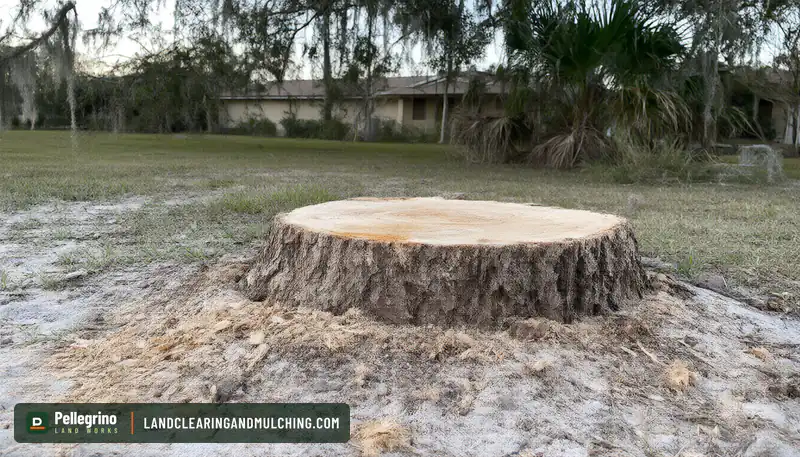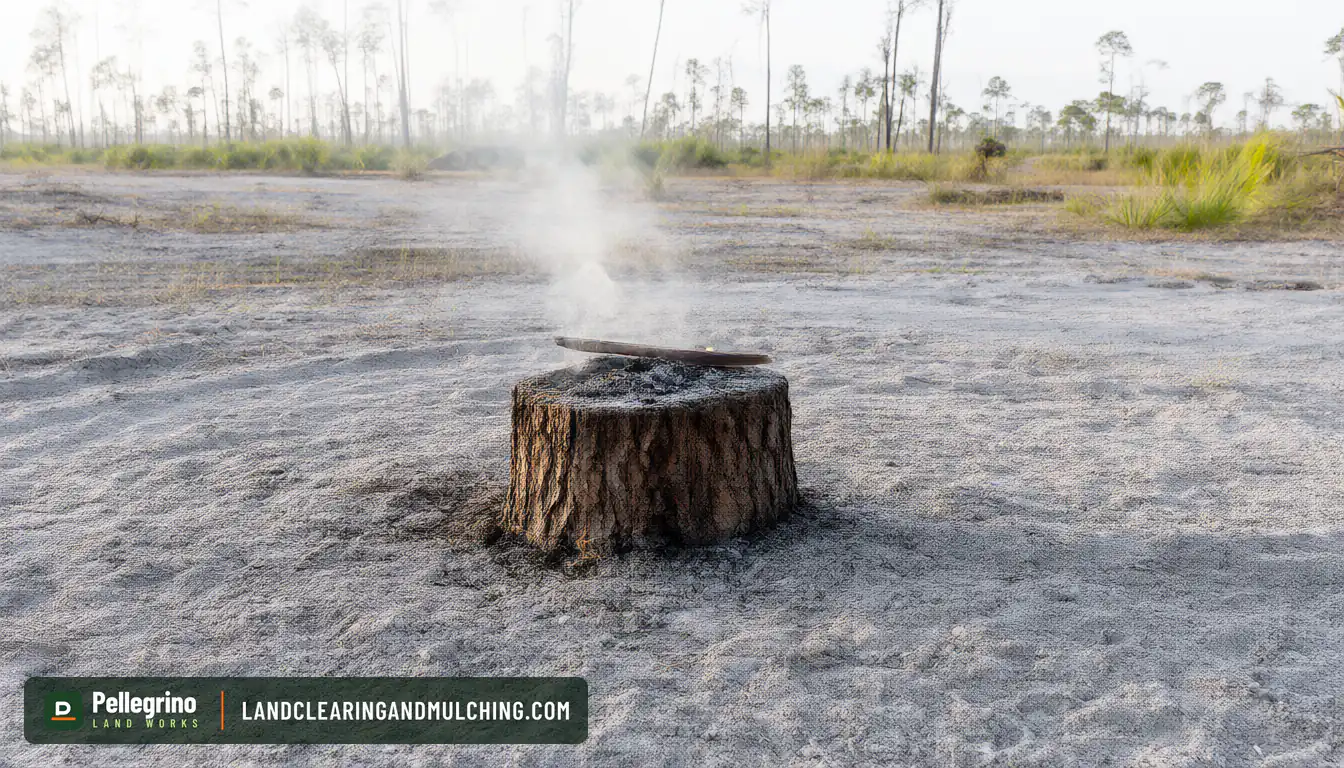
To burn a stump in Florida, rake a ring of bare sand around it, check for a burn ban, light dry kindling on top after 9 a.m. Eastern, and stay with it until you drown it an hour before sunset. That works on open ground at least 25 feet from your house and woods and 150 feet from a neighbor’s home. In most subdivisions, the honest answer is grind it.
A stump is the slowest fuel in your yard. UF/IFAS calls large-diameter wood a 10,000-hour fuel, and lists it with wet fuel as a long-duration smoke source. That one fact drives everything below. You are starting a project that wants to run for days, under rules that want it out by suppertime.
I have cleared Florida land since 2012, and burning is rarely allowed on the small lots we work. On most lots the stump grinding machine is faster than the match. But on open rural acreage, burning a tree stump can be legal and sensible.
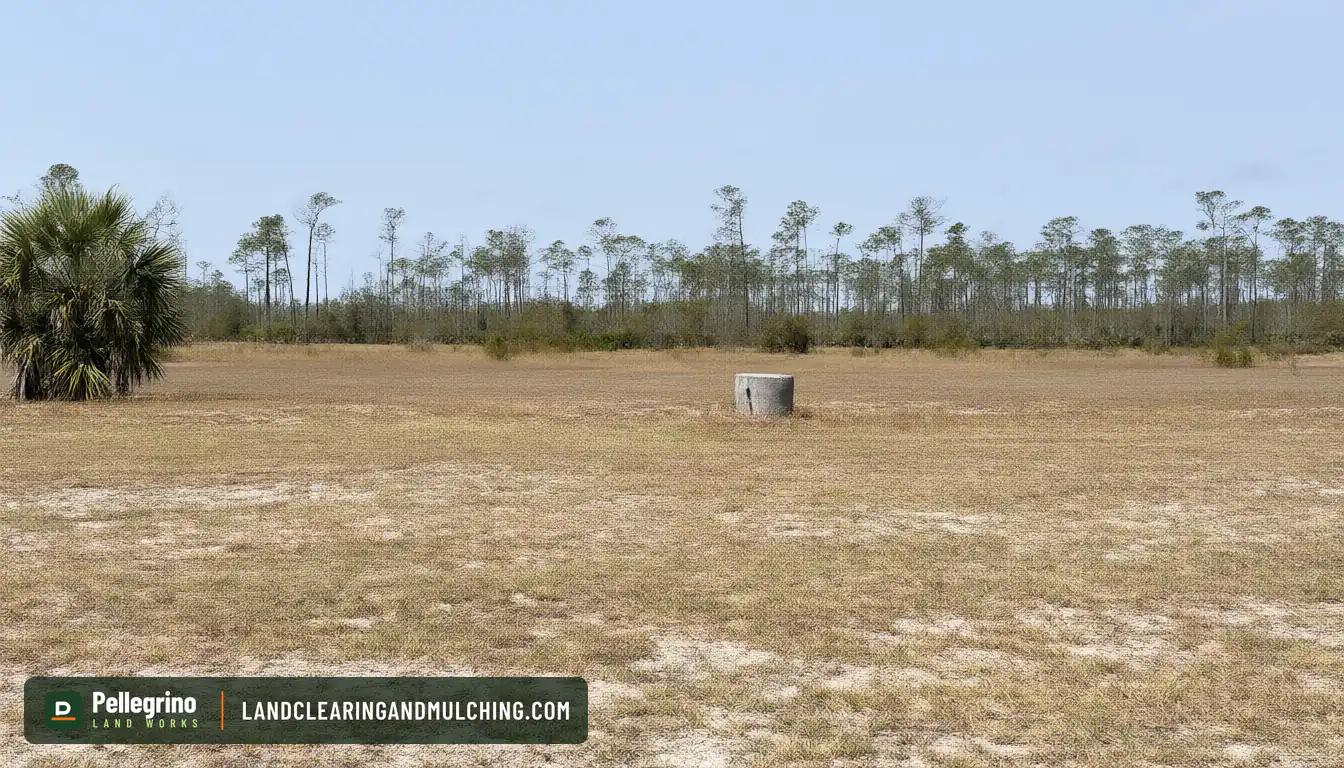
Can you burn a stump in Florida?
Sometimes, on open rural ground, when no burn ban is in effect and the setbacks fit. Florida law treats outdoor burning as the Florida Forest Service’s business, under Chapter 590 of the statutes and rule 5I-2 of the administrative code. Counties add their own rules on top.
The Forest Service lets you burn yard waste without an authorization if the pile is under 8 feet across. Its list of yard waste reads grass clippings, brush, leaves, tree limbs and palm fronds, and then “etc.” A stump in the ground is not named. Neither is it a pile, which the statute defines as debris “stacked together in a round or linear fashion.”
So a stump sits in a gray zone. I do not guess in gray zones. Call your local Forest Service field unit, describe the stump and where it sits, and ask. The call takes two minutes, and the answer is the one that counts.
Three places where the answer is almost always no:
- Platted subdivisions with houses close on every side. The setbacks alone rule it out.
- Any county under a burn ban.
- Lots on muck, or ground that holds standing water half the year. A wet stump smolders and smokes, and I would not strike a match there.
Florida burn rules for stumps, piles and yard waste
The rules split into two tiers: small yard waste piles with no paperwork, and everything bigger, which needs an authorization first. Here they are side by side, from the Forest Service page and rule 5I-2.006.
| What you burn | Authorization | Setbacks | Hours and attendance |
|---|---|---|---|
| Yard waste pile under 8 feet across | None, unless a county rule or ban says otherwise | 25 feet from your house and from forest, 50 feet from paved public roads, 150 feet from other occupied buildings | Light after 9 a.m. Eastern or 8 a.m. Central; out 1 hour before sunset |
| Pile over 8 feet, land clearing, pile burning | Forest Service authorization before you light; suppression equipment on hand | Residential piles: 300 feet from occupied buildings not yours, 50 feet from wildlands, brush or combustible structures, 100 feet from paved public roads | Attended at all times; noncertified burners finish 1 hour before sunset |
| Tree cutting debris | A DEP-permitted air curtain incinerator, or a home of one or two family units burning its own debris under the pile rules | Same as piles | Same as piles |
| Household garbage, paper, treated lumber, plastics, tires, paint cans | Illegal to burn |
Look at the last column of the first two rows. Out one hour before sunset. Attended at all times. A big oak stump will still be glowing at dark, and probably the next morning. That is the real conflict in stump burning, and no product on a store shelf solves it.
In the setback column, notice the word “occupied.” The 150 feet and 300 feet are measured to your neighbor’s house, not to yours. On a quarter-acre lot, that circle covers the whole block.
How to check for a Florida burn ban
Check your county first, then the Forest Service map, on the morning you plan to burn. The Forest Service says plainly that local burn bans are enacted by county governments. It keeps a county burn ban map, built from what counties report to it, on its Current Wildfire Information page.
Bans follow the drought. Orange County’s code, for example, starts a ban automatically when the Keetch-Byram Drought Index reaches 500, and lifts it after the index stays below 500 for seven days in a row. Its April 2026 ban prohibited all outdoor burning, yard waste included, unless a permit had been issued. Violators had the fire put out and faced a citation.
The Florida calendar works against you here. Dry season, November to May, is when a stump is dry enough to burn well. It is also when the drought index climbs and the bans come out. June brings rain, lower risk, and a stump too wet to keep lit. Florida gives you a fire window about as wide as a mail slot.
How to burn a tree stump: step by step
These steps assume burning is allowed on your lot today.
- Call ahead. Check your county for a burn ban and call your local Forest Service field unit about the stump. Get the answer on the day you burn, not the week before.
- Measure the setbacks. Pace it out: 25 feet to your house and to the woods, 50 feet to a paved public road, 150 feet to any other occupied building. Short on any one? Do not burn.
- Call 811 before you dig. Gas, power and fiber lines run under Florida yards, and roots grow around them.
- Cut a firebreak. Rake pine straw, leaves and dry palmetto fronds away until you reach bare sand, wider than the roots you can see. Pile the litter well outside that ring.
- Expose the stump. Dig the sand back from the root flare so air reaches the sides. Trim off any loose bark.
- Stage your water. A charged garden hose that reaches the stump, a shovel and a rake. The Forest Service requires suppression equipment on hand for big piles. I want it for a small stump too.
- Build the fire on top. Stack dry split kindling and a few lumps of charcoal on the flat top. A few sticks of lightered pine help it catch.
- Light it after 9 a.m. Eastern. Use a long match or a lighter wand and step back. No gasoline. Ever.
- Feed it and stay with it. Add dry wood as it burns down. Someone stays at the stump the whole time. Watch for sparks landing past the ring.
- Put it out an hour before sunset. Drown it, stir it, drown it again. Relight the next day only if the rules still allow it.
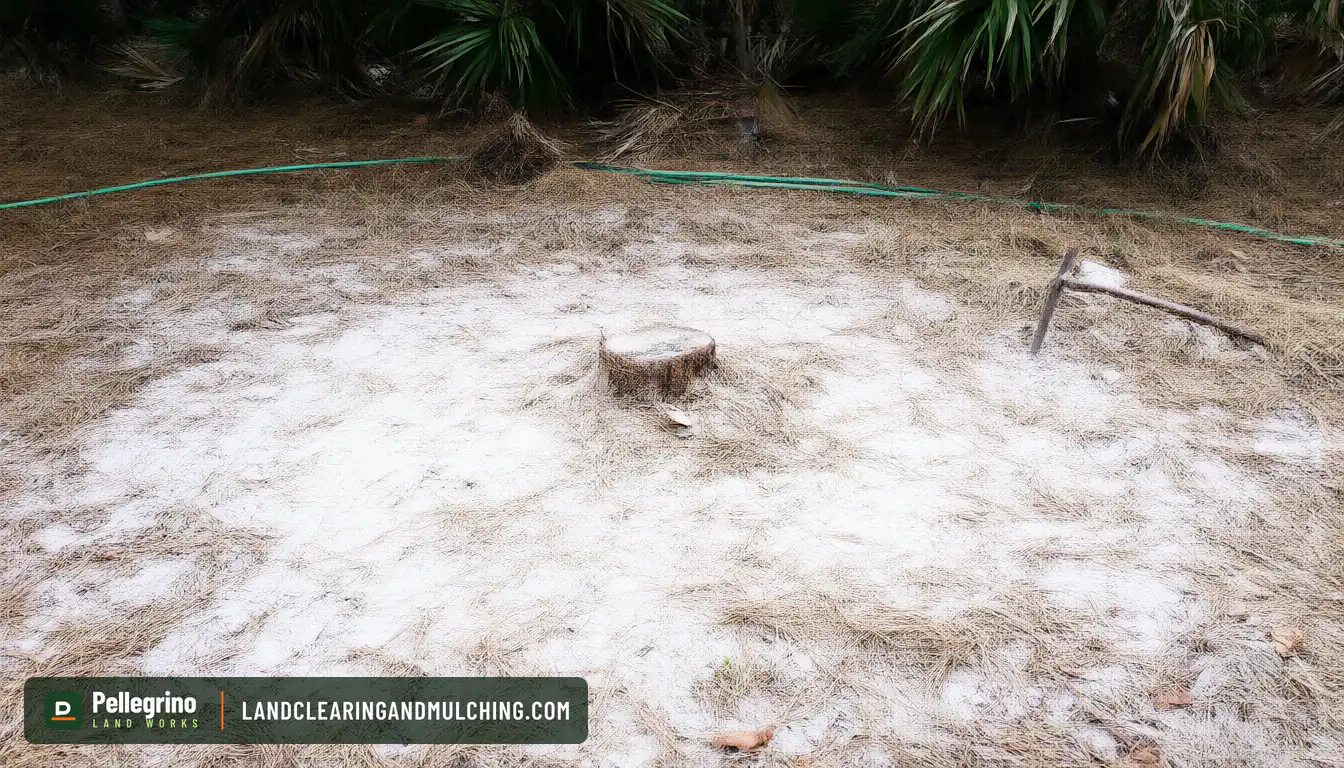
Lightered pine deserves a word. It is the resin-soaked heartwood of an old pine, and rule 5I-2.006 lists “clean dry wood or lightered pine” among the approved starter fuels for commercial burners. An old longleaf or slash pine stump full of it will burn well. A fresh-cut green oak barely holds a flame.
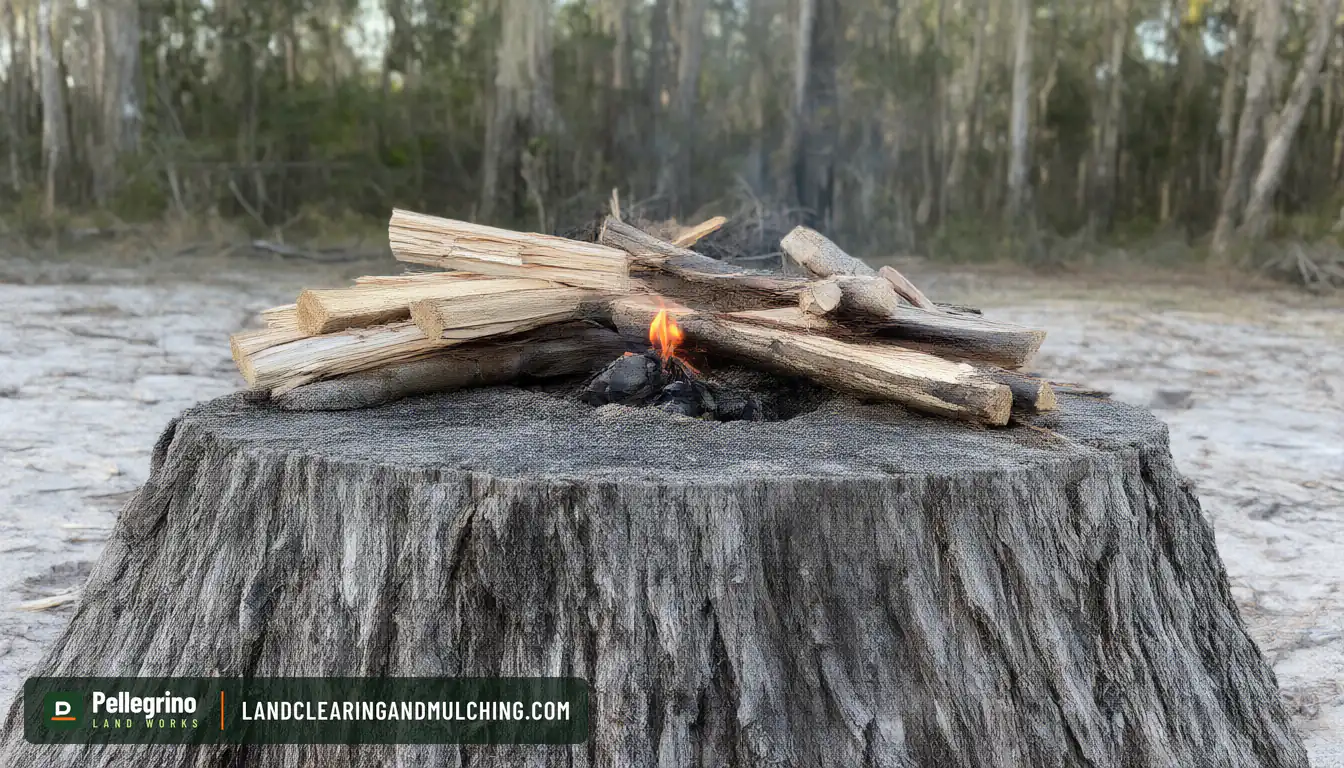
What is the best fuel to burn a stump?
Dry hardwood kindling and charcoal are the best fuel for burning a stump, because they hold steady heat on the wood. Liquid fuels flash off in seconds and leave the stump barely scorched.
Gasoline is the worst choice. Florida’s rule for air curtain incinerators, the permitted burners used on land clearing debris, bans gasoline, used oil, chemicals and tires as starter fuel. If gasoline is off the list for a professional burner, it is off the list for a backyard stump. Kerosene and diesel are on that approved list, but only for those burners. In a yard, they soak into the sand around the stump.
Granular stump remover adds its own risk. Most of it is potassium nitrate, an oxidizer, and some labels pair it with a fire later. The chemistry and the waiting periods are in how to kill a tree stump. If you put granules in your stump, read that label before you bring a match anywhere near it.
How long does it take to burn a stump?
Plan on days of burning for anything bigger than a dinner plate. Nobody can give you an honest hour count, because it depends on species, size and how wet the wood is.
Dry pine goes fastest. Live oak is dense, and its roots run far under the lawn. Cabbage palm is a fibrous boot that smolders more than it burns. Wet wood of any kind is worse. UF/IFAS notes that wet fuels can mean “prolonged smoldering and increased total smoke production.” In a Florida yard, the wood is often wet.
The daily shutdown stretches it. Each evening you drown the fire, and each morning you start it again on a soaked stump. A three-day burn becomes a week of evenings with a hose.
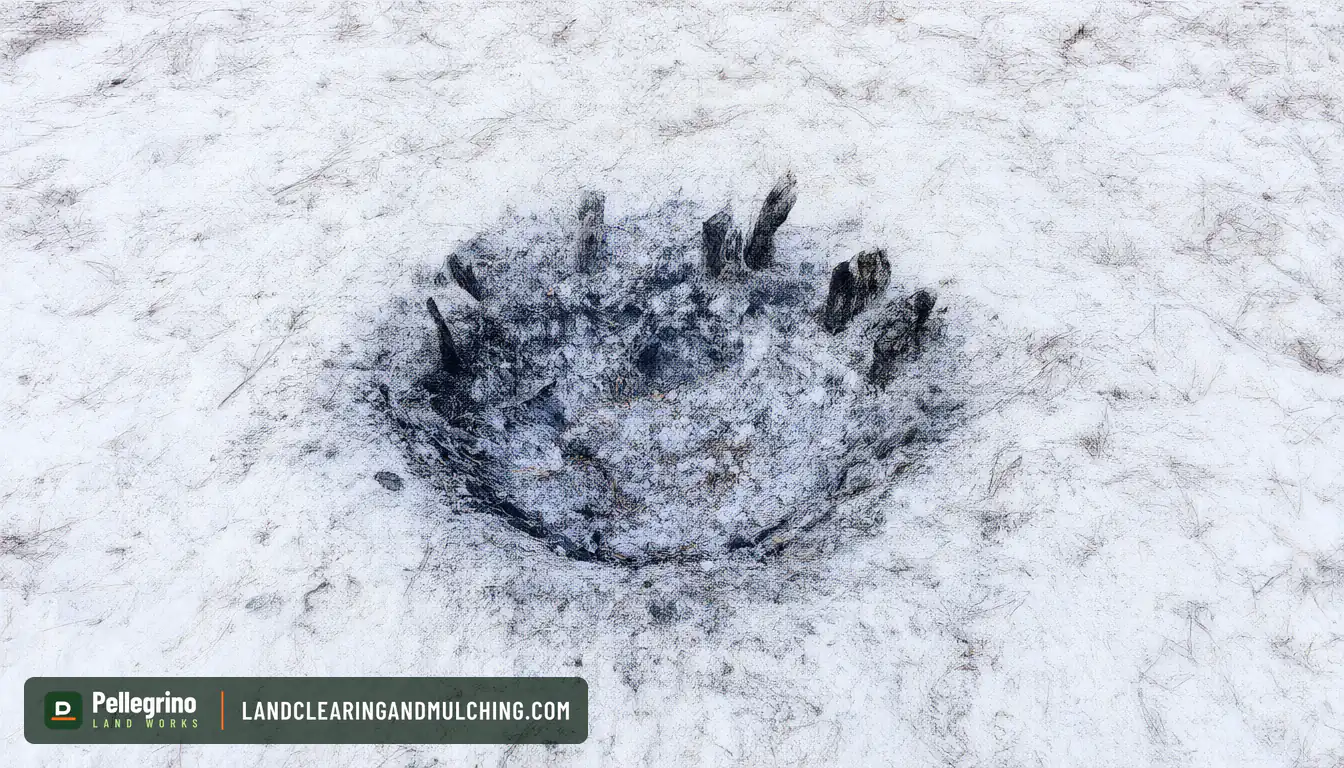
Can burning a stump cause a root fire?
Yes. Fire follows the roots below grade, and a root that smolders under the sand can push smoke up feet from the stump. The roots are the same wood as the stump, running out under your lawn in every direction.
That is why the firebreak goes wider than the roots you can see. It is also why you check the area for two or three mornings after the last flame. A thread of smoke coming out of the grass means a root is still burning. Dig to it with a shovel and soak it.
Fire takes the stump and the upper roots that dry out. The deep, wet ones stay and rot. Whether the roots sprout again depends on the species, which our post on whether tree stumps grow back covers.
Why most Florida stumps get ground, not burned
Grinding takes minutes, and the rules never come into it. Our crews grind at $4.50 per inch of diameter, $150 minimum per stump. A 20-inch slash pine lands on the minimum, and the grinding takes about ten minutes. No setbacks, no ban to check, no smoke in your neighbor’s window.
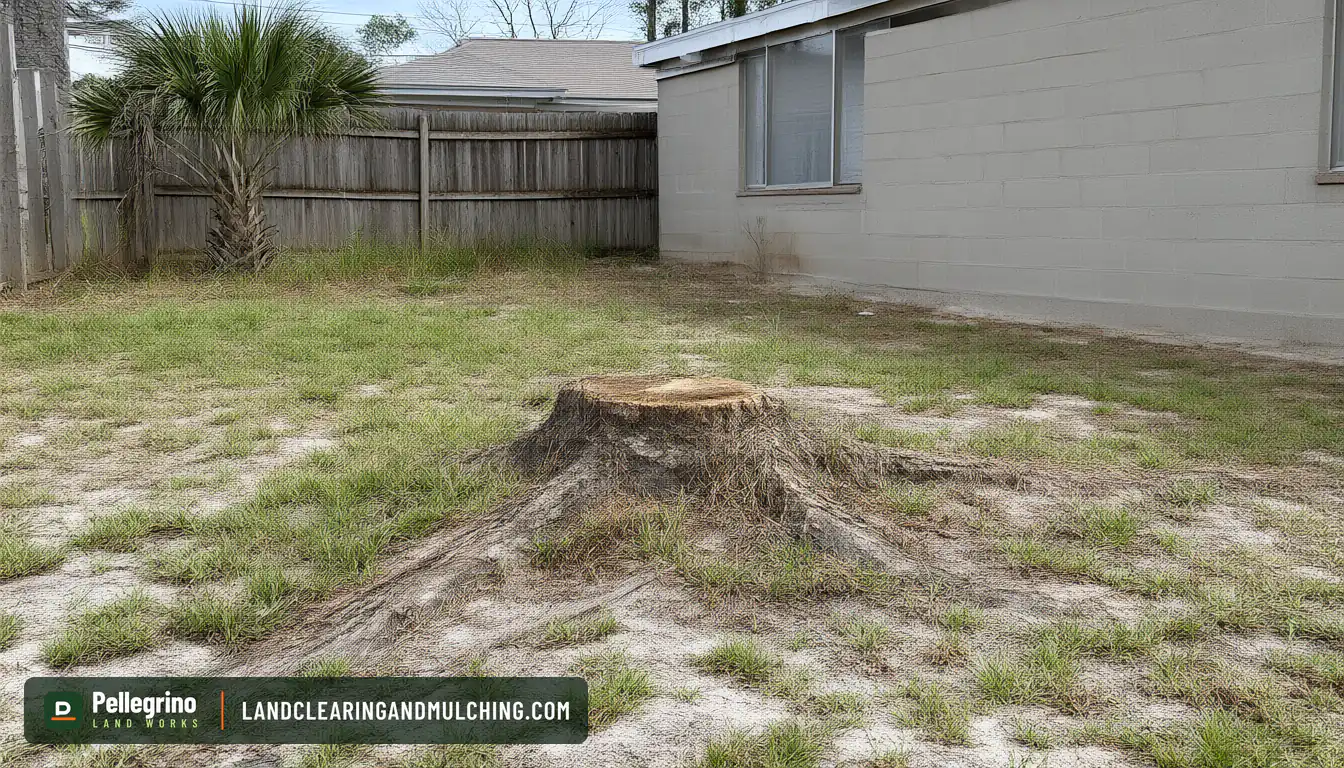
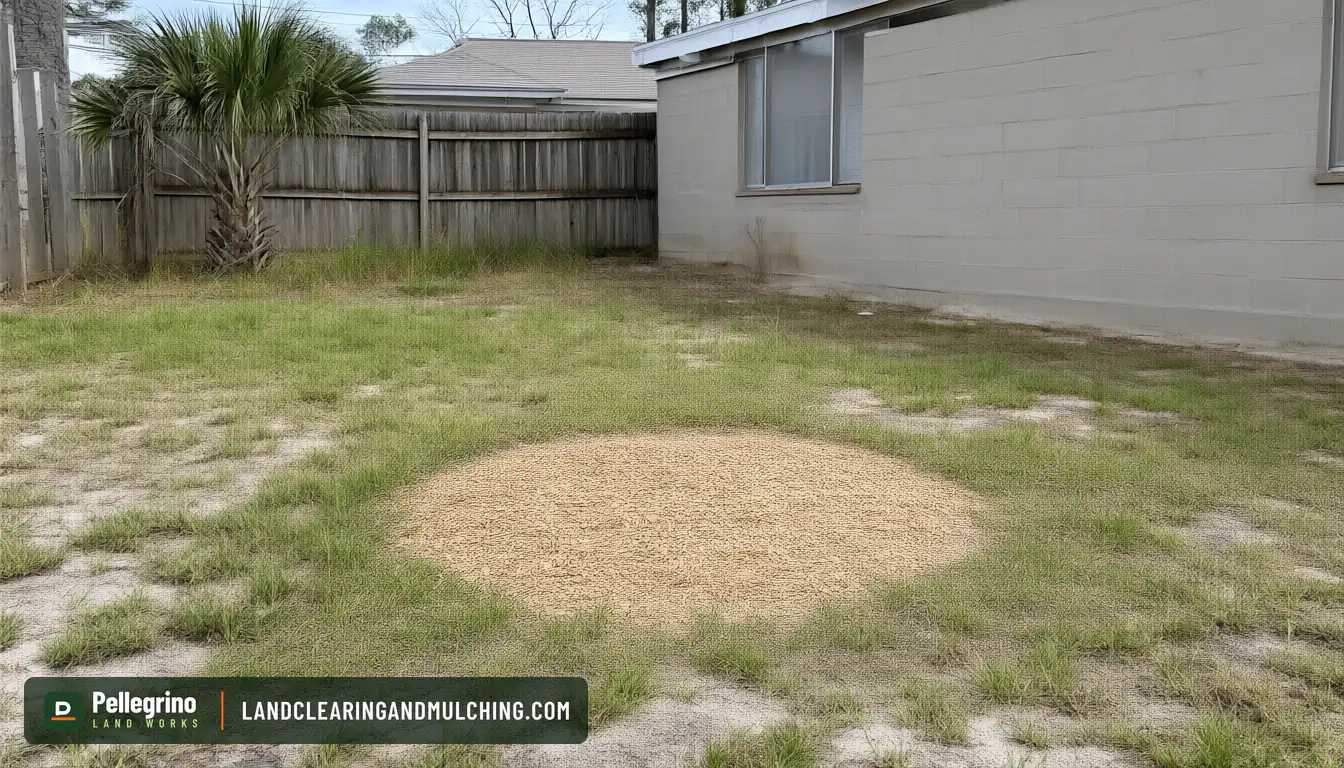
On bigger ground, burning is rarely allowed on small lots, and any land clearing pile needs a Forest Service authorization. That is why our land clearing work leans on the mulcher: the brush and small trees become a chip layer on your lot, and nothing waits on a burn day. The trade-offs are laid out in forestry mulching vs. bulldozing. North Florida pine country is the exception, and on North Florida acreage a pile can often still burn under an authorization pulled that morning.
Storm debris is the other case. After Ian I spent six months on debris in Charlotte and Lee. On one acre in Punta Gorda we hauled 9 loads, $8,100. For the full comparison of grinding, digging, chemicals and rot, read how to get rid of a tree stump.
When to call a pro instead of burning
Call a pro when the stump is near a house, a fence, a road or a neighbor, when a ban is on, or when you have more than a couple of stumps. I would add any stump on muck or wet flatwoods, and any stump you already filled with stump remover granules.
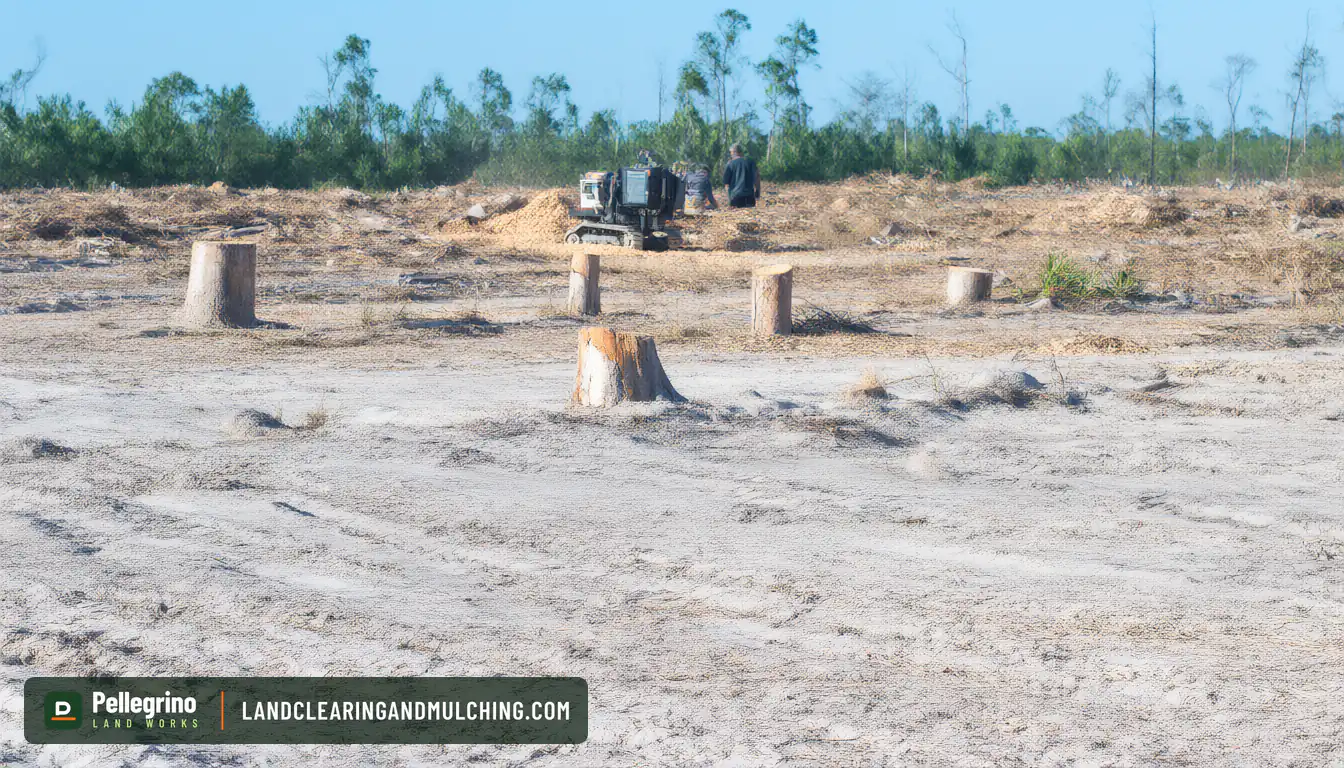
Ten stumps or more go by the day: $2,600 with the skid steer and grinder, transport included within 75 miles of Ocala or Punta Gorda. The estimate is free inside that range. We are a clearing outfit: we grind stumps and clear land, and our crews often grind the day after our own mulcher.
Count the stumps, measure the widest one at ground level, and tell us what goes on that spot next. Send the form or call (352) 619-3597. Brandi texts you a scheduling window within the hour.
Questions people ask
Do I need a burn permit to burn a stump in Florida?
You may not, but call your local Florida Forest Service field unit and ask before you light it. Yard waste piles under 8 feet across need no authorization. Land clearing, pile burning and anything bigger do. A stump is not named on either list, and county rules or a burn ban can still forbid it.
Can you burn a stump during a burn ban?
No, not during a county burn ban or a state burn ban. Orange County's 2026 ban, for example, prohibited all outdoor burning, yard waste included, unless a permit had been issued. Bans start and end with the drought, so check the county and the Florida Forest Service burn ban map on the morning you plan to burn.
Can I use gasoline or diesel to burn a stump?
Skip gasoline entirely. Florida's rule for commercial air curtain burners bans gasoline, used oil and chemicals as starter fuel, and those are permitted burners run on land clearing jobs. A backyard stump deserves at least the same care. Dry hardwood kindling and charcoal on top do the job without a fireball or fuel soaking into the sand.
How do you put out a stump fire?
Drown it, stir it, and drown it again. Soak the stump and the ground around it, break up the coals with a shovel, and keep going until nothing hisses. The roots run under the sand, so check the area again the next morning and the morning after for any thread of smoke.
Can I burn stump grindings?
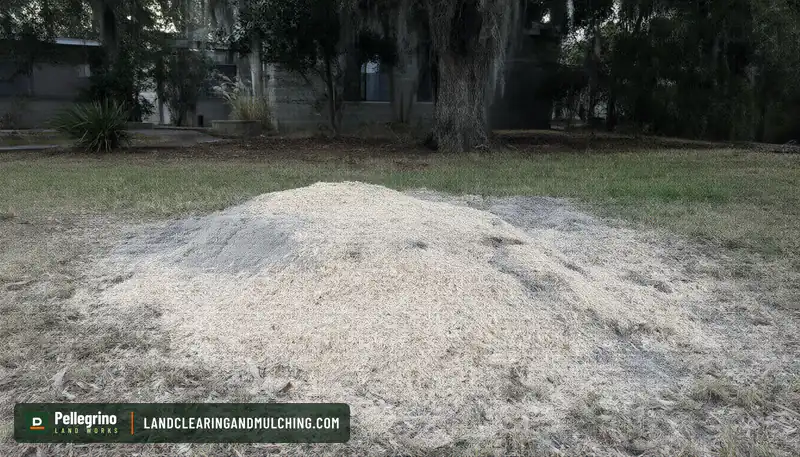
You can, under the yard waste rules for a pile under 8 feet, but it is a poor use of them. Grindings are wet, half sand, and they smolder and smoke. Spread them as mulch in a bed or rake them into the hole and let them settle. That costs nothing and takes no match.
What happens if you burn without authorization in Florida?
Pile burning without the authorization the law requires is a second-degree misdemeanor under Florida Statutes 590.125. Burning during a county ban can bring a citation, and the fire gets put out. If the fire escapes, the damage it does is a separate and bigger problem.
How we made this guide
Marc Pellegrino wrote this from 14+ years of clearing Florida lots and right-of-way corridors, and checked the facts against these sources:
- FDACS Florida Forest Service: Burn Authorizations and yard waste rules
- Florida Statutes 590.125: Open burning authorized by the Florida Forest Service
- Florida Administrative Code 5I-2.006: Open burning, pile burning setbacks and air curtain incinerators
- FDACS Florida Forest Service: Current Wildfire Information and county burn ban map
- Orange County, Florida: Burn ban issued as drought index rises (April 2026)
- UF/IFAS EDIS FOR381/FR452: Hurricane and Tropical Storm Impacts on Prescribed Fire and Wildfire Management